Division of Neonatology, LAC+USC Medical Center, Keck School of Medicine, University of Southern California, Los Angeles, CA, USA.
Fetal and Neonatal Medicine Institute, Division of Neonatal Medicine, Children's Hospital Los Angeles, 4650 Sunset Boulevard, MS #31, Los Angeles, CA, 90027, USA.
BMC Pediatr. 2021 Jan 4;21(1):7. doi: 10.1186/s12887-020-02463-5.
Our objectives were (1) to describe Care Transitions Measure (CTM) scores among caregivers of preterm infants after discharge from the neonatal intensive care unit (NICU) and (2) to describe the association of CTM scores with readmissions, enrollment in public assistance programs, and caregiver quality of life scores.
The study design was a cross-sectional study. We estimated adjusted associations between CTM scores (validated measure of transition) with outcomes using unconditional logistic and linear regression models and completed an E-value analysis on readmissions to quantify the minimum amount of unmeasured confounding.
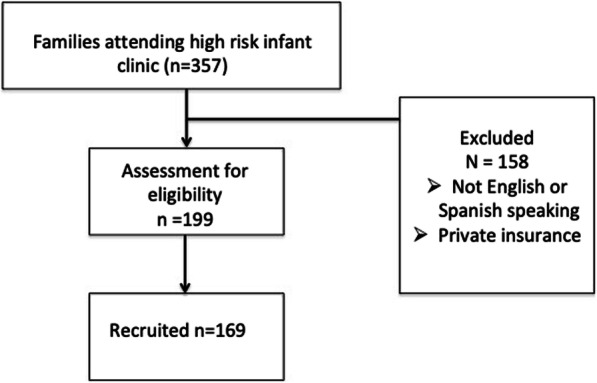
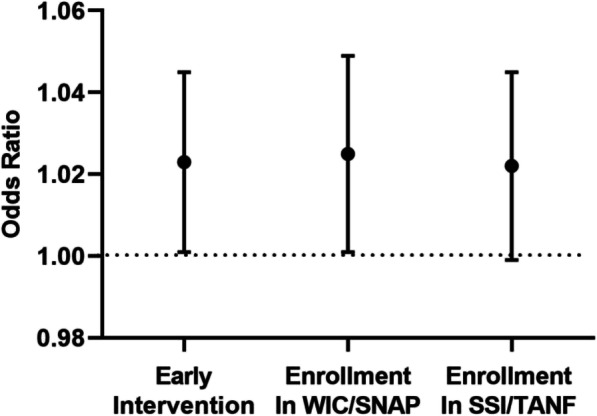
One hundred sixty-nine parents answered the questionnaire (85% response rate). The majority of our sample was Hispanic (72.5%), non-English speaking (67.1%) and reported an annual income of <$20,000 (58%). Nearly 28% of the infants discharged from the NICU were readmitted within a year from discharge. After adjusting for confounders, we identified that a positive 10-point change of CTM score was associated with an odds ratio (95% CI) of 0.74 (0.58, 0.98) for readmission (p = 0.01), 1.02 (1, 1.05) for enrollment in early intervention, 1.03 (1, 1.05) for enrollment in food assistance programs, and a unit change (95% CI) 0.41 (0.27, 0.56) in the Multicultural Quality of Life Index score (p < 0.0001). The associated E-value for readmissions was 1.6 (CI 1.1) suggesting moderate confounding.
The CTM may be a useful screening tool to predict certain outcomes for infants and their families after NICU discharge. However, further work must be done to identify unobserved confounding factors such as parenting confidence, problem-solving and patient activation.
我们的目标是(1)描述早产儿出院后(从新生儿重症监护病房(NICU))的照顾者的 Care Transitions Measure(CTM)评分,以及(2)描述 CTM 评分与再入院、参加公共援助计划和照顾者生活质量评分的关系。
本研究设计为横断面研究。我们使用无条件逻辑回归和线性回归模型估计 CTM 评分(过渡的有效测量)与结果之间的调整关联,并对再入院进行 E 值分析,以量化未测量混杂的最小量。
169 名父母回答了问卷(85%的回应率)。我们的样本大多数是西班牙裔(72.5%),非英语(67.1%),年收入低于 20000 美元(58%)。近 28%的从 NICU 出院的婴儿在出院一年内再次入院。在调整混杂因素后,我们发现 CTM 评分增加 10 分,再入院的比值比(95%置信区间)为 0.74(0.58,0.98)(p=0.01),参加早期干预的可能性为 1.02(1,1.05),参加食品援助计划的可能性为 1.03(1,1.05),多元文化生活质量指数评分的单位变化(95%置信区间)为 0.41(0.27,0.56)(p<0.0001)。再入院的相关 E 值为 1.6(CI 1.1),表明存在中度混杂。
CTM 可能是一种有用的筛查工具,可预测 NICU 出院后婴儿及其家庭的某些结果。然而,还需要进一步工作来确定未观察到的混杂因素,如育儿信心、解决问题和患者激活。