Numoto Shingo, Kurahashi Hirokazu, Sato Atsushi, Kubota Masaya, Shiihara Takashi, Okanishi Tohru, Tanaka Ryuta, Kuki Ichiro, Fukuyama Tetsuhiro, Kashiwagi Mitsuru, Ikeno Mitsuru, Kubota Kazuo, Akasaka Manami, Mimaki Masakazu, Okumura Akihisa
Department of Pediatrics, Aichi Medical University, 1-1 Yazako Karimata, Nagakute, Aichi, 480-1195, Japan.
Department of Pediatrics, The University of Tokyo Hospital, Tokyo, Japan.
Orphanet J Rare Dis. 2021 Jan 6;16(1):5. doi: 10.1186/s13023-020-01646-8.
We examined the clinical manifestations of acute encephalopathy (AE) and identify risk factors for AE in children with tuberous sclerosis complex (TSC).
The clinical data of 11 children with clinically diagnosed TSC associated with AE and 109 children with clinically diagnosed TSC alone aged 4 years or older were collected from 13 hospitals.
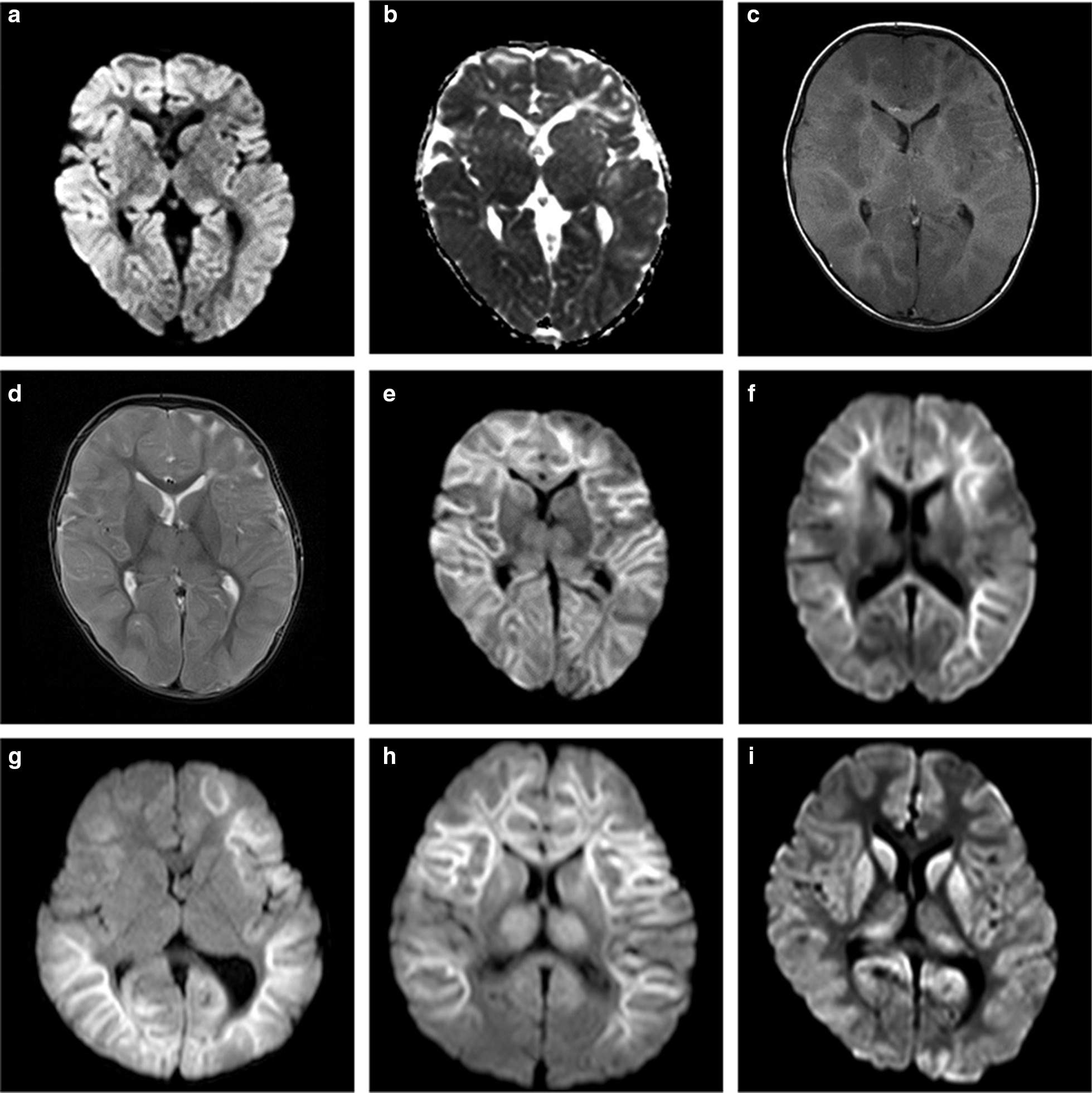
Of the 11 children with AE, 5 had histories of febrile seizures (FS), and all had histories of febrile status epilepticus (FSE). AE developed within 24 h after fever onset in all children with seizures lasting 30 min or longer. All children developed coma after seizure cessation. Head magnetic resonance imaging (MRI) revealed widespread abnormalities in the cerebral cortex, subcortical white matter, corpus callosum, basal ganglia, and thalamus. One child died; seven had severe neurological sequelae; and the other three, mild sequelae. Logistic regression analysis revealed that a history of FSE was correlated with the development of AE.
AE in children with TSC was characterized by sudden onset after fever, followed by coma, widespread brain edema evident on MRI, and poor outcomes. A history of FSE was a risk factor for the development of AE.
我们研究了结节性硬化症(TSC)患儿急性脑病(AE)的临床表现,并确定AE的危险因素。
从13家医院收集了11例临床诊断为TSC合并AE的患儿以及109例临床诊断为单纯TSC且年龄在4岁及以上患儿的临床资料。
11例AE患儿中,5例有热性惊厥(FS)病史,且均有热性惊厥持续状态(FSE)病史。所有惊厥持续30分钟或更长时间的患儿在发热开始后24小时内发生AE。所有患儿在惊厥停止后均出现昏迷。头部磁共振成像(MRI)显示大脑皮层、皮层下白质、胼胝体、基底神经节和丘脑广泛异常。1例患儿死亡;7例有严重神经后遗症;另外3例有轻度后遗症。逻辑回归分析显示,FSE病史与AE的发生相关。
TSC患儿的AE特点为发热后突然起病,随后昏迷,MRI显示广泛脑水肿,预后不良。FSE病史是AE发生的危险因素。