De Santis Giorgio, Mattioli Francesco, Pinelli Massimo, Martone Andrea, Starnoni Marta, Fermi Matteo, Presutti Livio
Department of Plastic and Reconstructive Surgery, University Hospital of Modena, Largo del Pozzo, 71, Modena, Italy.
Department of Otorhinolaryngology Head and Neck Surgery, University Hospital of Modena, Largo del Pozzo, 71, Modena, Italy.
Plast Reconstr Surg Glob Open. 2020 Dec 2;8(12):e3226. doi: 10.1097/GOX.0000000000003226. eCollection 2020 Dec.
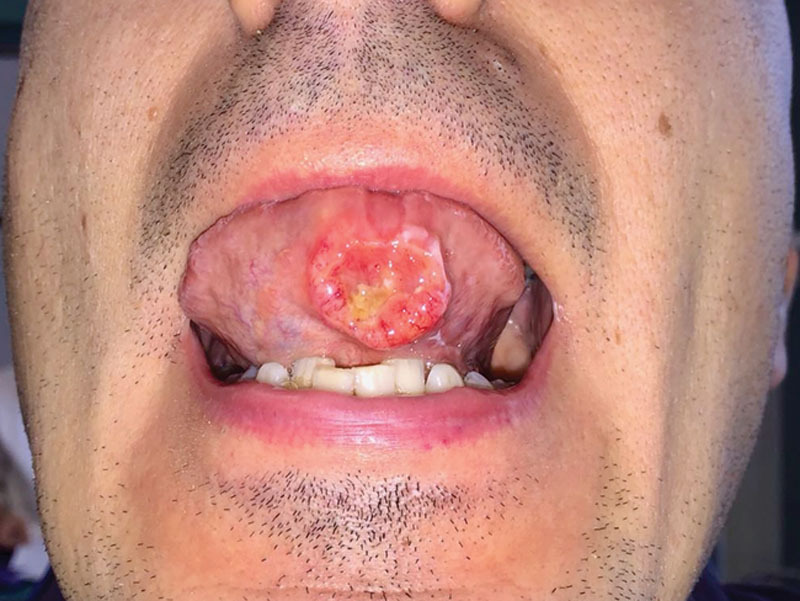
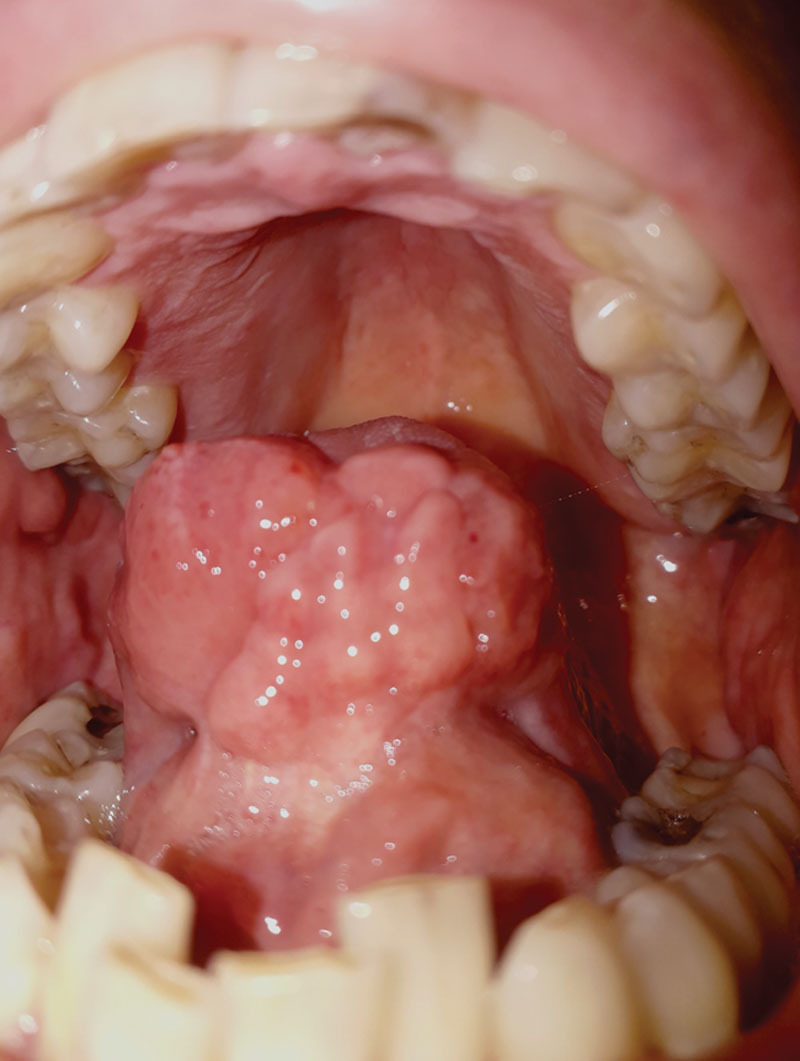
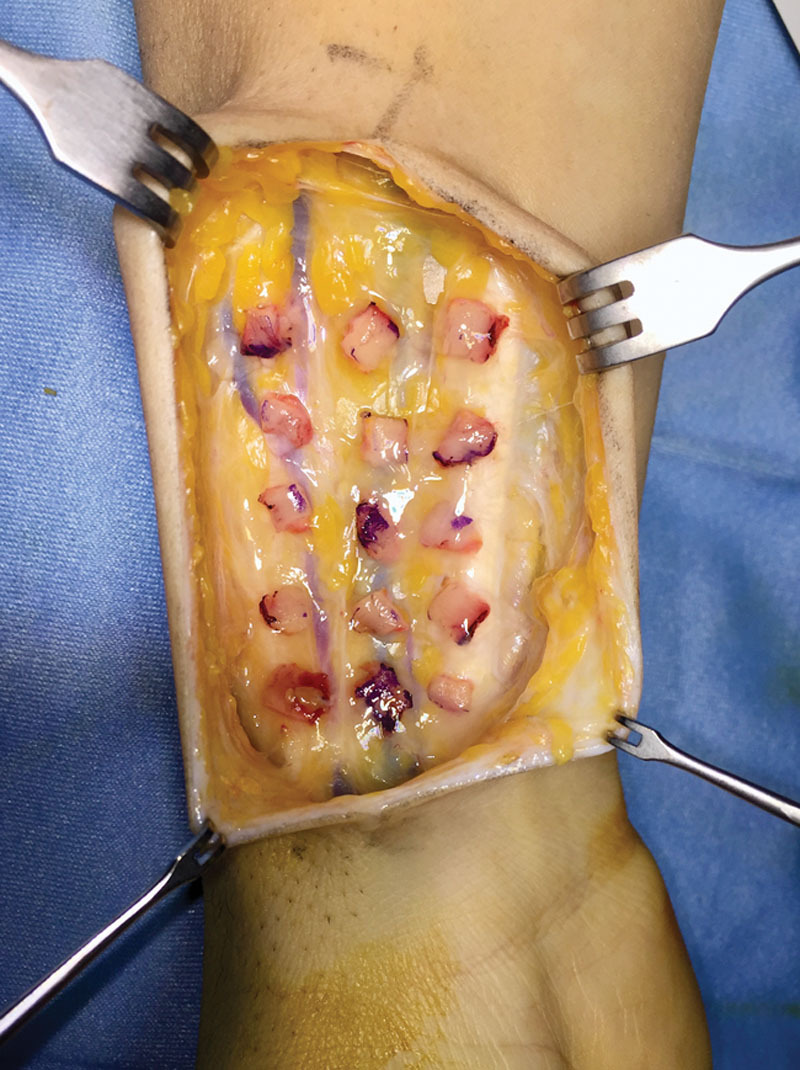
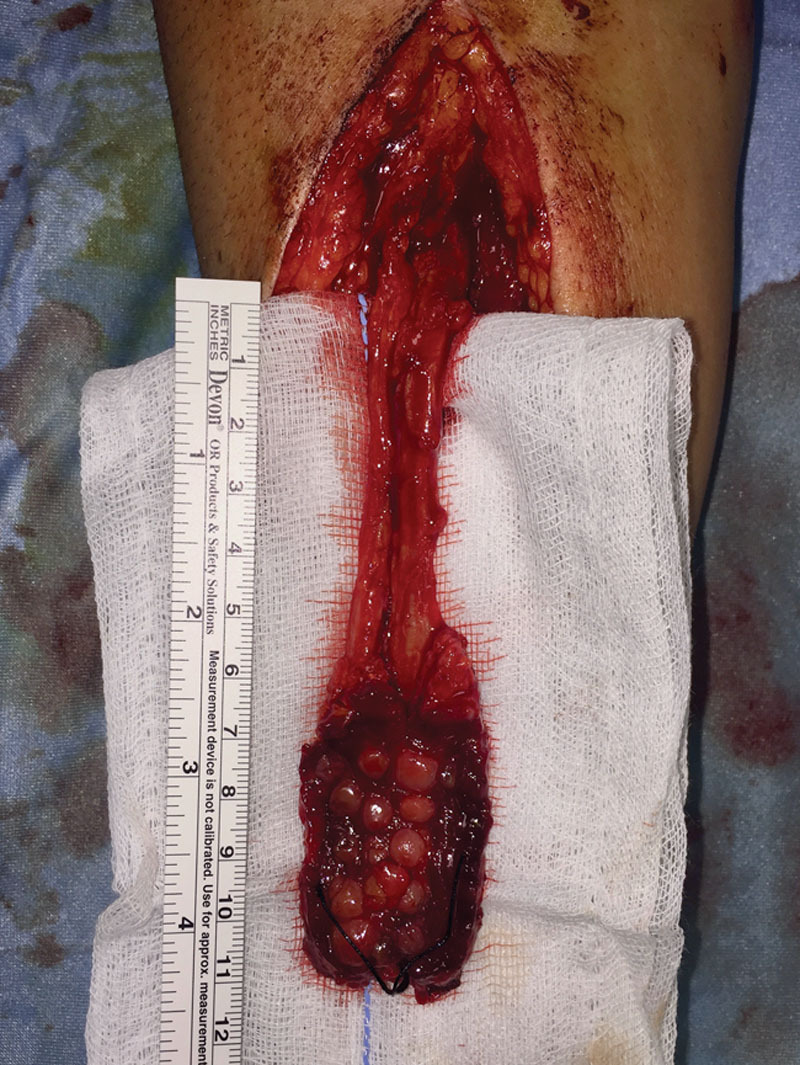
Tongue cancer is the most common malignant neoplasm of the oral cavity. Occurrence in the tip of the tongue (TOT) is rare. We describe a case report of a TOT tumor excision and reconstruction with a prelaminated fasciomucosal radial forearm free flap. A 41-year-old white man was referred to our department for a squamous cell carcinoma of the tip of the tongue. The patient worked as an air traffic control official; therefore, conservation of speech intelligibility, both in Italian and English language, was of paramount importance. A transoral excision of TOT, bilateral selective neck dissection, and reconstruction with prelaminated fasciomucosal radial forearm free flap were performed. Adjuvant radiotherapy was necessary. The patient was completely re-established as an air traffic control officer. Successful tongue reconstruction of smaller defects depends on thinness, pliability of flap, and conservation of tongue mobility. Surgical options for TOT reconstruction are facial artery muscolomucosa flap, Zhao flap, radial forearm free flap, or primary suture. In the authors' opinion, a fasciomucosal prelaminated RFFF offers a series of advantages for TOT reconstruction. The absence of subcutaneous tissue makes the PFRFFF much thinner than fascio-cutaneous flaps. Compared with mucosal loco-regional flaps, prelaminated flaps allow the preservation of oral mucosa lining while providing adequate bulk and reduced scar formation for optimal func- tional recovery. In our case report, the fasciomucosal flap allowed an adequate reconstruction of TOT volume with good functional and aesthetic outcomes. The flap's added bulk and its minimal scar retraction granted free tongue movement and optimal speech intelligibility.
舌癌是口腔中最常见的恶性肿瘤。发生于舌尖(TOT)的情况较为罕见。我们描述了一例采用预分层前臂桡侧游离筋膜黏膜瓣进行舌尖肿瘤切除及重建的病例报告。一名41岁的白人男性因舌尖鳞状细胞癌转诊至我科。该患者为空中交通管制官员;因此,保持意大利语和英语的语音清晰度至关重要。进行了经口舌尖切除术、双侧选择性颈清扫术,并采用预分层前臂桡侧游离筋膜黏膜瓣进行重建。辅助放疗是必要的。患者完全恢复成为一名空中交通管制官员。较小缺损的成功舌重建取决于皮瓣的薄度、柔韧性以及舌活动度的保留。舌尖重建的手术选择包括面动脉肌黏膜瓣、赵瓣、前臂桡侧游离皮瓣或一期缝合。作者认为,预分层筋膜黏膜前臂桡侧游离皮瓣为舌尖重建提供了一系列优势。无皮下组织使得前臂桡侧游离皮瓣比筋膜皮瓣薄得多。与黏膜局部皮瓣相比,预分层皮瓣在提供足够体积并减少瘢痕形成以实现最佳功能恢复的同时,可保留口腔黏膜内衬。在我们的病例报告中,筋膜黏膜瓣实现了舌尖体积的充分重建,功能和美学效果良好。皮瓣增加的体积及其最小的瘢痕回缩使舌能自由活动并实现最佳语音清晰度。