Anderson Cabot Center for Ocean Life, New England Aquarium, Boston, MA, 02110, USA.
School for the Environment, The University of Massachusetts Boston, Boston, MA, 02125, USA.
Sci Rep. 2021 Jan 12;11(1):454. doi: 10.1038/s41598-020-79953-0.
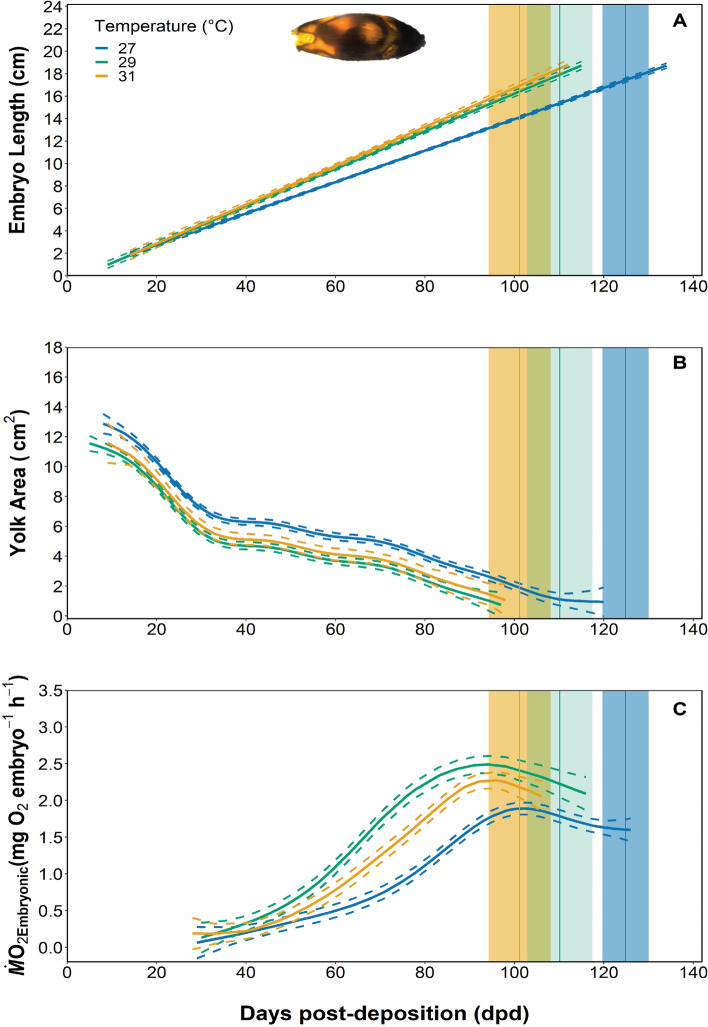
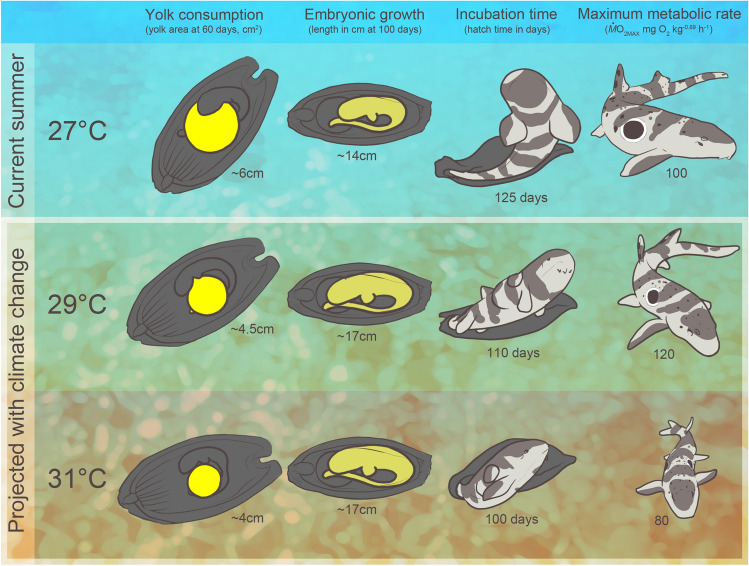
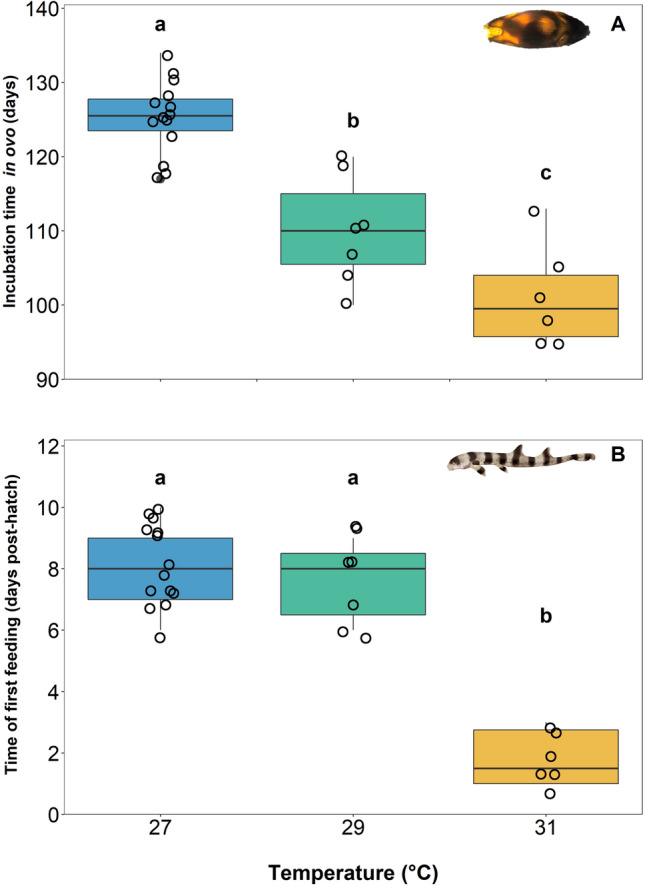
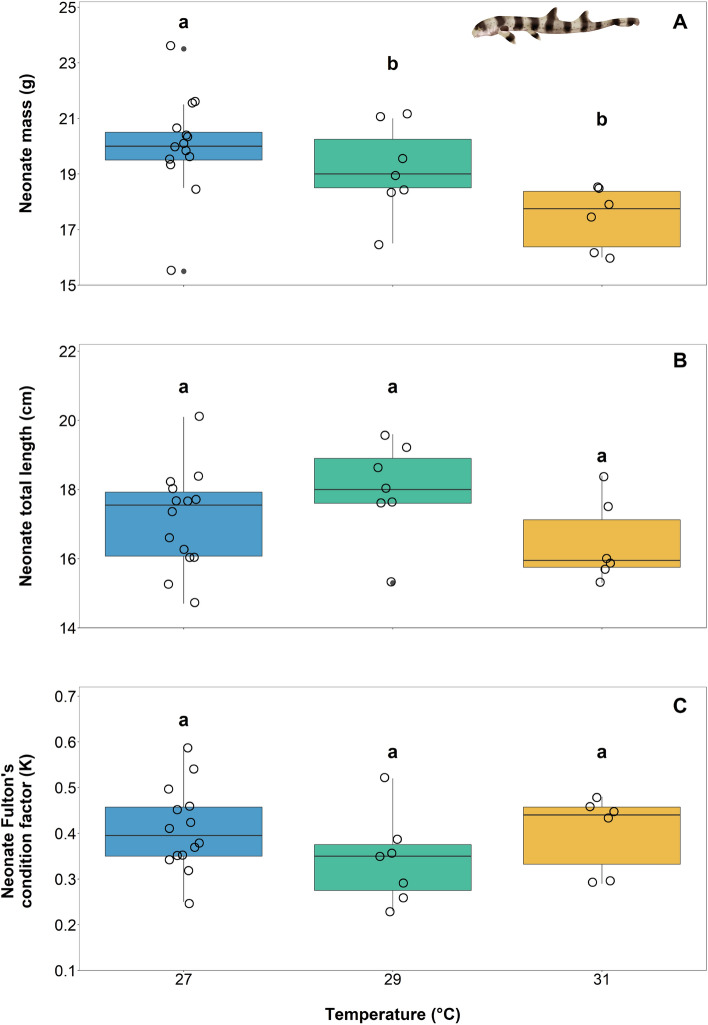
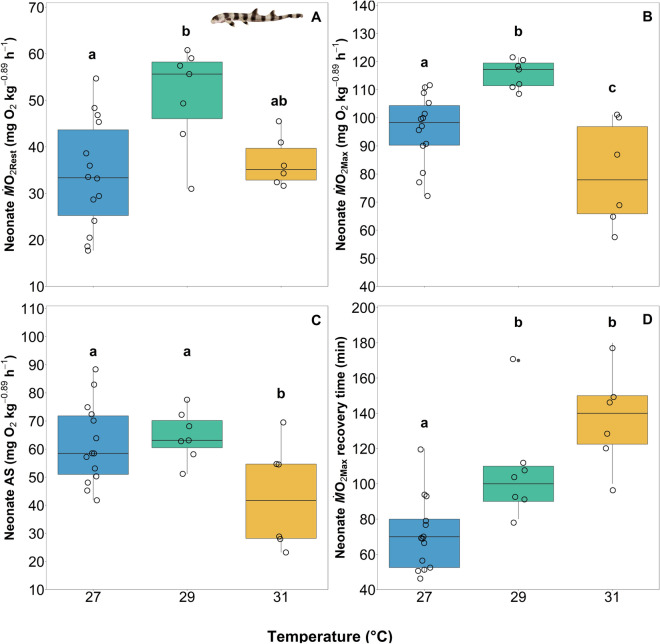
Climate change is affecting thermal regimes globally, and organisms relying on their environment to regulate biological processes face unknown consequences. In ectotherms, temperature affects development rates, body condition, and performance. Embryonic stages may be the most vulnerable life history stages, especially for oviparous species already living at the warm edge of their distribution, as embryos cannot relocate during this developmental window. We reared 27 epaulette shark (Hemiscyllium ocellatum) embryos under average summer conditions (27 °C) or temperatures predicted for the middle and end of the twenty-first century with climate change (i.e., 29 and 31 °C) and tracked growth, development, and metabolic costs both in ovo and upon hatch. Rearing sharks at 31 °C impacted embryonic growth, yolk consumption, and metabolic rates. Upon hatch, 31 °C-reared sharks weighed significantly less than their 27 °C-reared counterparts and exhibited reduced metabolic performance. Many important growth and development traits in this species may peak after 27 °C and start to become negatively impacted nearing 31 °C. We hypothesize that 31 °C approximates the pejus temperature (i.e., temperatures at which performance of a trait begin to decline) for this species, which is alarming, given that this temperature range is well within ocean warming scenarios predicted for this species' distribution over the next century.
气候变化正在影响全球的热环境,依赖环境来调节生物过程的生物面临着未知的后果。在变温动物中,温度会影响发育速度、身体状况和表现。胚胎阶段可能是最脆弱的生命史阶段,尤其是对于已经生活在分布暖端的卵生物种,因为胚胎在这个发育窗口期间无法迁移。我们在平均夏季条件(27°C)或预计在二十一世纪中叶和末期的气候变化条件下(即 29 和 31°C)下饲养了 27 只条纹斑竹鲨(Hemiscyllium ocellatum)胚胎,并跟踪了胚胎在卵内和孵化后的生长、发育和代谢成本。在 31°C 下饲养鲨鱼会影响胚胎的生长、卵黄消耗和代谢率。孵化后,在 31°C 下饲养的鲨鱼体重明显低于在 27°C 下饲养的鲨鱼,并且表现出代谢性能降低。该物种的许多重要生长和发育特征可能在 27°C 后达到峰值,在接近 31°C 时开始受到负面影响。我们假设 31°C 接近该物种的 pejus 温度(即表现开始下降的温度),这令人担忧,因为这个温度范围在该物种分布范围内未来一个世纪预计的海洋变暖情景中很常见。