Department of Health Sciences and Technology, GAIHST, Gachon University, Incheon, 21936, Korea.
Neuroscience Research Institute, Gachon University, Incheon, 21565, Korea.
Mol Brain. 2021 Jan 13;14(1):11. doi: 10.1186/s13041-020-00726-x.
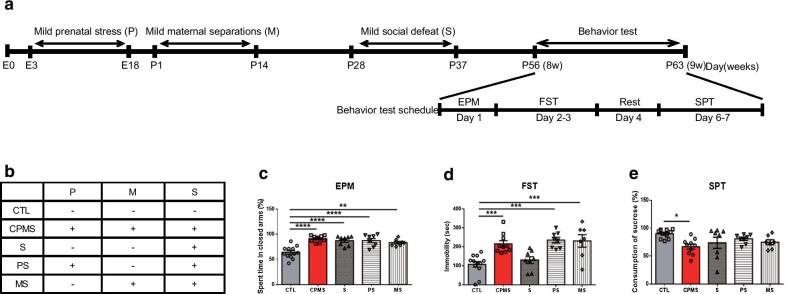
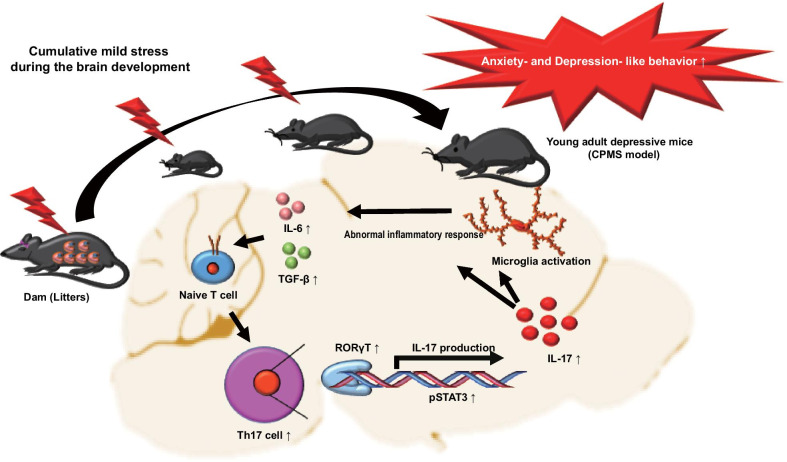
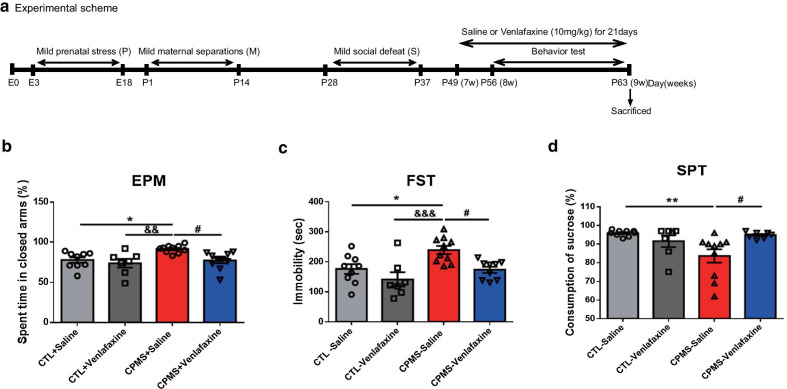
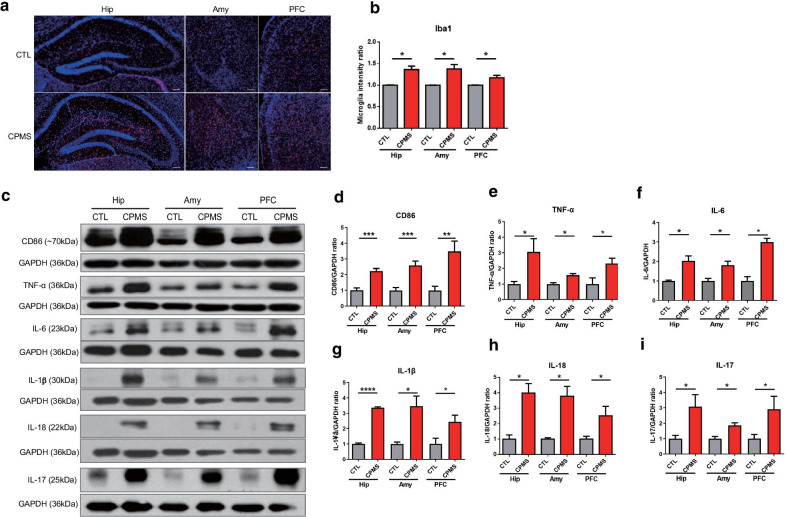
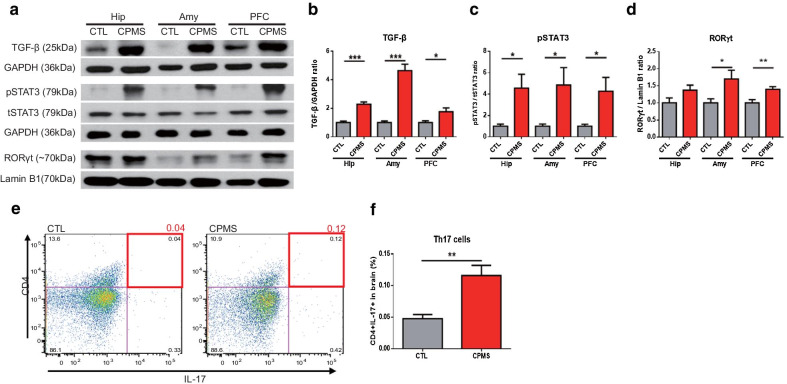
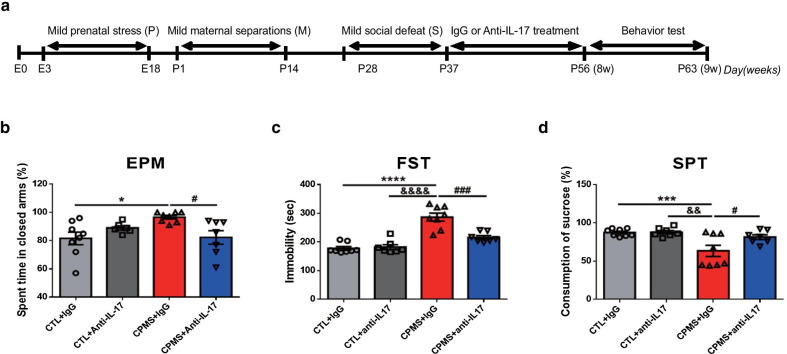
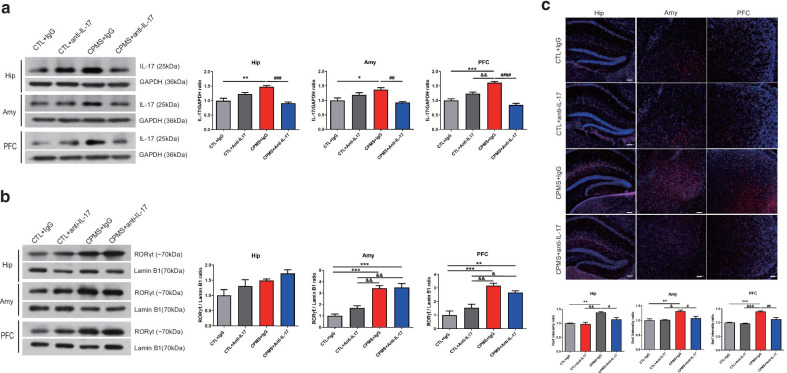
The number of young adult patients with major depression, one of the most common mental disorders, is gradually increasing in modern society. Stressful experiences in early life are considered one of the risk factors for chronic depressive symptoms, along with an abnormal inflammatory response in later life. Although increased inflammatory activity has been identified in patients with depression, the cause of long-lasting depressive states is still unclear. To identify the effects of cumulative mild stress in brain development periods, we generated a young adult depression mouse model exposed to cumulative mild stress (CPMS; cumulative mild prenatal stress, mild maternal separation, and mild social defeat) to mimic early life adversities. CPMS mice exhibited more long-lasting anxiety and depression-like behaviors than groups exposed to single or double combinations of mild stress in young adult age. Using the molecular works, we found that inflammatory cytokines, especially interleukin (IL)-17, upregulated microglial activation in the hippocampus, amygdala, and prefrontal cortex of CPMS mice. In the brains of CPMS mice, we also identified changes in the T helper (Th)-17 cell population as well as differentiation. Finally, anti-IL-17 treatment rescued anxiety and depression-like behavior in CPMS mice. In conclusion, we found that cumulative mild stress promoted long-lasting depressive symptoms in CPMS mice through the upregulation of IL-17. We suggest that the CPMS model may be useful to study young adult depression and expect that IL-17 may be an important therapeutic target for depression in young adults.
在现代社会,越来越多的年轻人患有重度抑郁症,这是最常见的精神障碍之一。早期生活中的应激经历被认为是慢性抑郁症状的风险因素之一,此外还有晚年异常的炎症反应。虽然已经确定抑郁症患者的炎症活性增加,但导致长期抑郁状态的原因仍不清楚。为了确定在大脑发育期累积轻度压力对大脑的影响,我们建立了一个年轻成年抑郁小鼠模型,该模型经历了累积轻度压力(CPMS;累积轻度产前应激、轻度母婴分离和轻度社交挫败),以模拟早期生活中的逆境。与仅经历单一或双重轻度压力的年轻成年组相比,CPMS 小鼠表现出更持久的焦虑和抑郁样行为。通过分子研究,我们发现炎性细胞因子,特别是白细胞介素(IL)-17,在上调 CPMS 小鼠海马体、杏仁核和前额叶皮质中小胶质细胞的激活。在 CPMS 小鼠的大脑中,我们还发现 Th17 细胞群的变化和分化。最后,抗 IL-17 治疗可挽救 CPMS 小鼠的焦虑和抑郁样行为。总之,我们发现 CPMS 通过上调 IL-17 促进了 CPMS 小鼠的长期抑郁症状。我们认为 CPMS 模型可能有助于研究年轻成年抑郁,并且期望 IL-17 可能是年轻成年人抑郁的一个重要治疗靶点。