
用钙结合纳米颗粒控制人类血小板激活。
Controlling human platelet activation with calcium-binding nanoparticles.
作者信息
Cabrera David, Walker Karen, Moise Sandhya, Telling Neil D, Harper Alan G S
机构信息
School of Pharmacy and Bioengineering, Keele University, Guy Hilton Research Centre, Thornburrow Drive, Hartshill, Stoke-on-Trent ST4 7QB, UK.
Central Electron Microscope Unit, School of Life Sciences, Keele University, Newcastle-under-Lyme, Staffordshire, ST5 5BG, UK.
出版信息
Nano Res. 2020 Oct;13(10):2697-2705. doi: 10.1007/s12274-020-2912-8. Epub 2020 Jul 11.
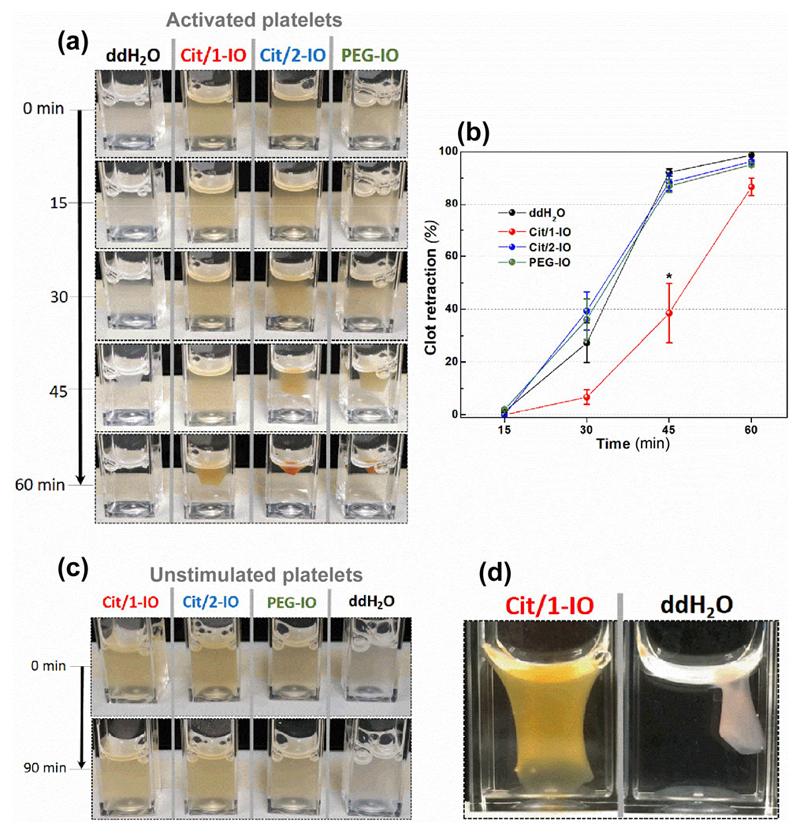
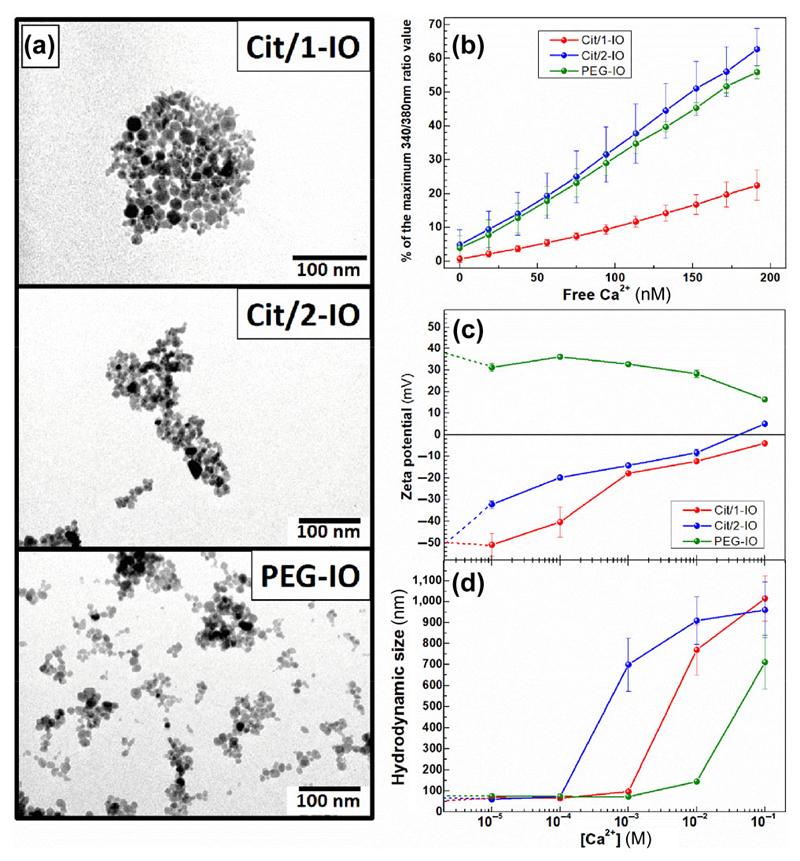
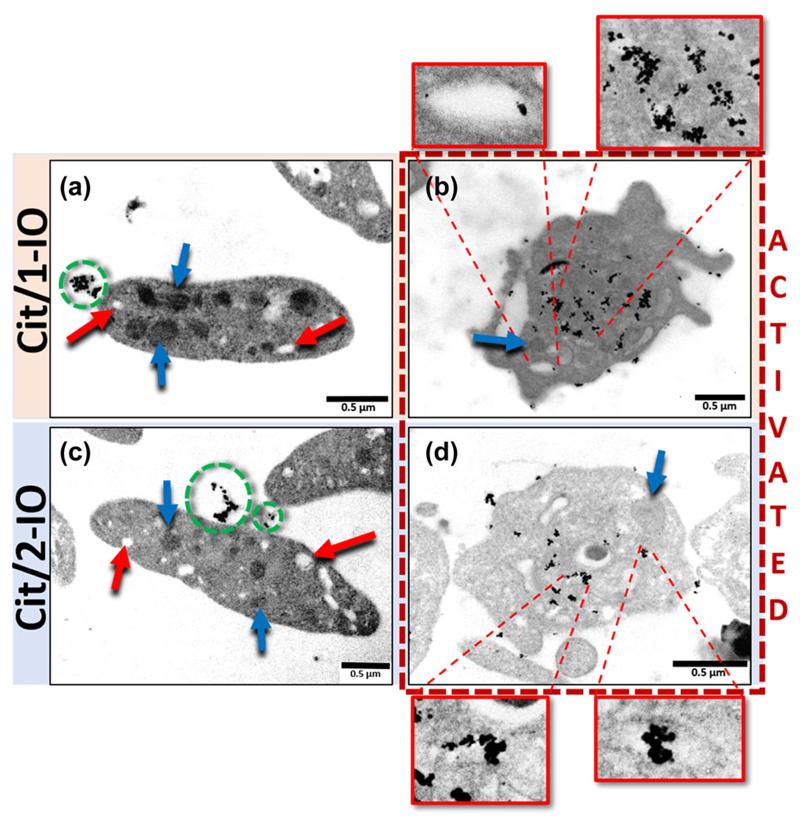
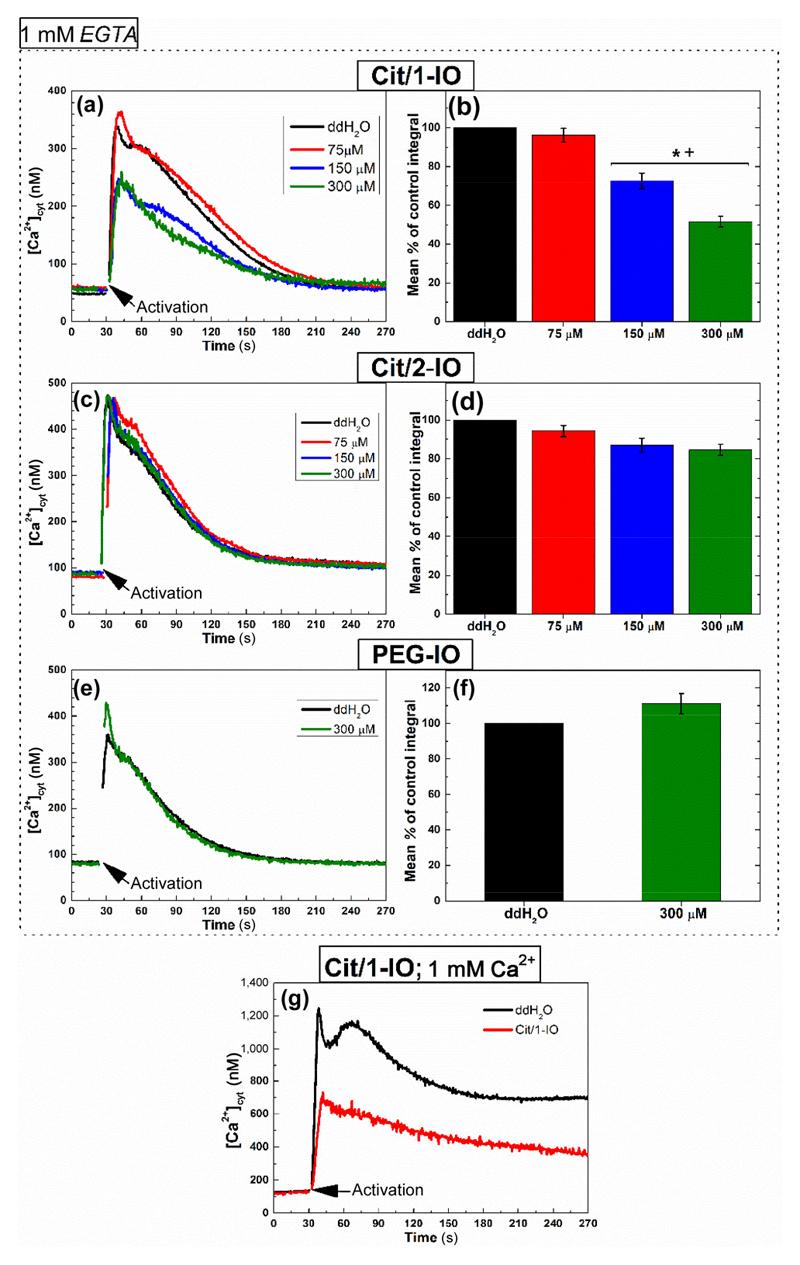
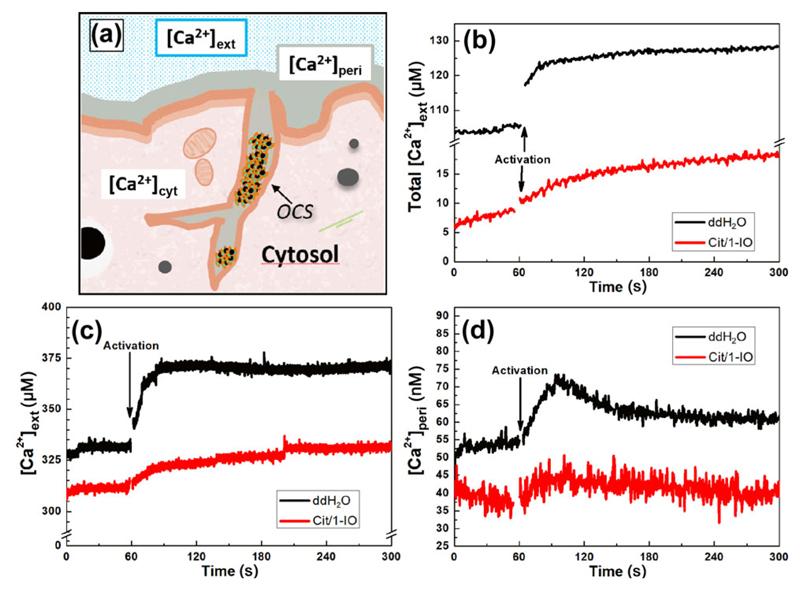
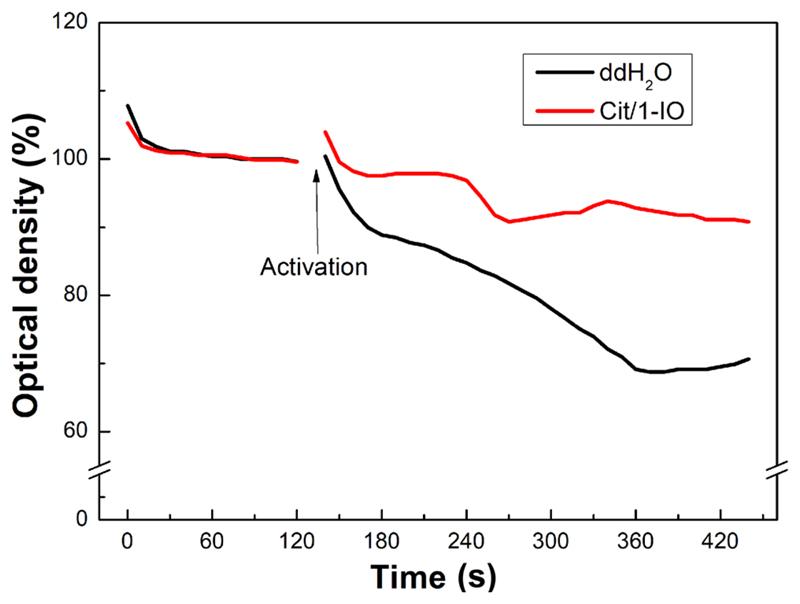
Human platelets aggregate at sites of blood vessel damage in response to a rise in their cytosolic calcium concentration. Controlling these cytosolic calcium rises would provide a method to inhibit platelet activation and prevent the unwanted blood clots that causes heart attack and strokes. Previously we have predicted that calcium accumulation within the lumen of an infolded portion of the platelet plasma membrane called the open canalicular system (OCS) is essential for maintaining this cytosolic calcium rise. Due to its nanometer dimensions of the OCS, it has been difficult to measure or interfere with the predicted luminal calcium accumulation. Here we utilise iron oxide magnetic nanoparticles coated with the known calcium chelator, citrate, to create calcium-binding nanoparticles. These were used to assess whether an OCS calcium store plays a role in controlling the dynamics of human platelet activation and aggregation. We demonstrate that citrate-coated nanoparticles are rapidly and selectively uptaken into the OCS of activated human platelets, where they act to buffer the accumulation of calcium there. Treatment with these calcium-binding nanoparticles reduced thrombin-evoked cytosolic calcium rises, and slowed platelet aggregation and clot retraction in human platelets. In contrast, nanoparticles that cannot bind calcium have no effect. This study demonstrates that the OCS acts as a key source of calcium for maintaining cytosolic calcium rises and accelerating platelet aggregation, and that calcium-binding nanoparticles targeted to the OCS could provide an anti-platelet therapy to treat patients at risk of suffering heart attacks or strokes.
人类血小板会因胞质钙浓度升高而在血管损伤部位聚集。控制这些胞质钙升高将提供一种抑制血小板活化并预防引发心脏病发作和中风的不必要血凝块的方法。此前我们已经预测,在血小板质膜内褶部分称为开放小管系统(OCS)的腔室内钙的积累对于维持这种胞质钙升高至关重要。由于OCS的纳米尺寸,很难测量或干扰预测的腔室钙积累。在这里,我们利用涂有已知钙螯合剂柠檬酸盐的氧化铁磁性纳米颗粒来制备钙结合纳米颗粒。这些纳米颗粒用于评估OCS钙库是否在控制人类血小板活化和聚集的动力学中起作用。我们证明,柠檬酸盐包被的纳米颗粒能迅速且选择性地被活化的人类血小板的OCS摄取,在那里它们起到缓冲钙积累的作用。用这些钙结合纳米颗粒处理可减少凝血酶引起的胞质钙升高,并减缓人类血小板的聚集和凝块回缩。相比之下,不能结合钙的纳米颗粒则没有效果。这项研究表明,OCS作为维持胞质钙升高和加速血小板聚集的关键钙源,并且靶向OCS的钙结合纳米颗粒可为有心脏病发作或中风风险的患者提供抗血小板治疗。
 Zotero 插件