
新冠疫情期间的临床试验:在快速变化的环境中持续学习的共享基础设施。
Clinical trials in a COVID-19 pandemic: Shared infrastructure for continuous learning in a rapidly changing landscape.
机构信息
Quantitative Sciences Unit, Division of Biomedical Informatics Research, Department of Medicine, Stanford University School of Medicine, Palo Alto, CA, USA.
Sean N. Parker Center for Allergy and Asthma Research, Department of Medicine, Stanford University School of Medicine, Stanford, CA, USA.
出版信息
Clin Trials. 2021 Jun;18(3):324-334. doi: 10.1177/1740774520988298. Epub 2021 Feb 3.
BACKGROUND
Clinical trials, conducted efficiently and with the utmost integrity, are a key component in identifying effective vaccines, therapies, and other interventions urgently needed to solve the COVID-19 crisis. Yet launching and implementing trials with the rigor necessary to produce convincing results is a complicated and time-consuming process. Balancing rigor and efficiency involves relying on designs that employ flexible features to respond to a fast-changing landscape, measuring valid endpoints that result in translational actions and disseminating findings in a timely manner. We describe the challenges involved in creating infrastructure with potential utility for shared learning.
METHODS
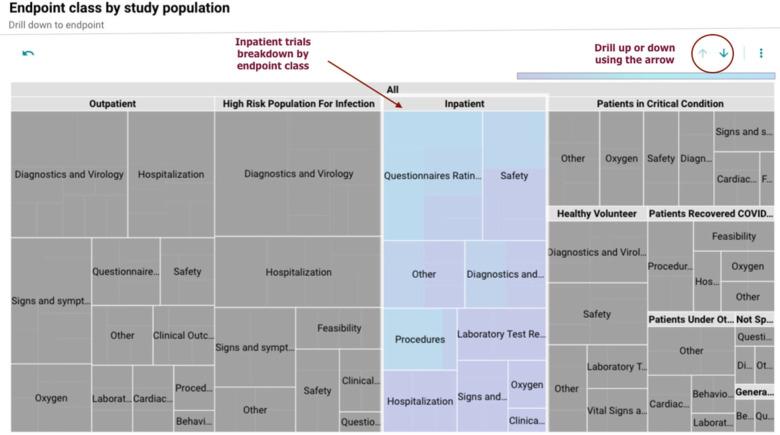
We have established a shared infrastructure that borrows strength across multiple trials. The infrastructure includes an endpoint registry to aid in selecting appropriate endpoints, a registry to facilitate establishing a Data & Safety Monitoring Board, common data collection instruments, a COVID-19 dedicated design and analysis team, and a pragmatic platform protocol, among other elements.
RESULTS
The authors have relied on the shared infrastructure for six clinical trials for which they serve as the Data Coordinating Center and have a design and analysis team comprising 15 members who are dedicated to COVID-19. The authors established a pragmatic platform to simultaneously investigate multiple treatments for the outpatient with adaptive features to add or drop treatment arms.
CONCLUSION
The shared infrastructure provides appealing opportunities to evaluate disease in a more robust manner with fewer resources and is especially valued during a pandemic where efficiency in time and resources is crucial. The most important element of the shared infrastructure is the pragmatic platform. While it may be the most challenging of the elements to establish, it may provide the greatest benefit to both patients and researchers.
背景
高效且保持最高诚信度进行临床试验是确定有效疫苗、疗法和其他干预措施的关键组成部分,这些措施是解决 COVID-19 危机所急需的。然而,开展和实施具有产生令人信服结果所需严格性的试验是一个复杂且耗时的过程。在平衡严格性和效率时,需要依赖采用灵活特性来应对快速变化的情况的设计,衡量产生转化行动的有效终点,并及时传播研究结果。我们描述了创建具有共享学习潜力的基础设施所涉及的挑战。
方法
我们已经建立了一个共享的基础设施,可以跨多个试验借用力量。该基础设施包括一个终点登记处,以帮助选择适当的终点;一个登记处,以方便建立数据和安全监测委员会;共同的数据收集工具;一个专门用于 COVID-19 的设计和分析团队;以及一个实用的平台协议等要素。
结果
作者依靠共享基础设施开展了六项临床试验,他们担任数据协调中心,并组建了一个由 15 名成员组成的设计和分析团队,专门研究 COVID-19。作者建立了一个实用的平台,可以同时对门诊患者的多种治疗方法进行调查,并具有自适应特性,可以添加或删除治疗臂。
结论
共享基础设施提供了有吸引力的机会,可以更有效地评估疾病,所需资源更少,在时间和资源效率至关重要的大流行期间尤其有价值。共享基础设施最重要的元素是实用平台。虽然它可能是建立起来最具挑战性的元素之一,但它可能会为患者和研究人员带来最大的利益。



 Zotero 插件