Jeong Jae Heon, Yun Jae Won, Kim Ha Young, Heo Chan Yeong, Lee Sejoon
Integrated Major in Innovative Medical Science, College of Medicine, Seoul National University, Seoul 08826, Korea.
Interdisciplinary Program for Bioengineering, College of Engineering, Seoul National University, Seoul 08826, Korea.
J Clin Med. 2021 Feb 4;10(4):582. doi: 10.3390/jcm10040582.
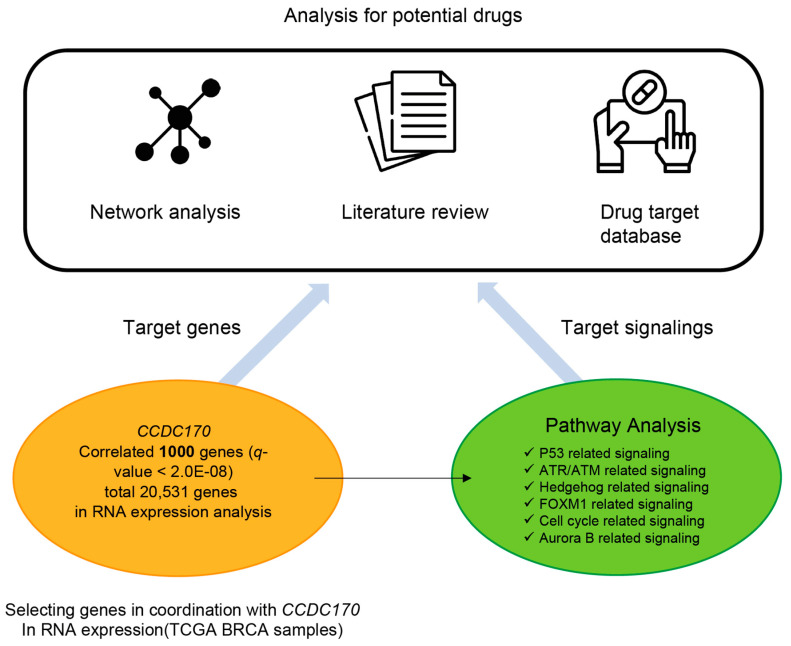
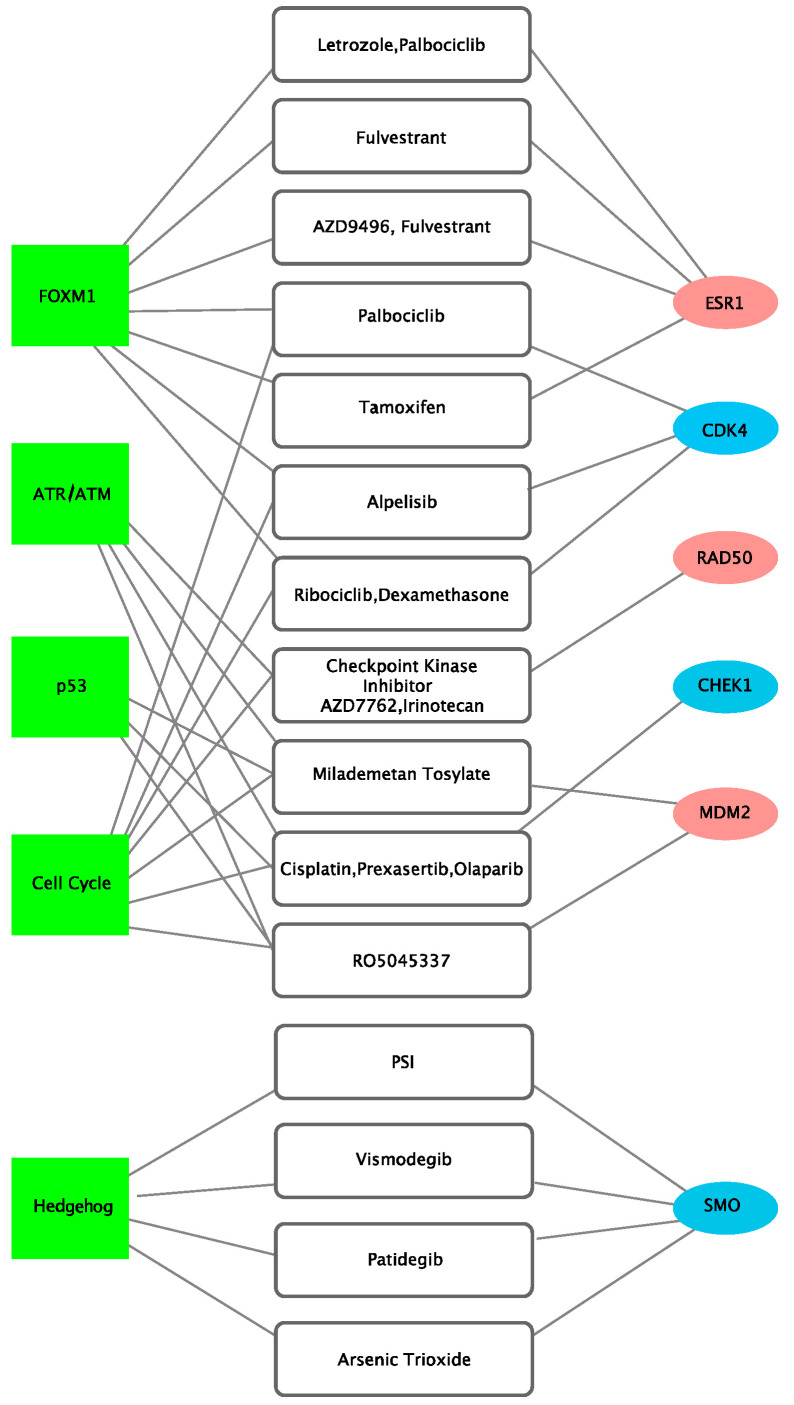
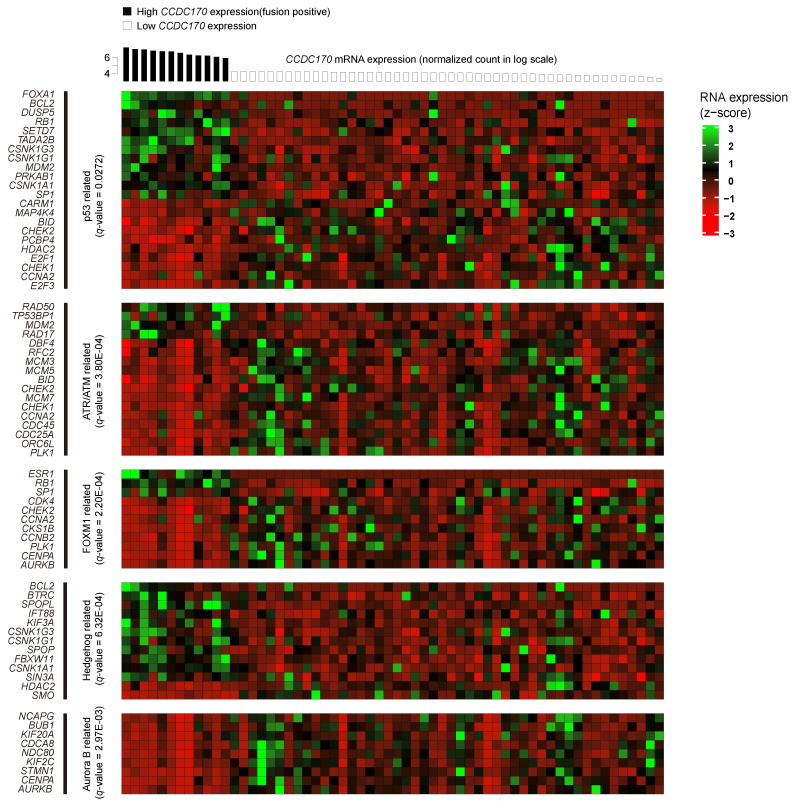
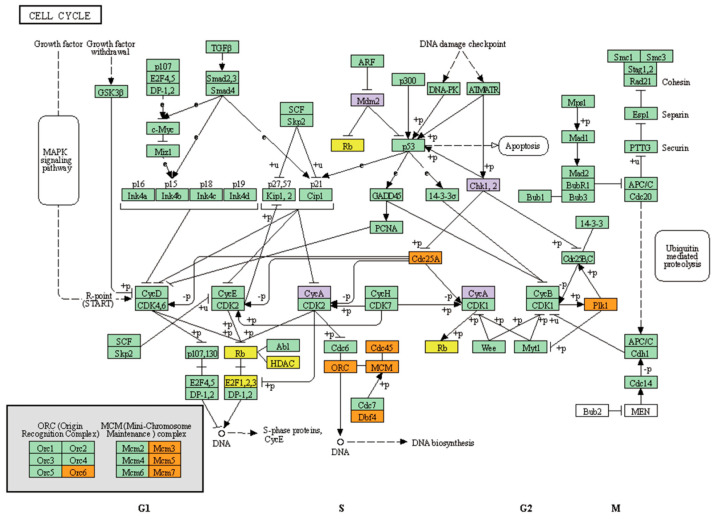
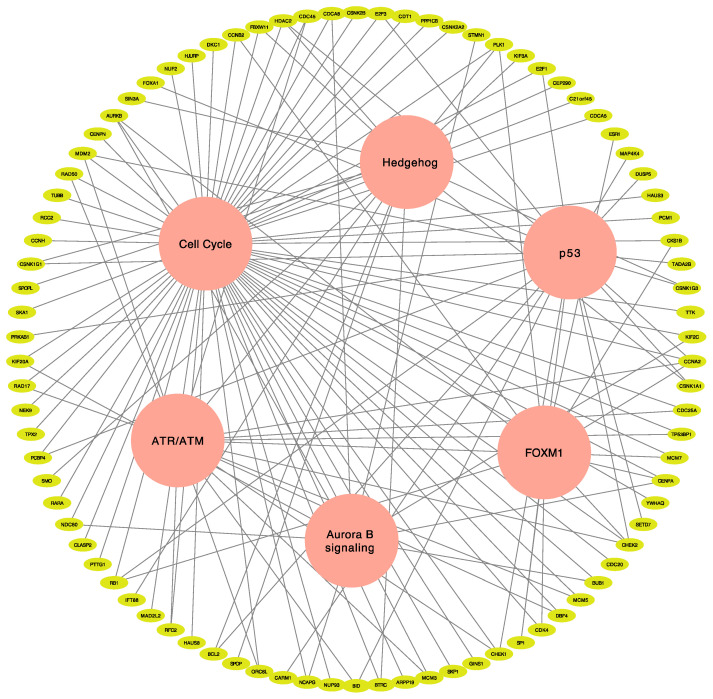
Among the various types of breast cancer, the luminal B subtype is the most common in young women, and (E:C) fusion is the most frequent oncogenic fusion driver of the luminal B subtype. Nevertheless, treatments targeting E:C fusion has not been well established yet. Hence, the aim of this study is to investigate potential therapies targeting E:C fusion based on systematic bioinformatical analysis of the Cancer Genome Atlas (TCGA) data. One thousand related genes were extracted using transcriptome analysis, and major signaling pathways associated with breast cancer were identified with over-representation analysis. Then, we conducted drug-target network analysis based on the OncoKB and CIViC databases, and finally selected potentially applicable drug candidates. Six major cancer-related signaling pathways (p53, ATR/ATM, FOXM1, hedgehog, cell cycle, and Aurora B) were significantly altered in E:C fusion-positive cases of breast cancer. Further investigation revealed that nine genes (, , , , , , , , and ) in coordination with E:C fusion were found to be common denominators in three or more of these pathways, thereby making them promising gene biomarkers for target therapy. Among the 21 putative actionable drugs inferred by drug-target network analysis, palbociclib, alpelisib, ribociclib, dexamethasone, checkpoint kinase inhibitor AXD 7762, irinotecan, milademetan tosylate, R05045337, cisplatin, prexasertib, and olaparib were considered promising drug candidates targeting genes involved in at least two E:C fusion-related pathways.
在各种类型的乳腺癌中,管腔B亚型在年轻女性中最为常见,而(E:C)融合是管腔B亚型最常见的致癌融合驱动因素。然而,针对E:C融合的治疗方法尚未得到很好的确立。因此,本研究的目的是基于对癌症基因组图谱(TCGA)数据的系统生物信息学分析,研究针对E:C融合的潜在疗法。通过转录组分析提取了1000个相关基因,并通过过表达分析确定了与乳腺癌相关的主要信号通路。然后,我们基于OncoKB和CIViC数据库进行了药物-靶点网络分析,最终选择了潜在适用的候选药物。在E:C融合阳性的乳腺癌病例中,六个主要的癌症相关信号通路(p53、ATR/ATM、FOXM1、刺猬信号通路、细胞周期和极光激酶B)发生了显著改变。进一步研究发现,九个基因(、、、、、、、、和)与E:C融合协同作用,在这些通路中的三个或更多通路中是共同特征,因此使其成为有前景的靶向治疗基因生物标志物。在药物-靶点网络分析推断的21种假定可操作药物中,帕博西尼、阿培利司、瑞博西尼、地塞米松、检查点激酶抑制剂AXD 7762、伊立替康、甲苯磺酸米拉地坦、R05045337、顺铂、普雷西替尼和奥拉帕利被认为是针对至少两条E:C融合相关通路中涉及基因的有前景的候选药物。