Maekawa Naoya, Konnai Satoru, Nishimura Maki, Kagawa Yumiko, Takagi Satoshi, Hosoya Kenji, Ohta Hiroshi, Kim Sangho, Okagawa Tomohiro, Izumi Yusuke, Deguchi Tatsuya, Kato Yukinari, Yamamoto Satoshi, Yamamoto Keiichi, Toda Mikihiro, Nakajima Chie, Suzuki Yasuhiko, Murata Shiro, Ohashi Kazuhiko
Department of Advanced Pharmaceutics, Faculty of Veterinary Medicine, Hokkaido University, Sapporo, Japan.
Department of Disease Control, Faculty of Veterinary Medicine, Hokkaido University, Sapporo, Japan.
NPJ Precis Oncol. 2021 Feb 12;5(1):10. doi: 10.1038/s41698-021-00147-6.
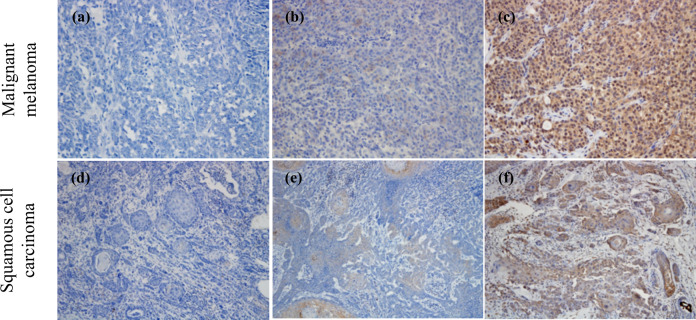
Immunotherapy targeting programmed cell death 1 (PD-1) and PD-ligand 1 (PD-L1) represents promising treatments for human cancers. Our previous studies demonstrated PD-L1 overexpression in some canine cancers, and suggested the therapeutic potential of a canine chimeric anti-PD-L1 monoclonal antibody (c4G12). However, such evidence is scarce, limiting the clinical application in dogs. In the present report, canine PD-L1 expression was assessed in various cancer types, using a new anti-PD-L1 mAb, 6C11-3A11, and the safety and efficacy of c4G12 were explored in 29 dogs with pulmonary metastatic oral malignant melanoma (OMM). PD-L1 expression was detected in most canine malignant cancers including OMM, and survival was significantly longer in the c4G12 treatment group (median 143 days) when compared to a historical control group (n = 15, median 54 days). In dogs with measurable disease (n = 13), one dog (7.7%) experienced a complete response. Treatment-related adverse events of any grade were observed in 15 dogs (51.7%). Here we show that PD-L1 is a promising target for cancer immunotherapy in dogs, and dogs could be a useful large animal model for human cancer research.
靶向程序性细胞死亡蛋白1(PD-1)和程序性死亡配体1(PD-L1)的免疫疗法是人类癌症很有前景的治疗方法。我们之前的研究表明,PD-L1在一些犬类癌症中过表达,并提示犬嵌合抗PD-L1单克隆抗体(c4G12)具有治疗潜力。然而,此类证据较少,限制了其在犬类中的临床应用。在本报告中,使用一种新的抗PD-L1单克隆抗体6C11-3A11评估了犬类多种癌症类型中PD-L1的表达情况,并在29只患有肺转移口腔恶性黑色素瘤(OMM)的犬中探索了c4G12的安全性和疗效。在包括OMM在内的大多数犬类恶性癌症中均检测到PD-L1表达,与历史对照组(n = 15,中位数54天)相比,c4G12治疗组的生存期显著更长(中位数143天)。在疾病可测量的犬(n = 13)中,1只犬(7.7%)出现完全缓解。15只犬(51.7%)观察到任何级别的治疗相关不良事件。在此我们表明,PD-L1是犬类癌症免疫治疗的一个有前景的靶点,并且犬类可能是人类癌症研究中有用的大型动物模型。