National Organization for Research and Control of Biologicals (NORCB), 51 Wezaret El Zeraa St, El-Agouza-Giza, Dokki, Egyptian Drug Authority, P.O Box: 354, Dokki, Egypt.
Department of Oncology, National Cancer Institute, Cairo University, Kornish El-Nile - Fom El- Khaleg, Cairo, 11796, Egypt.
BMC Immunol. 2021 Feb 19;22(1):15. doi: 10.1186/s12865-021-00405-z.
Immunogenicity is a major challenge in drug development and patient care. Clinicians and regulators are familiar with immunogenicity concerns of monoclonal antibody (mAb) therapeutics, growth factors and enzyme replacements. Although most small therapeutic molecules are unlikely to trigger undesirable immunogenic responses against themselves upon their administration, the biological therapeutic agents are likely to induce such kind of immunogenicity. This imparts a problem that has to be considered upon judging their risk-benefit ratio. In this article, we tested the immunogenicity developed in patients' sera due to the use of trastuzumab and that developed in laboratory animals injected with this recombinant humanized IgG1 monoclonal antibody.
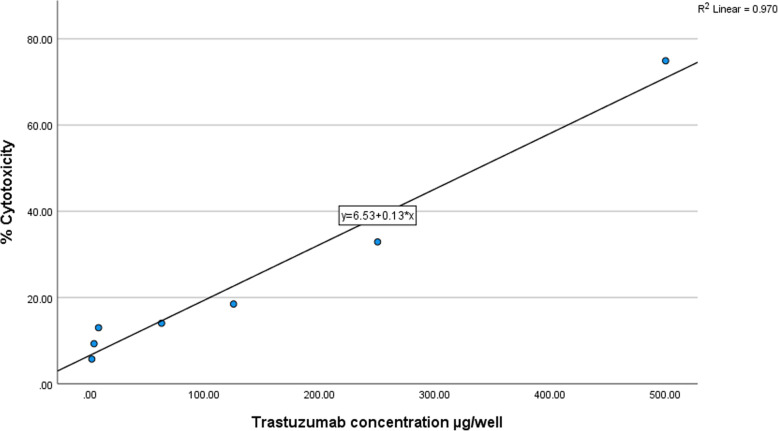
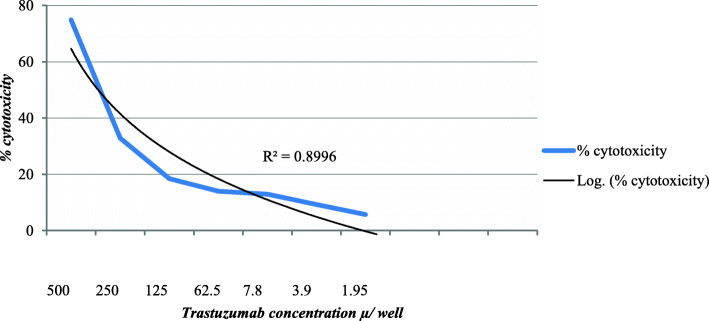
We studied trastuzumab immunogenicity by: I in vitro detection of anti-trastuzumab antibody (Ab) levels in patient's serum samples withdrawn at different points during trastuzumab treatment course; I.1 using an Affinity Capture Elution (ACE) assay, the assay is both sensitive and highly tolerant to free drug; I.2 using MTT cytotoxicity method against MCF-7 cell line as confirmatory method used in sample showed high level of anti-trastuzumab Ab and to determine neutralizing activity of the anti-trastuzumab Ab. II in vivo immunogenicity testing of trastuzumab in lab animals.
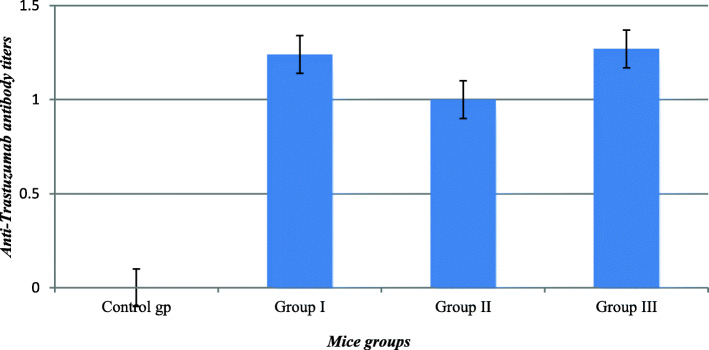
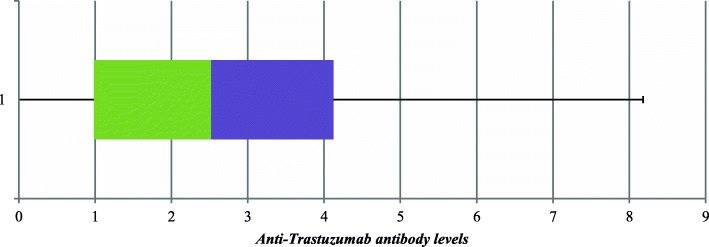
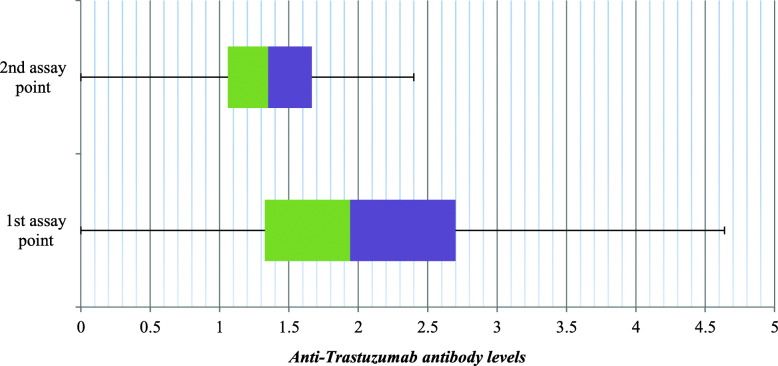
In vitro analysis of patients' sera for antibodies developed against trastuzumab revealed that this monoclonal antibody has low immunogenicity since most samples showed low levels of anti-trastuzumab antibodies that decreased progressively along the treatment course. Only 1% of samples showed high levels of anti-trastuzumab antibodies which might affect treatment course. In vivo immunogenicity testing in mice showed also low immunogenicity of trastuzumab that could support the in vitro clinical assessment applied in our study.
The study gives an evidence for the low trastuzumab immunogenicity when assessed in Egyptian patients under treatment with this biological therapeutic agent. This supports its prescription and continuous use across the approved indications as biological therapeutic agent.
免疫原性是药物开发和患者护理中的主要挑战。临床医生和监管机构熟悉单克隆抗体(mAb)治疗药物、生长因子和酶替代物的免疫原性问题。虽然大多数小分子治疗药物在给药时不太可能引发针对自身的不良免疫原性反应,但生物治疗剂很可能会引起这种免疫原性。这带来了一个问题,即在判断其风险效益比时必须考虑到这一点。在本文中,我们测试了由于使用曲妥珠单抗而在患者血清中产生的免疫原性,以及在注射这种重组人源化 IgG1 单克隆抗体的实验动物中产生的免疫原性。
我们通过以下方法研究曲妥珠单抗的免疫原性:I. 在曲妥珠单抗治疗过程中不同时间点从患者血清样本中检测抗曲妥珠单抗抗体(Ab)水平;I.1 使用亲和捕获洗脱(ACE)测定法,该测定法既敏感又对游离药物高度耐受;I.2 使用 MTT 细胞毒性法对 MCF-7 细胞系作为确证方法,用于在样本中显示高水平抗曲妥珠单抗 Ab 的情况下,确定抗曲妥珠单抗 Ab 的中和活性。II. 在实验动物中进行曲妥珠单抗的体内免疫原性测试。
对患者血清中针对曲妥珠单抗产生的抗体进行的体外分析表明,这种单克隆抗体的免疫原性较低,因为大多数样本显示出低水平的抗曲妥珠单抗抗体,并且随着治疗过程的进行而逐渐降低。只有 1%的样本显示出高水平的抗曲妥珠单抗抗体,这可能会影响治疗过程。在小鼠中的体内免疫原性测试也表明曲妥珠单抗的免疫原性较低,这可以支持我们在研究中应用的体外临床评估。
该研究为在接受这种生物治疗剂治疗的埃及患者中评估曲妥珠单抗的低免疫原性提供了证据。这支持其在批准的适应症范围内作为生物治疗剂的处方和连续使用。