Department of General Surgery, Ruijin Hospital, Shanghai Jiao Tong University School of Medicine, Shanghai 200001, P.R. China.
Department of PET/CT Center, Shanxi Provincial Cancer Hospital, Taiyuan, Shanxi 030001, P.R. China.
Oncol Rep. 2021 Apr;45(4). doi: 10.3892/or.2021.7983. Epub 2021 Mar 2.
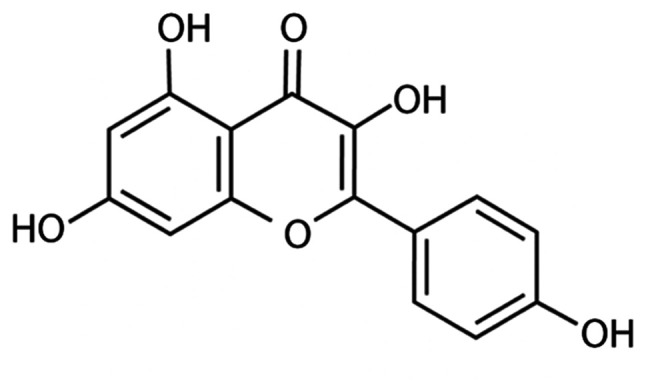
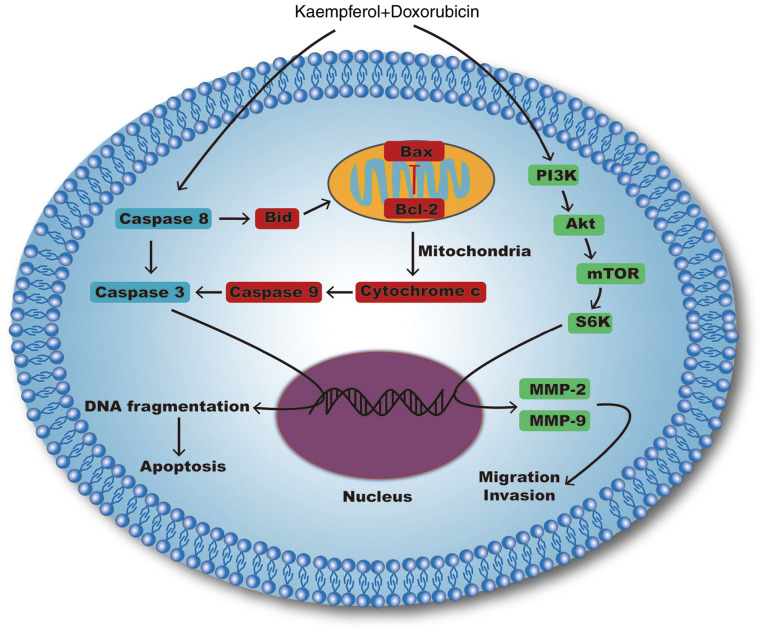
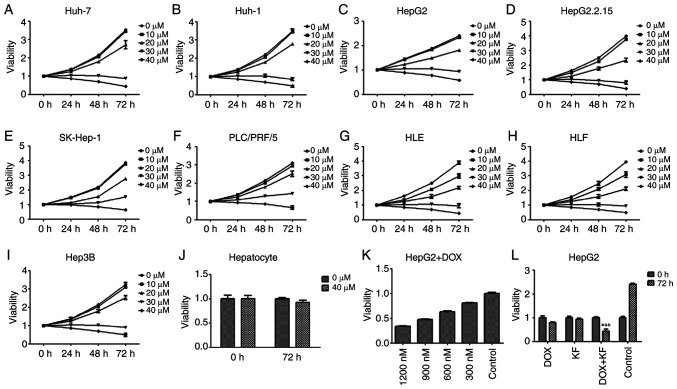
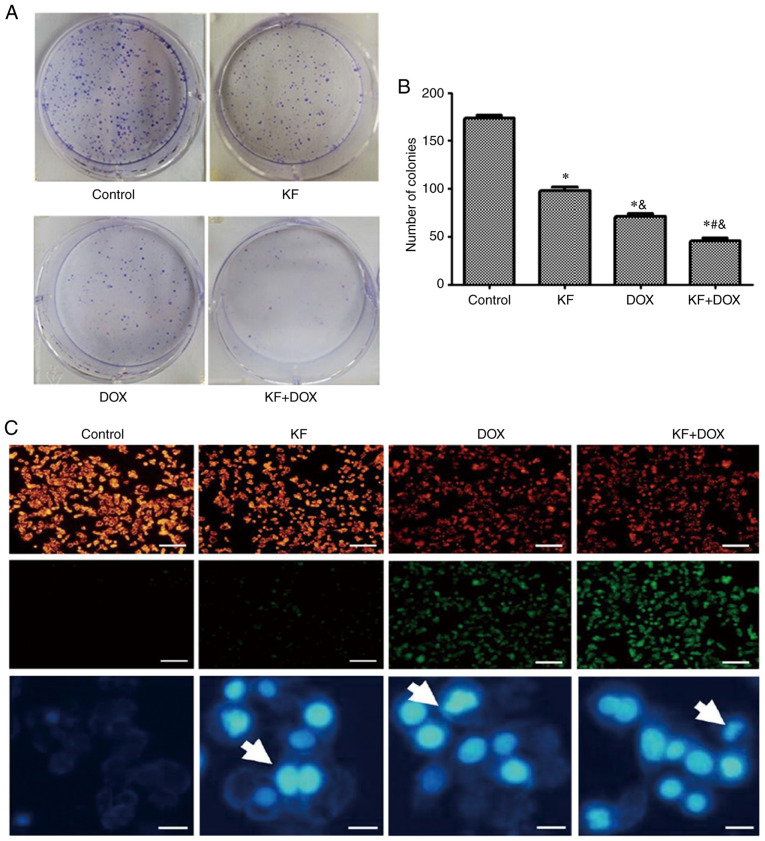
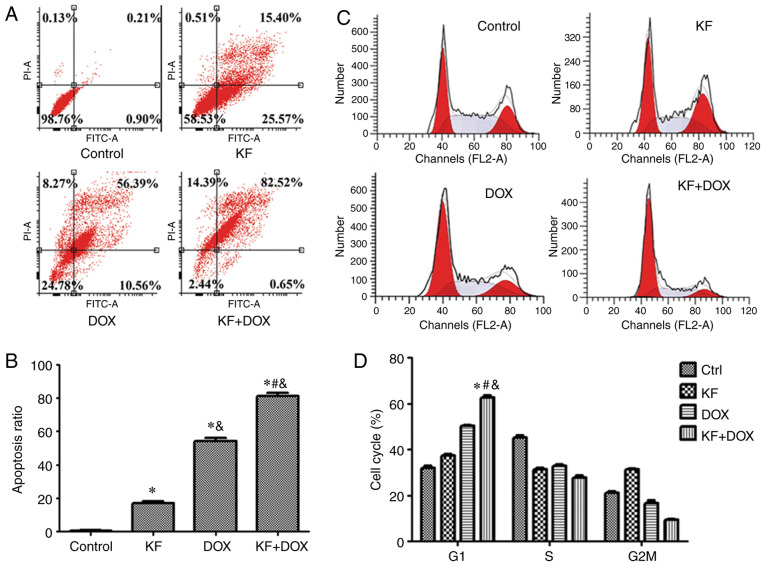
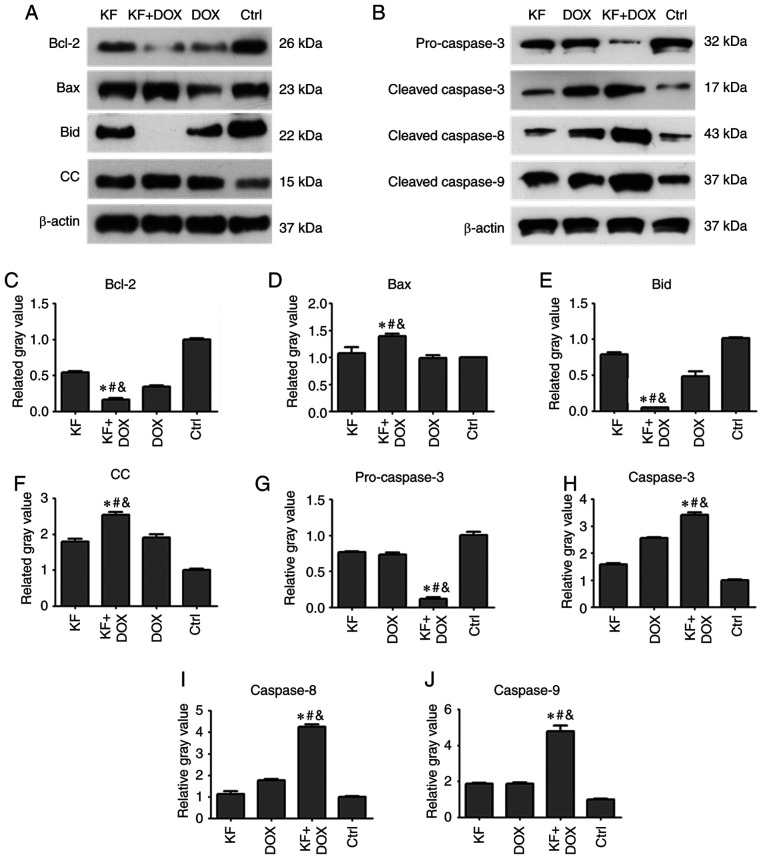
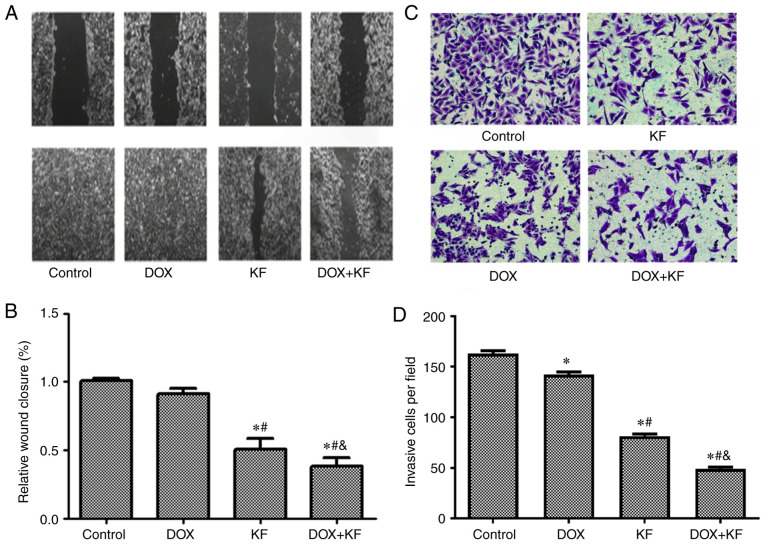
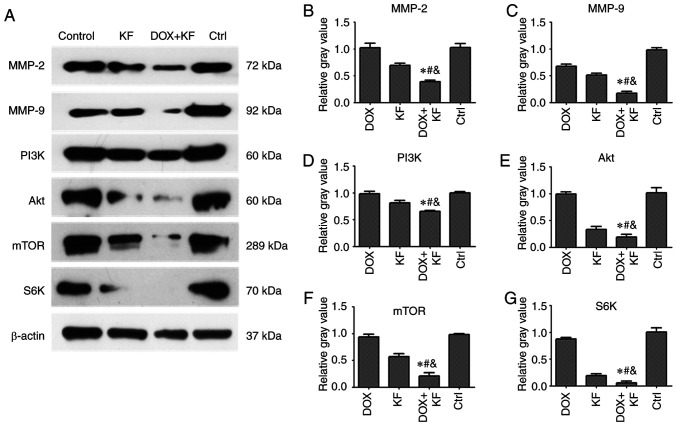
Kaempferol (KF), a flavonoid compound isolated from herbal medicines, has been reported to play a significant role in inhibiting certain types of cancer. Although recent studies reported that KF exerted inhibitive activity on liver cancer, they failed to elucidate the signaling pathways and synergistic effects in combination with chemotherapeutic drugs currently in use in the clinical setting. In the present study, the signaling pathways and synergistic effects of KF in liver cancer cells were investigated. Nine liver cancer cell lines were used to assess the inhibitive activity and synergistic effects of KF. Cellular behavioral experiments, such as viability, colony formation, cell cycle arrest, apoptotic, wound healing, and Transwell assays were used to assess the effects of KF on the proliferation, apoptosis, migration, and invasion of liver cancer cells. Western blotting was performed to validate the key signaling pathway elements underlying those cellular behaviors. KF exhibited inhibitory effects on nine liver cancer cell lines in time‑ and dose‑dependent manners and was mostly nontoxic to the normal hepatocyte cells. The combination of KF and doxorubicin revealed a stronger inhibitive effect on the viability of liver cancer cells. Combination therapy also revealed higher suppressive effects on colony formation, cell cycle progression, survival, DNA damage response, and mitochondrial function. By western blotting assay, mitochondrial and caspase signaling pathways were determined to be involved in proliferation inhibition. In wound healing and Transwell invasion assays, combination therapy also exhibited more robust inhibitory activity in blocking the migration and invasion of liver cancer cells. PI3K/mTOR/MMP protein pathways were also revealed to be related to cell migration inhibition. KF alone exhibited an inhibitory effect on proliferation, migration, and invasion of liver cancer cells, and its synergistic effects revealed stronger inhibitory activities. The present data indicated that KF is a promising candidate as a complementary medicine to conventional chemotherapeutic drugs.
山奈酚(KF)是一种从草药中分离出来的类黄酮化合物,已被报道在抑制某些类型的癌症方面发挥重要作用。尽管最近的研究报道 KF 对肝癌具有抑制活性,但它们未能阐明在临床环境中目前使用的化疗药物联合使用时的信号通路和协同作用。在本研究中,研究了 KF 在肝癌细胞中的信号通路和协同作用。使用 9 种肝癌细胞系评估 KF 的抑制活性和协同作用。细胞行为实验,如活力、集落形成、细胞周期停滞、凋亡、划痕愈合和 Transwell 测定,用于评估 KF 对肝癌细胞增殖、凋亡、迁移和侵袭的影响。进行 Western blot 以验证这些细胞行为背后的关键信号通路元素。KF 以时间和剂量依赖的方式对 9 种肝癌细胞系表现出抑制作用,对正常肝细胞的毒性大多较小。KF 与多柔比星的联合使用对肝癌细胞活力表现出更强的抑制作用。联合治疗还对集落形成、细胞周期进展、存活、DNA 损伤反应和线粒体功能表现出更高的抑制作用。通过 Western blot 测定,确定线粒体和半胱氨酸蛋白酶信号通路参与增殖抑制。在划痕愈合和 Transwell 侵袭测定中,联合治疗在阻止肝癌细胞迁移和侵袭方面也表现出更强的抑制活性。PI3K/mTOR/MMP 蛋白通路也与细胞迁移抑制有关。KF 单独对肝癌细胞的增殖、迁移和侵袭具有抑制作用,其协同作用显示出更强的抑制活性。本数据表明 KF 是一种有前途的候选药物,可作为传统化疗药物的补充药物。