Institute for Nanophotonics Göttingen e.V., Optical Nanoscopy, Hans-Adolf-Krebs Weg 1, 37077, Göttingen, Germany.
Abberior GmbH, Hans-Adolf-Krebs Weg 1, 37077, Göttingen, Germany.
Sci Rep. 2021 Mar 26;11(1):6991. doi: 10.1038/s41598-021-86460-3.
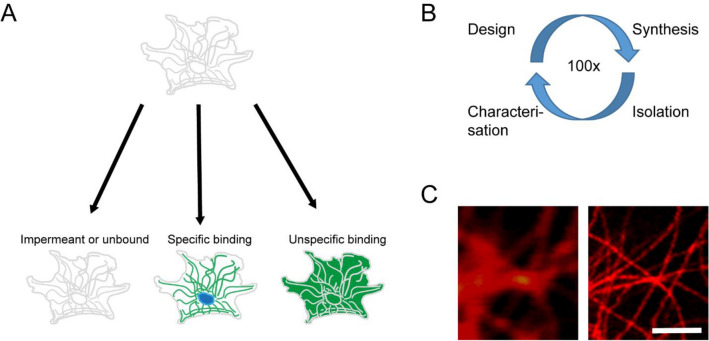
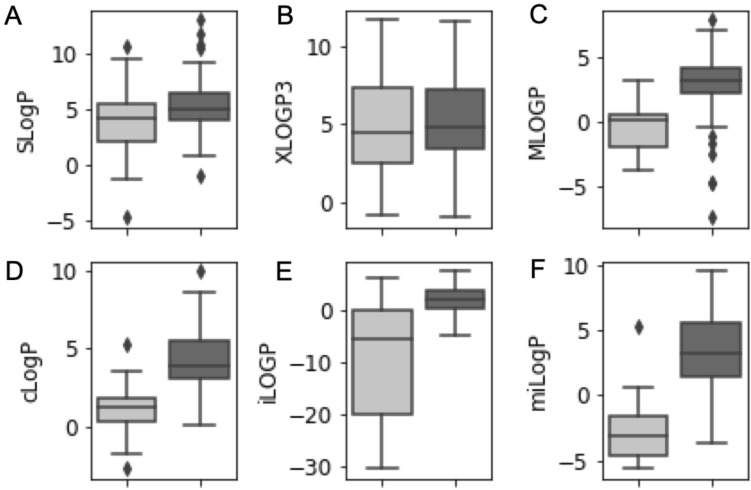
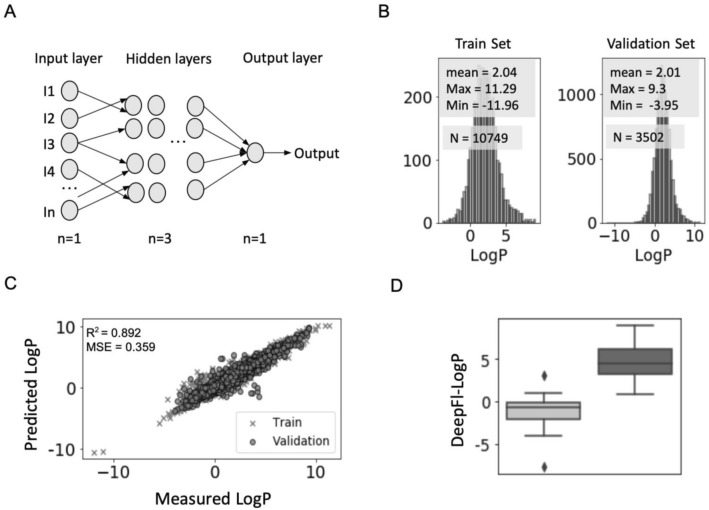
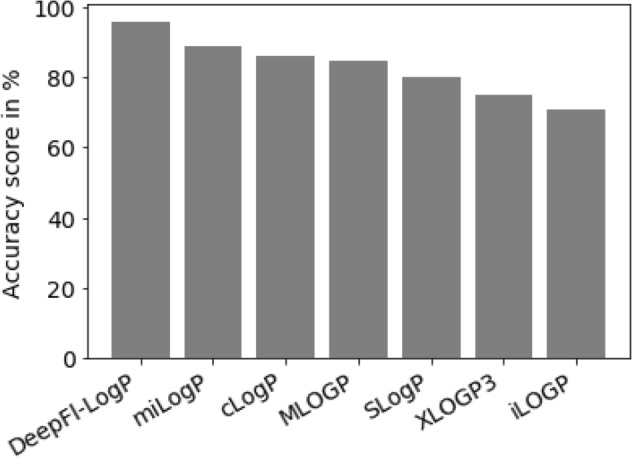
Light microscopy has become an indispensable tool for the life sciences, as it enables the rapid acquisition of three-dimensional images from the interior of living cells/tissues. Over the last decades, super-resolution light microscopy techniques have been developed, which allow a resolution up to an order of magnitude higher than that of conventional light microscopy. Those techniques require labelling of cellular structures with fluorescent probes exhibiting specific properties, which are supplied from outside and therefore have to surpass cell membranes. Currently, major efforts are undertaken to develop probes which can surpass cell membranes and exhibit the photophysical properties required for super-resolution imaging. However, the process of probe development is still based on a tedious and time consuming manual screening. An accurate computer based model that enables the prediction of the cell permeability based on their chemical structure would therefore be an invaluable asset for the development of fluorescent probes. Unfortunately, current models, which are based on multiple molecular descriptors, are not well suited for this task as they require high effort in the usage and exhibit moderate accuracy in their prediction. Here, we present a novel fragment based lipophilicity descriptor DeepFL-LogP, which was developed on the basis of a deep neural network. DeepFL-LogP exhibits excellent correlation with the experimental partition coefficient reference data (R2 = 0.892 and MSE = 0.359) of drug-like substances. Further a simple threshold permeability model on the basis of this descriptor allows to categorize the permeability of fluorescent probes with 96% accuracy. This novel descriptor is expected to largely simplify and speed up the development process for novel cell permeable fluorophores.
光学显微镜已成为生命科学中不可或缺的工具,因为它能够快速获取活细胞/组织内部的三维图像。在过去的几十年中,已经开发出超分辨率光学显微镜技术,其分辨率比传统光学显微镜高一个数量级。这些技术需要用具有特定性质的荧光探针标记细胞结构,这些探针是从外部提供的,因此必须穿过细胞膜。目前,人们正在努力开发可以穿过细胞膜并表现出超分辨率成像所需的光物理特性的探针。然而,探针的开发过程仍然基于繁琐且耗时的手动筛选。因此,一个能够根据其化学结构预测细胞通透性的准确基于计算机的模型,将成为开发荧光探针的宝贵资产。不幸的是,当前基于多个分子描述符的模型并不适合这项任务,因为它们在使用时需要大量的工作,并且在预测方面的准确性也适中。在这里,我们提出了一种新的基于片段的亲脂性描述符 DeepFL-LogP,它是基于深度神经网络开发的。DeepFL-LogP 与药物样物质的实验分配系数参考数据(R2=0.892,MSE=0.359)具有极好的相关性。进一步基于该描述符的简单阈值渗透性模型可以以 96%的准确度对荧光探针的渗透性进行分类。预计这个新的描述符将大大简化和加速新型细胞通透性荧光团的开发过程。