General Surgery Department, The Affiliated Hospital of Qingdao University, Qingdao, Shandong, China.
Rheumatology and Immunology Department, The Affiliated Hospital of Qingdao University, Qingdao, Shandong, China.
Sci Prog. 2021 Jan-Mar;104(1):368504211004260. doi: 10.1177/00368504211004260.
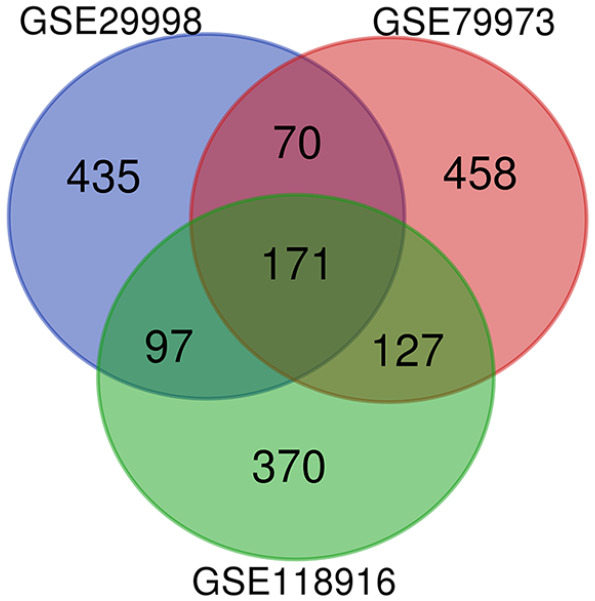
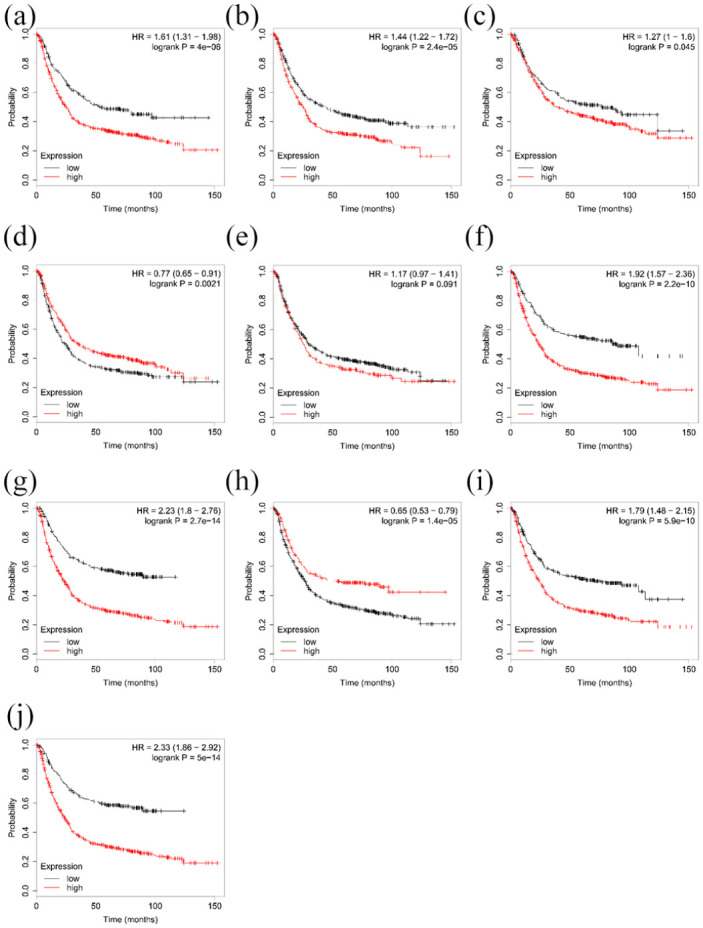
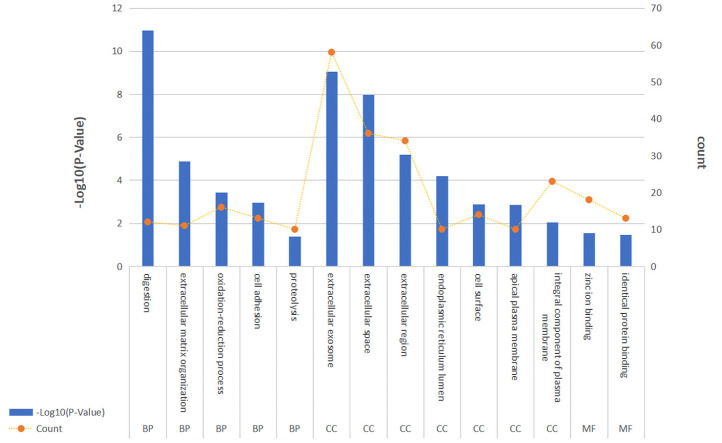
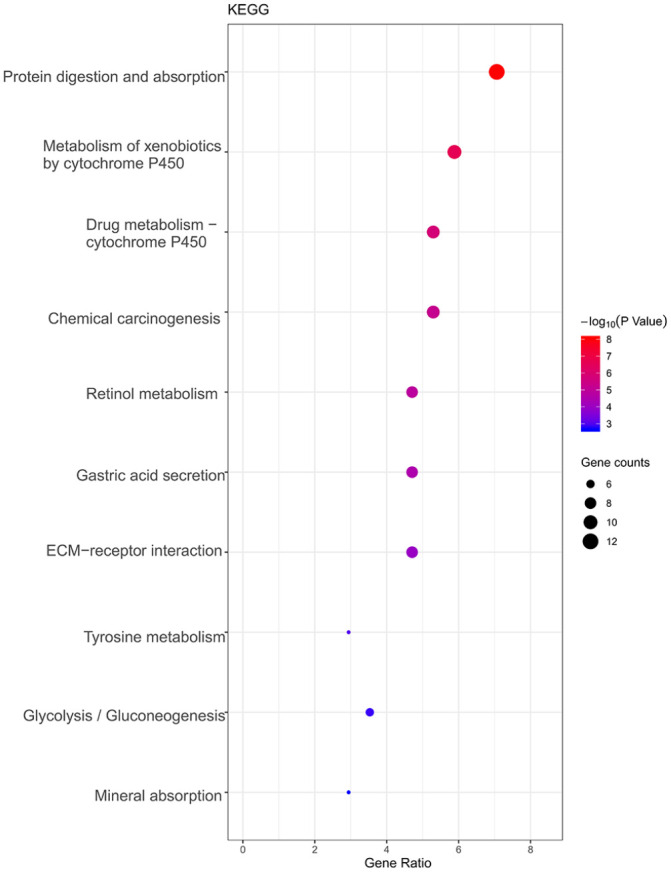
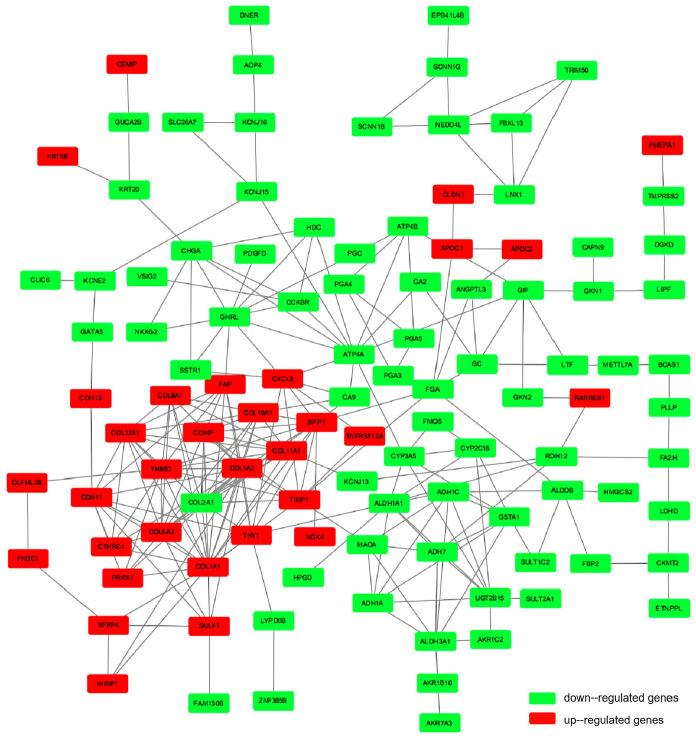
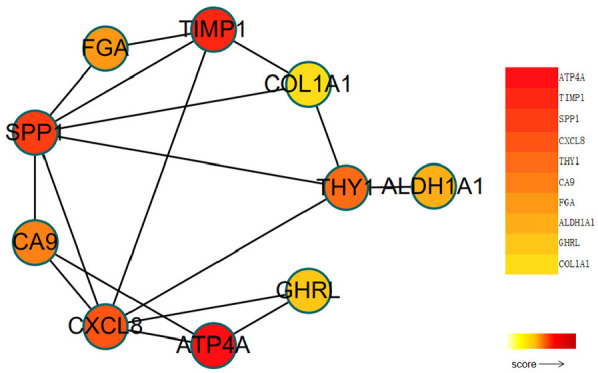
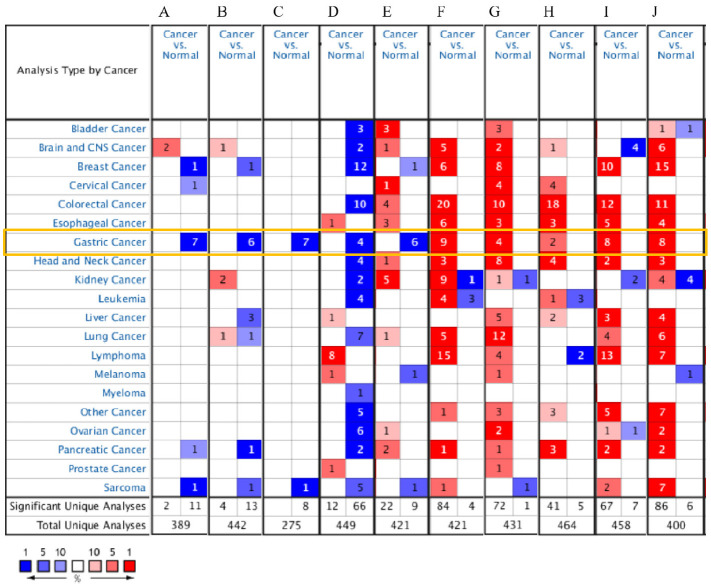
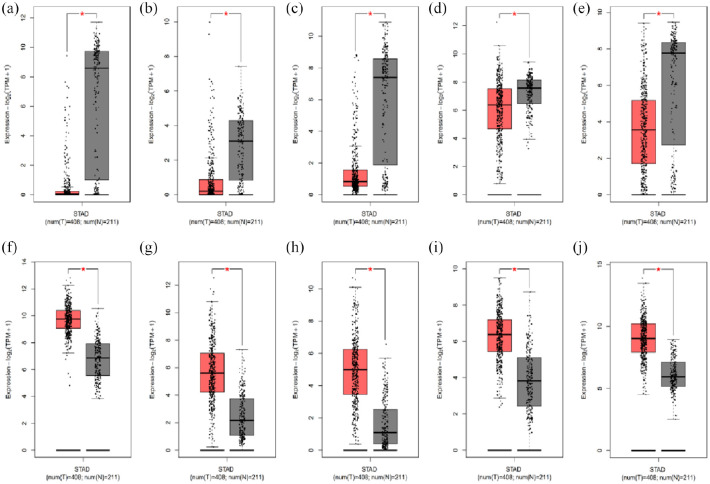
Gastric adenocarcinoma is the most common histologic type of gastric cancer; however, the pathogenic mechanisms remain unclear. To improve mechanistic understanding and identify new treatment targets or diagnostic biomarkers, we used bioinformatic tools to predict the hub genes related to the process of gastric adenocarcinoma development from public datasets, and explored their prognostic significance. We screened differentially expressed genes between gastric adenocarcinoma and normal gastric tissues in Gene Expression Omnibus datasets (GSE79973, GSE118916, and GSE29998) using the GEO2R tool, and their functions were annotated with Gene Ontology and Kyoto Encyclopedia of Genes and Genomes signaling pathway enrichment analyses in the DAVID database. Hub genes were identified based on the protein-protein network constructed in the STRING database with Cytoscape software. A total of 10 hub genes were selected for further analysis, and their expression patterns in gastric adenocarcinoma patients were investigated using the Oncomine GEPIA database. The expression levels of , and were reduced, whereas those of , and were increased in gastric adenocarcinoma. The Kaplan-Meier online plotter tool showed associations of all hub genes except for with prognosis in gastric adenocarcinoma patients; and were positively correlated with survival, and the other genes were negatively correlated with survival. These 10 hub genes may be involved in important processes in gastric adenocarcinoma development, providing new directions for research to clarify the role of these genes and offer insight for improved treatment.
胃腺癌是最常见的胃癌组织学类型;然而,其发病机制仍不清楚。为了提高对发病机制的理解,并确定新的治疗靶点或诊断生物标志物,我们使用生物信息学工具从公共数据集预测与胃腺癌发展过程相关的枢纽基因,并探讨了它们的预后意义。我们使用 GEO2R 工具从基因表达综合数据库(GSE79973、GSE118916 和 GSE29998)中筛选胃腺癌与正常胃组织之间的差异表达基因,并在 DAVID 数据库中进行基因本体论和京都基因与基因组百科全书信号通路富集分析来注释它们的功能。使用 Cytoscape 软件中的 STRING 数据库构建蛋白质-蛋白质网络来识别枢纽基因。共选择了 10 个枢纽基因进行进一步分析,并使用 Oncomine GEPIA 数据库研究其在胃腺癌患者中的表达模式。Oncomine GEPIA 数据库显示,除 外,其余 9 个枢纽基因的表达水平在胃腺癌中均降低,而 、 和 的表达水平升高。Kaplan-Meier 在线绘图工具显示,除 外,所有枢纽基因均与胃腺癌患者的预后相关;和 与生存呈正相关,而其他基因与生存呈负相关。这 10 个枢纽基因可能参与胃腺癌发展的重要过程,为研究这些基因的作用提供了新的方向,并为改善治疗提供了新的思路。