United States Army Medical Research Institute of Chemical Defense, Medical Toxicology Research Division, Neuroscience Department, 2900 Ricketts Point Rd, Aberdeen Proving Ground, MD 21010, USA.
Department of Neurosurgery, University of Utah School of Medicine, Salt Lake City, UT 84108, USA.
Neuroscience. 2021 May 21;463:143-158. doi: 10.1016/j.neuroscience.2021.03.029. Epub 2021 Apr 6.
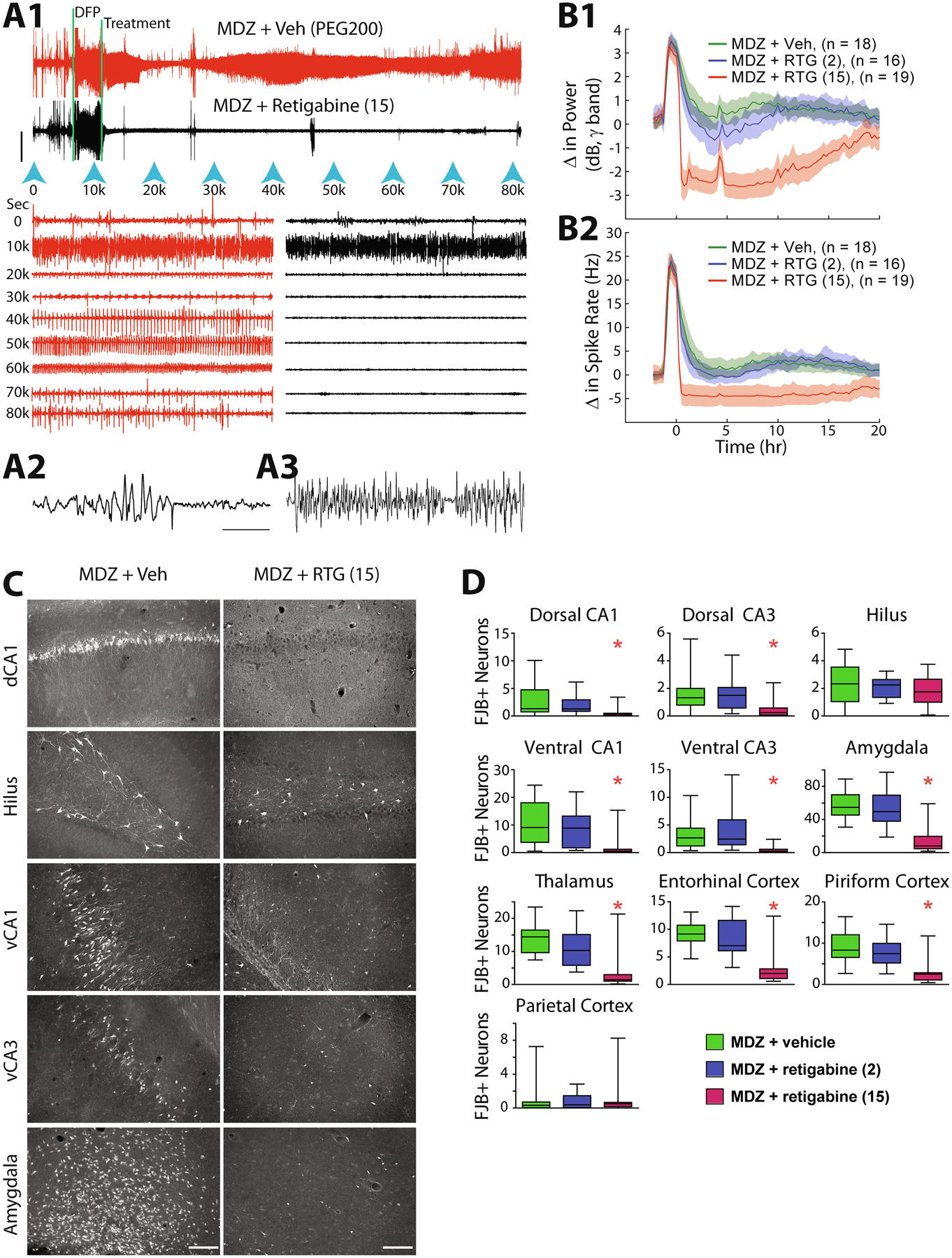
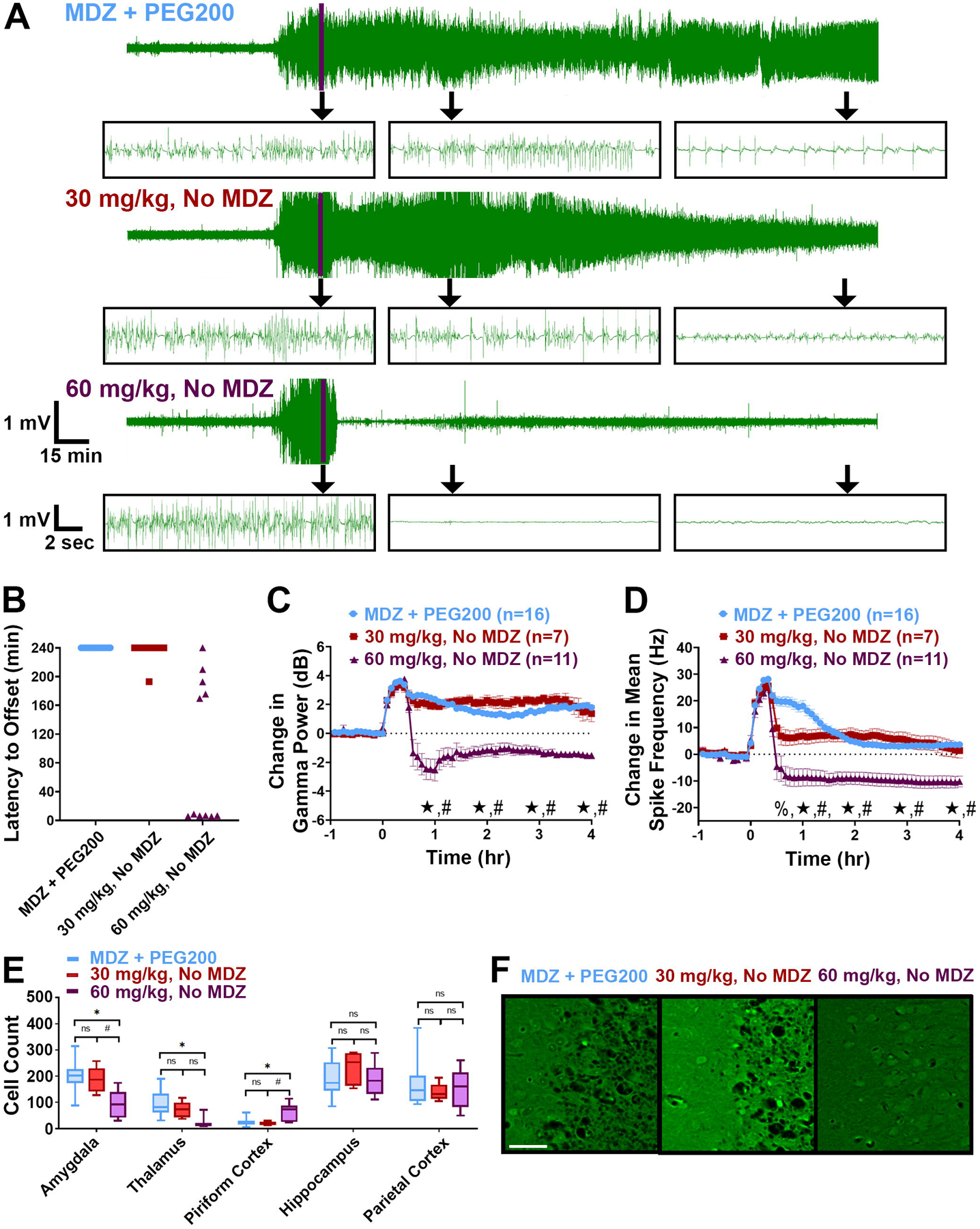
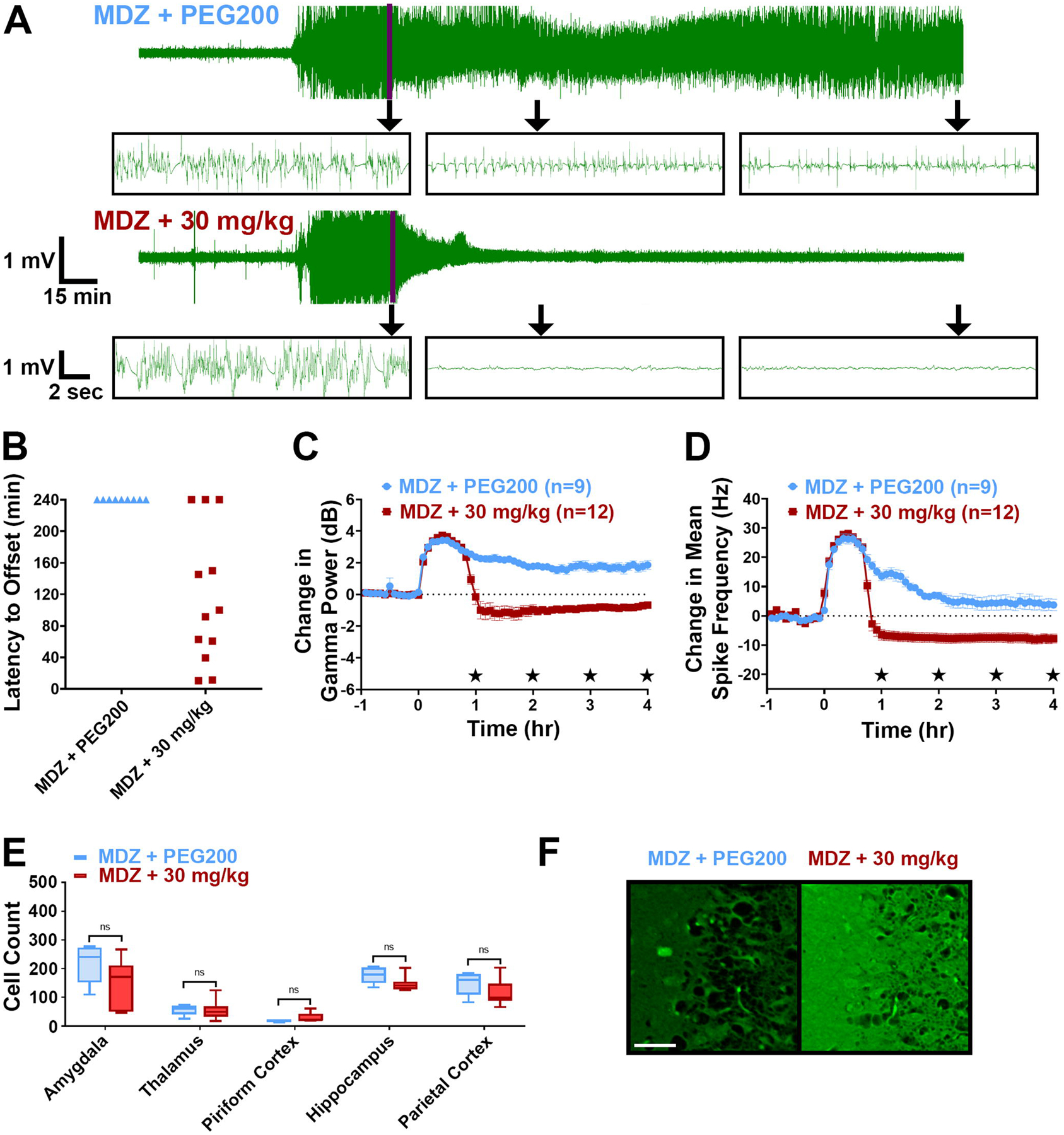
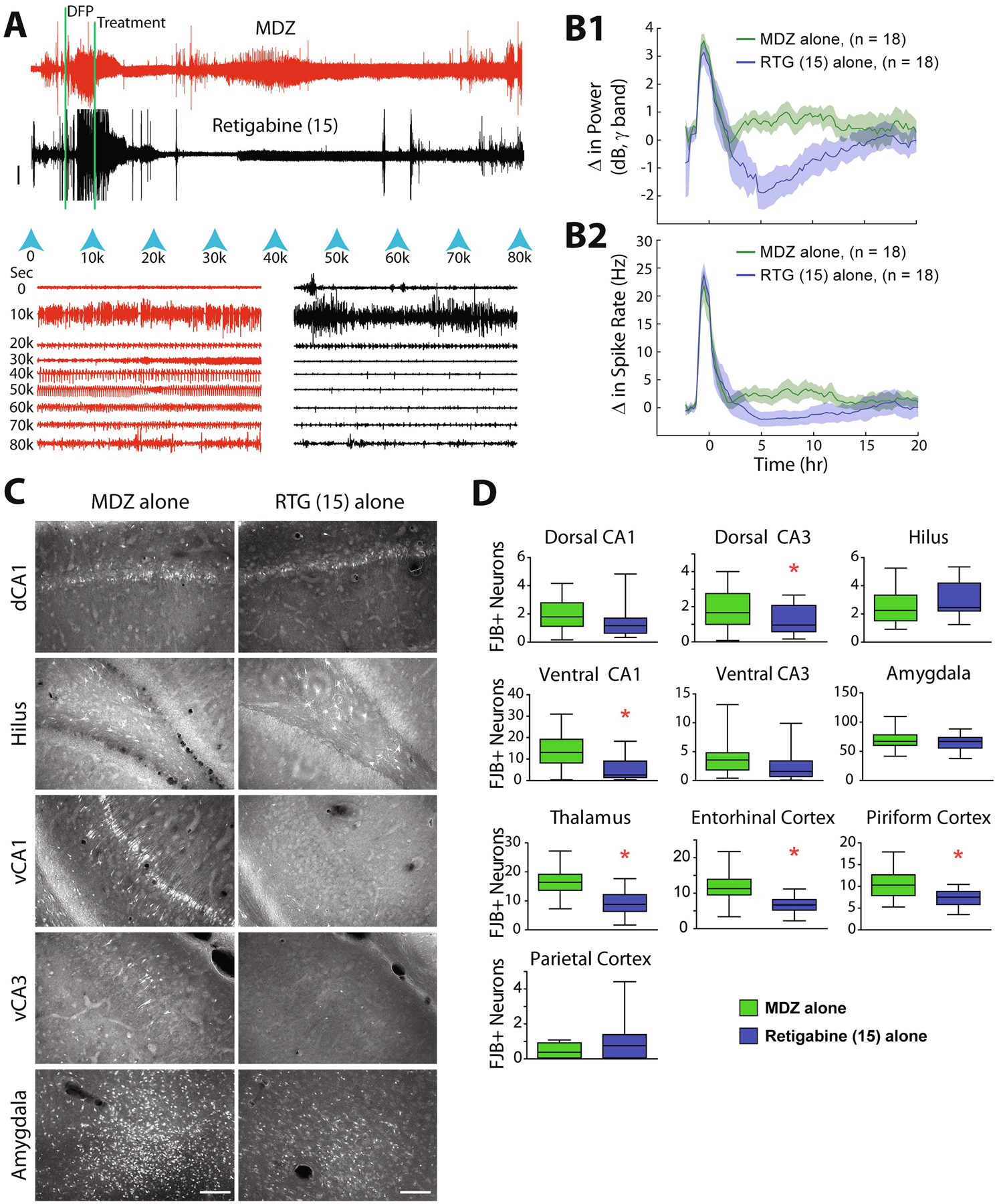
Benzodiazepines are the primary treatment option for organophosphate (OP)-induced status epilepticus (SE), but these antiseizure drugs (ASDs) lose efficacy as treatment is delayed. In the event of a mass civilian or military exposure, significant treatment delays are likely. New ASDs that combat benzodiazepine-resistant, OP-induced SE are critically needed, particularly if they can be efficacious after a long treatment delay. This study evaluated the efficacy of the K7 channel modulator, retigabine, as a novel therapy for OP-induced SE. Adult, male rats were exposed to soman or diisopropyl fluorophosphate (DFP) to elicit SE and monitored by electroencephalogram (EEG) recording. Retigabine was administered alone or adjunctive to midazolam (MDZ) at delays of 20- or 40-min in the soman model, and 60-min in the DFP model. Following EEG recordings, rats were euthanized and brain tissue was collected for Fluoro-Jade B (FJB) staining to quantify neuronal death. In the DFP model, MDZ + 15 mg/kg retigabine suppressed seizure activity and was neuroprotective. In the soman model, MDZ + 30 mg/kg retigabine suppressed seizures at 20- and 40-min delays. Without MDZ, 15 mg/kg retigabine provided partial antiseizure and neuroprotectant efficacy in the DFP model, while 30 mg/kg without MDZ failed to attenuate soman-induced SE. At 60 mg/kg, retigabine without MDZ strongly reduced seizure activity and neuronal degeneration against soman-induce SE. This study demonstrates the antiseizure and neuroprotective efficacy of retigabine against OP-induced SE. Our data suggest retigabine could be a useful adjunct to standard-of-care and has potential for use in the absence of MDZ.
苯二氮䓬类药物是治疗有机磷(OP)诱导的癫痫持续状态(SE)的主要治疗选择,但这些抗癫痫药物(ASD)在治疗延迟时会失去疗效。如果发生大规模平民或军事暴露,很可能会出现严重的治疗延迟。急需新的 ASD 来对抗苯二氮䓬类药物耐药的 OP 诱导的 SE,特别是如果它们在长时间治疗延迟后仍能有效。本研究评估了 K7 通道调节剂瑞替加滨作为治疗 OP 诱导 SE 的新型治疗药物的疗效。成年雄性大鼠接触梭曼或二异丙基氟膦(DFP)以引发 SE,并通过脑电图(EEG)记录进行监测。瑞替加滨在梭曼模型中单独或与咪达唑仑(MDZ)联合给药,延迟时间为 20 或 40 分钟,在 DFP 模型中延迟 60 分钟。EEG 记录后,处死大鼠并采集脑组织进行 Fluoro-Jade B(FJB)染色以定量神经元死亡。在 DFP 模型中,MDZ+15mg/kg 瑞替加滨抑制癫痫发作并具有神经保护作用。在梭曼模型中,MDZ+30mg/kg 瑞替加滨在 20 分钟和 40 分钟的延迟时间内抑制癫痫发作。没有 MDZ 时,15mg/kg 瑞替加滨在 DFP 模型中提供部分抗癫痫和神经保护作用,而 30mg/kg 没有 MDZ 的瑞替加滨未能减轻梭曼诱导的 SE。在 60mg/kg 时,没有 MDZ 的瑞替加滨强烈减少了梭曼诱导的 SE 的癫痫发作活动和神经元变性。本研究证明了瑞替加滨对 OP 诱导的 SE 的抗癫痫和神经保护作用。我们的数据表明,瑞替加滨可能是标准治疗的有用辅助手段,并且在没有 MDZ 的情况下具有潜在用途。