MMWR Morb Mortal Wkly Rep. 2021 Apr 16;70(15):547-551. doi: 10.15585/mmwr.mm7015a2.
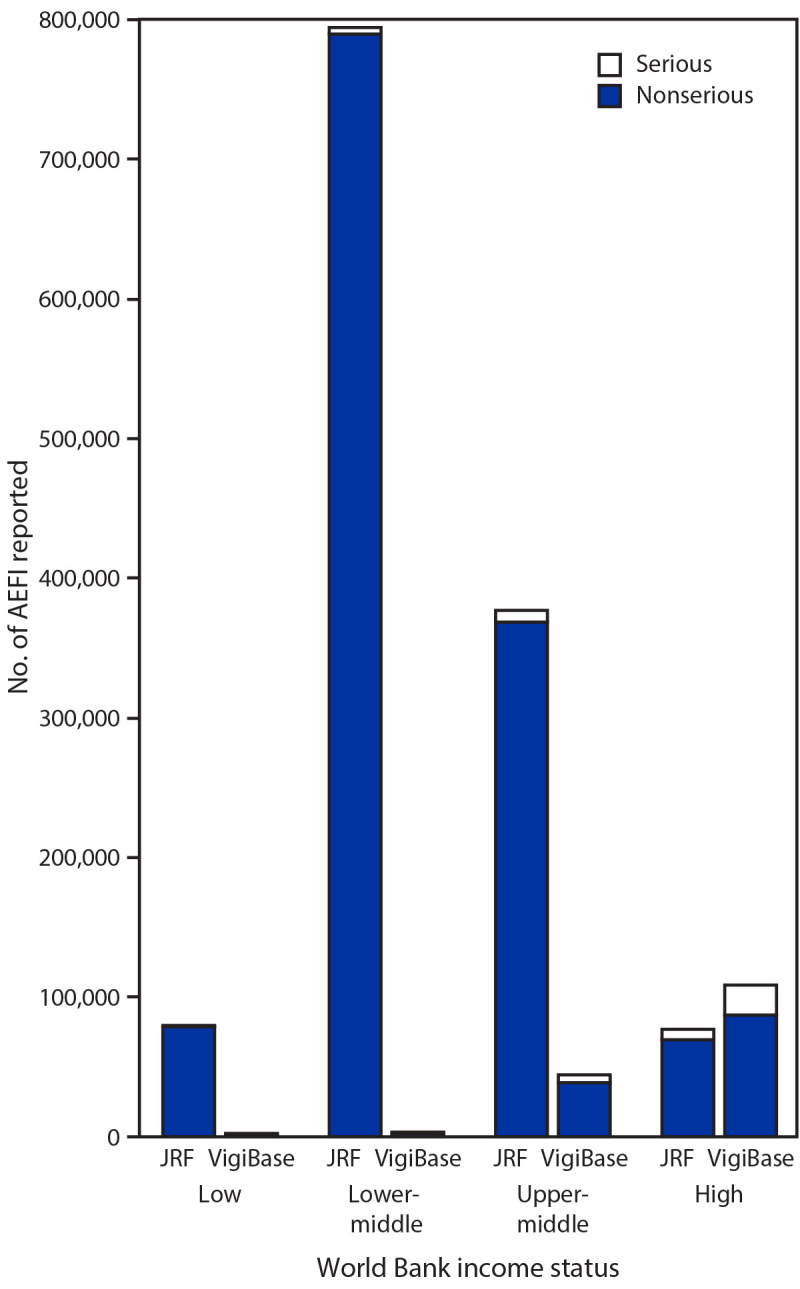
High levels of coverage with safe and effective immunizations are critical to the successful control and prevention of vaccine-preventable diseases worldwide. In addition to stringent standards to regulate the safety of vaccines, robust postlicensure monitoring systems help ensure that the benefits of vaccines continue to outweigh the risks for the populations who receive them. National Expanded Programmes on Immunization (EPI) are typically responsible for identifying and investigating adverse events following immunization (AEFI), including assessment of causality. National regulatory authorities (NRAs) are mandated to perform postlicensure surveillance of adverse drug reactions, including those associated with receipt of vaccines. This report describes global progress toward meeting World Health Organization (WHO) indicators on minimal country capacity for vaccine safety surveillance and coordination of AEFI reporting between countries' EPI and NRAs. In 2019, among 194 countries, 129 (66.5%) reported having an operational national AEFI causality review committee, compared with 94 (48.5%) in 2010. During 2010-2019, the proportion of countries reporting ≥10 AEFI per 100,000 surviving infants per year (an indicator of country capacity to monitor immunization safety) increased, from 41.2% to 56.2%. In 2019, however, only 46 (23.7%) countries reported AEFI data from both EPI and NRAs. Although global progress has been made toward strengthening systems for vaccine safety monitoring over the past decade, new indicators for monitoring global immunization safety performance are needed to better reflect program functionality. Continued global efforts will be vital to address barriers to routine reporting of AEFI, build national capacity for AEFI investigation and data management, and improve sharing of AEFI data at national, regional, and global levels.
高覆盖率的安全有效的免疫接种对于全球范围内控制和预防疫苗可预防疾病至关重要。除了严格的标准来规范疫苗的安全性外,强有力的上市后监测系统有助于确保疫苗的效益继续超过接受疫苗的人群的风险。国家扩大免疫规划(EPI)通常负责识别和调查免疫接种后不良事件(AEFI),包括因果关系评估。国家监管机构(NRA)被授权对不良药物反应进行上市后监测,包括与疫苗接种有关的反应。本报告描述了在实现世界卫生组织(WHO)关于疫苗安全监测最低国家能力的指标以及国家免疫规划和国家监管机构之间 AEFI 报告协调方面取得的全球进展。2019 年,在 194 个国家中,有 129 个(66.5%)报告称拥有运作中的国家 AEFI 因果关系审查委员会,而 2010 年为 94 个(48.5%)。2010-2019 年,报告每年每 10 万存活婴儿发生≥10 例 AEFI 的国家比例(监测免疫安全的国家能力指标)有所增加,从 41.2%增加到 56.2%。然而,2019 年只有 46 个(23.7%)国家报告了来自国家免疫规划和国家监管机构的 AEFI 数据。尽管在过去十年中,在加强疫苗安全监测系统方面取得了全球进展,但需要新的指标来监测全球免疫安全绩效,以更好地反映计划功能。持续的全球努力对于解决 AEFI 常规报告的障碍、建立 AEFI 调查和数据管理的国家能力以及改善国家、区域和全球各级 AEFI 数据共享至关重要。