Virginia Commonwealth University, 1101 E. Marshall St., Box 980709, Richmond, VA, 23298, USA.
Godwin High School, Henrico, VA, USA.
Sci Rep. 2021 Apr 21;11(1):8620. doi: 10.1038/s41598-021-88030-z.
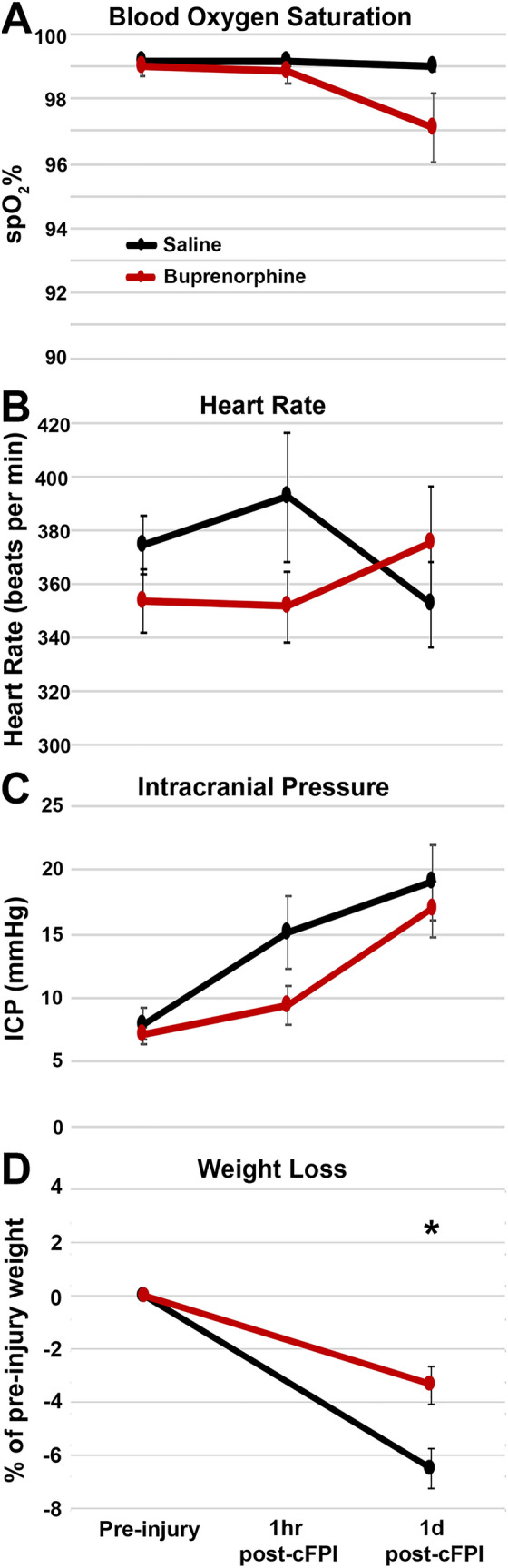
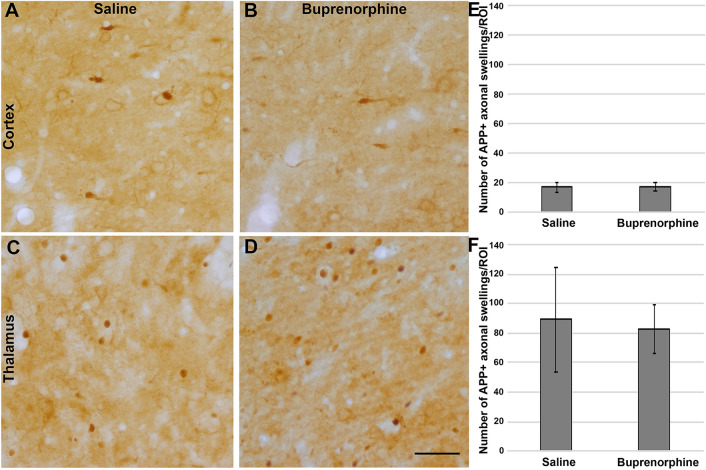
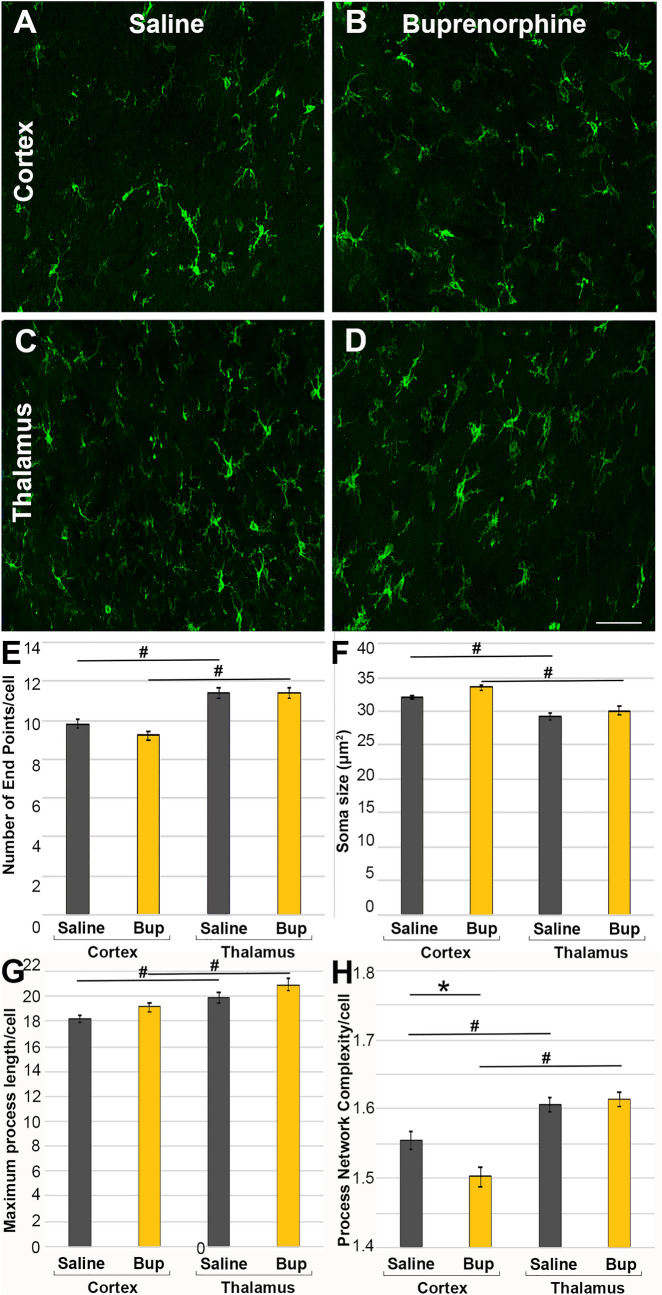
Traumatic brain injury (TBI) is a common phenomenon, accounting for significant cost and adverse health effects. While there is information about focal pathologies following TBI, knowledge of more diffuse processes is lacking, particularly regarding how analgesics affect this pathology. As buprenorphine is the most commonly used analgesic in experimental TBI models, this study investigated the acute effects of the opioid analgesic buprenorphine (Bup-SR-Lab) on diffuse neuronal/glial pathology, neuroinflammation, cell damage, and systemic physiology. We utilized a model of central fluid percussion injury (CFPI) in adult male rats treated with a single subcutaneous bolus of Bup-SR-Lab or saline 15 min post-injury. Microscopic assessments were performed at 1 day post-injury. Cell impermeable dextran was infused intraventricularly prior to sacrifice to assess neuronal membrane disruption. Axonal injury was assessed by investigating labeling of the anterogradely transported amyloid precursor protein. Neuroinflammation was assessed by analyzing Iba-1 + microglial and GFAP + astrocyte histological/morphological features as well as cytokine levels in both regions of interest (ROIs). Myelin pathology was assessed by evaluating the expression of myelin basic protein (MBP) and the propensity of MBP + myelin debris. Acute physiologic data showed no difference between groups except for reduction in weight loss following cFPI in Bup treated animals compared to saline. There were no discernable differences in axonal injury or membrane disruption between treatment groups. Cytokine levels were consistent between Bup and saline treated animals, however, microglia and astrocytes revealed region specific histological changes at 1d following Bup treatment. Myelin integrity and overall MBP expression showed no differences between Bup and saline treated animals, but there were significant regional differences in MBP expression between the cortex and thalamus. These data suggest effects of Bup treatment on weight following CFPI and potential regional specificity of Bup-associated microglial and astrocyte alterations, but very little change in other acute pathology at 1-day post-injury. Overall, this preliminary study indicates that use of Bup-SR-Lab in preclinical work does have effects on acute glial pathology, however, longer term studies will be needed to assess potential effects of Bup treatment on more chronic pathological progressions.
创伤性脑损伤 (TBI) 是一种常见现象,会造成重大的成本和不良健康影响。虽然有关于 TBI 后局灶性病变的信息,但缺乏对更弥漫性过程的了解,特别是关于镇痛药如何影响这种病变。由于丁丙诺啡是实验性 TBI 模型中最常用的镇痛药,因此本研究调查了阿片类镇痛药丁丙诺啡(Bup-SR-Lab)对弥漫性神经元/神经胶质病理、神经炎症、细胞损伤和全身生理学的急性影响。我们利用成年雄性大鼠的中央液冲击伤 (CFPI) 模型,在损伤后 15 分钟给予单次皮下丁丙诺啡或盐水冲击。在损伤后 1 天进行微观评估。在牺牲前,通过脑室内输注不可渗透的葡聚糖来评估神经元膜的破坏情况。通过研究顺行转运的淀粉样前体蛋白的标记来评估轴突损伤。通过分析感兴趣区域 (ROI) 中的 Iba-1+小胶质细胞和 GFAP+星形胶质细胞的组织学/形态特征以及细胞因子水平来评估神经炎症。通过评估髓鞘碱性蛋白 (MBP) 的表达和 MBP+髓鞘碎片的倾向来评估髓鞘病理。除了 Bup 处理组的 cFPI 后体重减轻减少外,急性生理数据在组间没有差异。在治疗组之间,轴突损伤或膜破坏没有明显差异。细胞因子水平在 Bup 和盐水处理的动物之间一致,但是在 Bup 处理后 1 天,小胶质细胞和星形胶质细胞显示出区域特异性的组织学变化。Bup 和盐水处理的动物之间的髓鞘完整性和总体 MBP 表达没有差异,但皮质和丘脑之间的 MBP 表达存在显著的区域差异。这些数据表明 CFPI 后 Bup 处理对体重的影响以及 Bup 相关小胶质细胞和星形胶质细胞改变的潜在区域特异性,但在损伤后 1 天,其他急性病理变化很小。总体而言,这项初步研究表明,在临床前工作中使用 Bup-SR-Lab 确实会对急性神经胶质病理产生影响,但需要进行更长期的研究来评估 Bup 治疗对更慢性病理进展的潜在影响。