
产科困境假说:老狗也有春天。
The obstetrical dilemma hypothesis: there's life in the old dog yet.
机构信息
Institute of Evolutionary Medicine, University of Zurich, Winterthurerstrasse 190, Zürich, 8057, Switzerland.
Konrad Lorenz Institute (KLI) for Evolution and Cognition Research, Martinstrasse 12, Klosterneuburg, 3400, Austria.
出版信息
Biol Rev Camb Philos Soc. 2021 Oct;96(5):2031-2057. doi: 10.1111/brv.12744. Epub 2021 May 19.
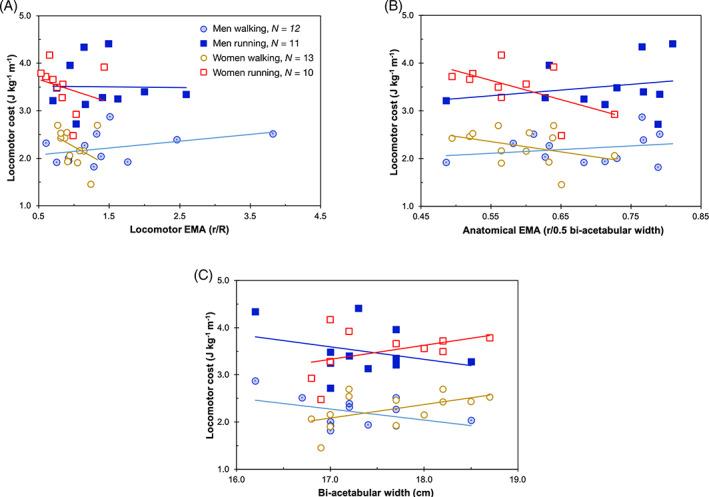
The term 'obstetrical dilemma' was coined by Washburn in 1960 to describe the trade-off between selection for a larger birth canal, permitting successful passage of a big-brained human neonate, and the smaller pelvic dimensions required for bipedal locomotion. His suggested solution to these antagonistic pressures was to give birth prematurely, explaining the unusual degree of neurological and physical immaturity, or secondary altriciality, observed in human infants. This proposed trade-off has traditionally been offered as the predominant evolutionary explanation for why human childbirth is so challenging, and inherently risky, compared to that of other primates. This perceived difficulty is likely due to the tight fit of fetal to maternal pelvic dimensions along with the convoluted shape of the birth canal and a comparatively low degree of ligamentous flexibility. Although the ideas combined under the obstetrical dilemma hypothesis originated almost a century ago, they have received renewed attention and empirical scrutiny in the last decade, with some researchers advocating complete rejection of the hypothesis and its assumptions. However, the hypothesis is complex because it presently captures several, mutually non-exclusive ideas: (i) there is an evolutionary trade-off resulting from opposing selection pressures on the pelvis; (ii) selection favouring a narrow pelvis specifically derives from bipedalism; (iii) human neonates are secondarily altricial because they are born relatively immature to ensure that they fit through the maternal bony pelvis; (iv) as a corollary to the asymmetric selection pressure for a spacious birth canal in females, humans evolved pronounced sexual dimorphism of pelvic shape. Recently, the hypothesis has been challenged on both empirical and theoretical grounds. Here, we appraise the original ideas captured under the 'obstetrical dilemma' and their subsequent evolution. We also evaluate complementary and alternative explanations for a tight fetopelvic fit and obstructed labour, including ecological factors related to nutrition and thermoregulation, constraints imposed by the stability of the pelvic floor or by maternal and fetal metabolism, the energetics of bipedalism, and variability in pelvic shape. This reveals that human childbirth is affected by a complex combination of evolutionary, ecological, and biocultural factors, which variably constrain maternal pelvic form and fetal growth. Our review demonstrates that it is unwarranted to reject the obstetrical dilemma hypothesis entirely because several of its fundamental assumptions have not been successfully discounted despite claims to the contrary. As such, the obstetrical dilemma remains a tenable hypothesis that can be used productively to guide evolutionary research.
“产科困境”一词由 Washburn 于 1960 年创造,用于描述在选择更大的产道以允许大脑较大的人类新生儿成功通过和双足运动所需的较小骨盆尺寸之间的权衡取舍。他建议解决这些对抗性压力的方法是早产,这解释了人类婴儿中观察到的不寻常的神经和身体不成熟程度,或继发性早产。这种提出的权衡取舍传统上被认为是人类分娩如此具有挑战性和内在风险的主要进化解释,与其他灵长类动物相比。这种感知到的困难可能是由于胎儿与母体骨盆尺寸的紧密贴合,加上产道的曲折形状以及相对较低的韧带灵活性所致。尽管产科困境假说下的这些想法起源于近一个世纪前,但在过去十年中,它们受到了新的关注和实证检验,一些研究人员主张完全拒绝该假说及其假设。然而,该假说很复杂,因为它目前包含几个相互不排斥的想法:(i)由于对骨盆的选择压力相反,存在进化上的权衡取舍;(ii)特别有利于狭窄骨盆的选择来自于双足行走;(iii)人类新生儿是继发性早产,因为他们出生时相对不成熟,以确保他们通过母体骨性骨盆;(iv)作为女性宽敞分娩道的不对称选择压力的推论,人类进化出明显的骨盆形状性别二态性。最近,该假说在实证和理论方面都受到了挑战。在这里,我们评估了“产科困境”下所包含的原始想法及其随后的演变。我们还评估了与紧密的胎儿骨盆贴合和分娩受阻相关的替代和补充解释,包括与营养和体温调节有关的生态因素、骨盆底稳定性或母婴代谢所施加的限制、双足行走的能量学以及骨盆形状的可变性。这表明,人类分娩受到复杂的进化、生态和生物文化因素的影响,这些因素不同程度地限制了母体骨盆形态和胎儿生长。我们的综述表明,完全拒绝产科困境假说没有道理,因为尽管有相反的说法,但该假说的几个基本假设并没有被成功否定。因此,产科困境仍然是一个可行的假说,可以有效地用于指导进化研究。



 Zotero 插件