Rafi Harmain, Zestos Alexander G
Department of Chemistry, American University, Washington, DC 20016, United States of America.
Center for Neuroscience and Behavior, American University, Washington, DC 20016, United States of America.
J Electrochem Soc. 2021 May;168(5). doi: 10.1149/1945-7111/ac0064. Epub 2021 May 20.
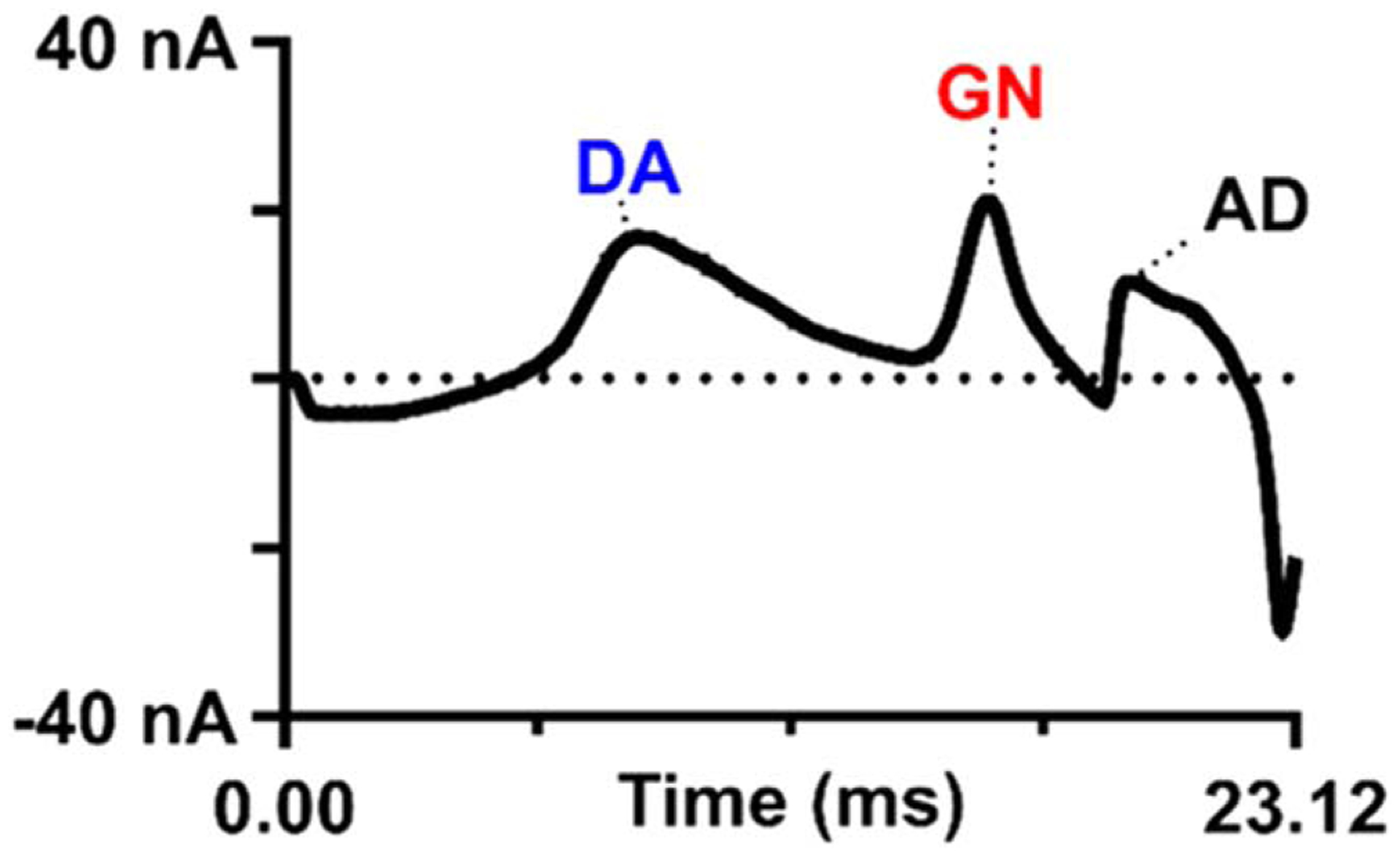
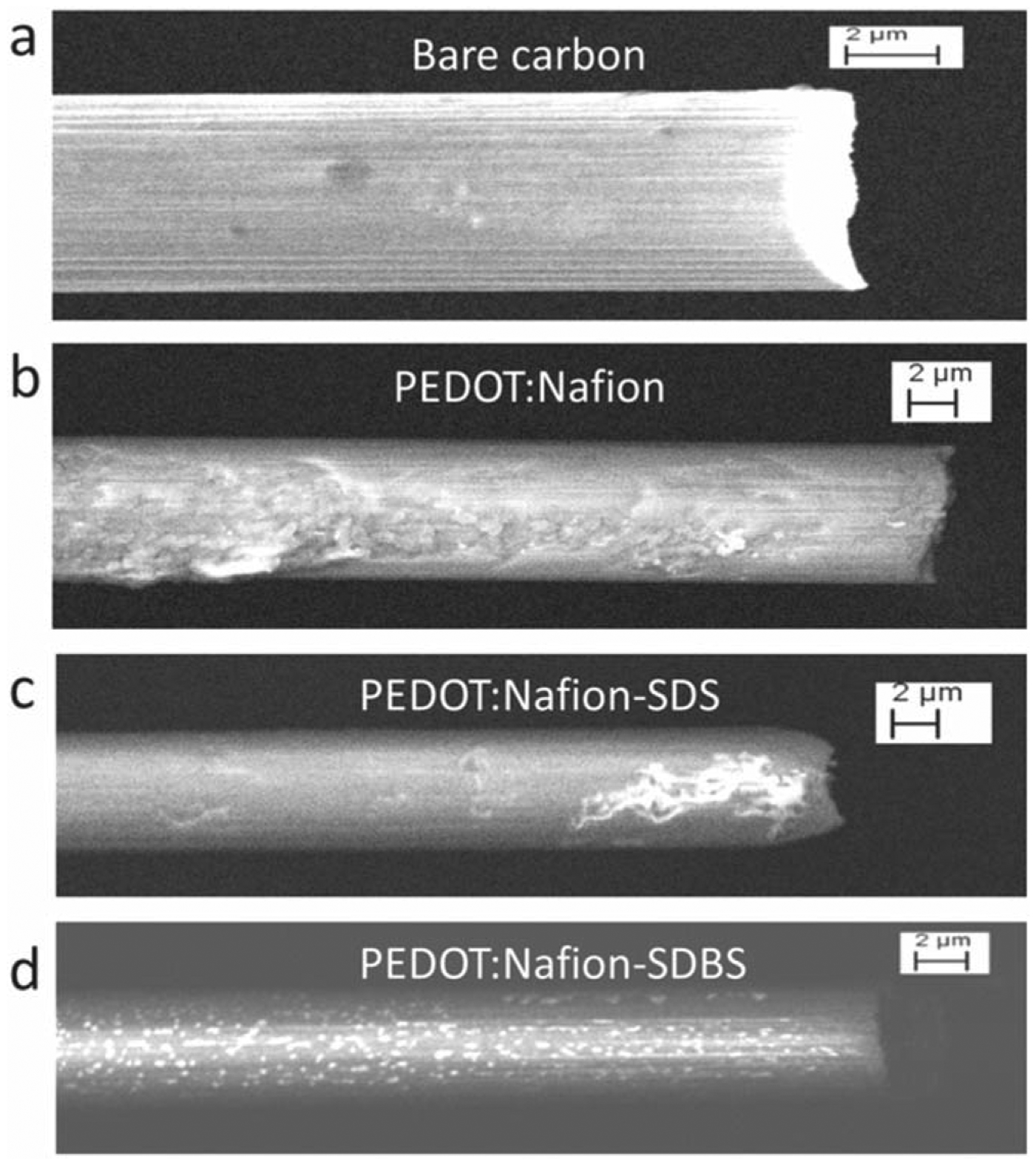
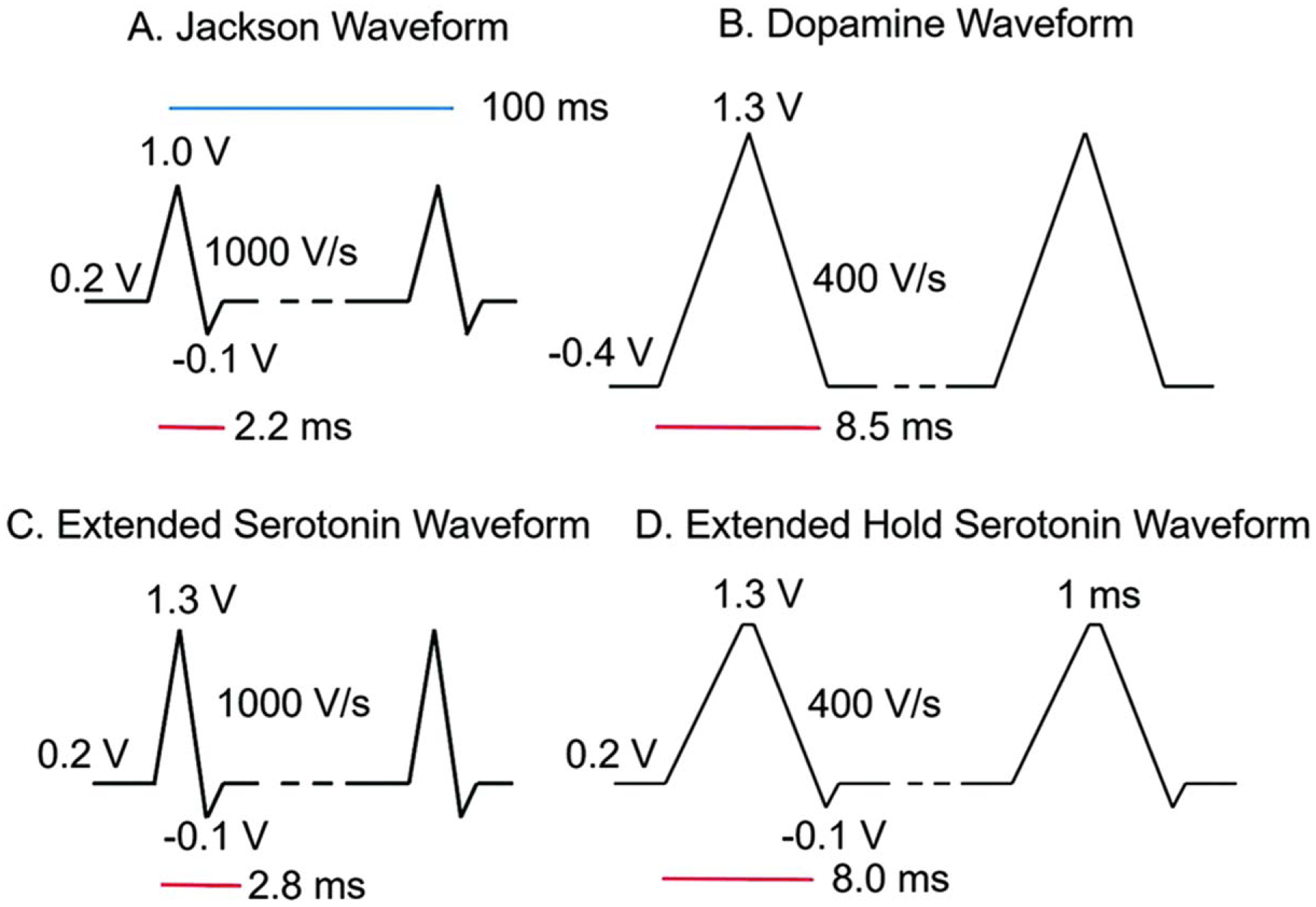
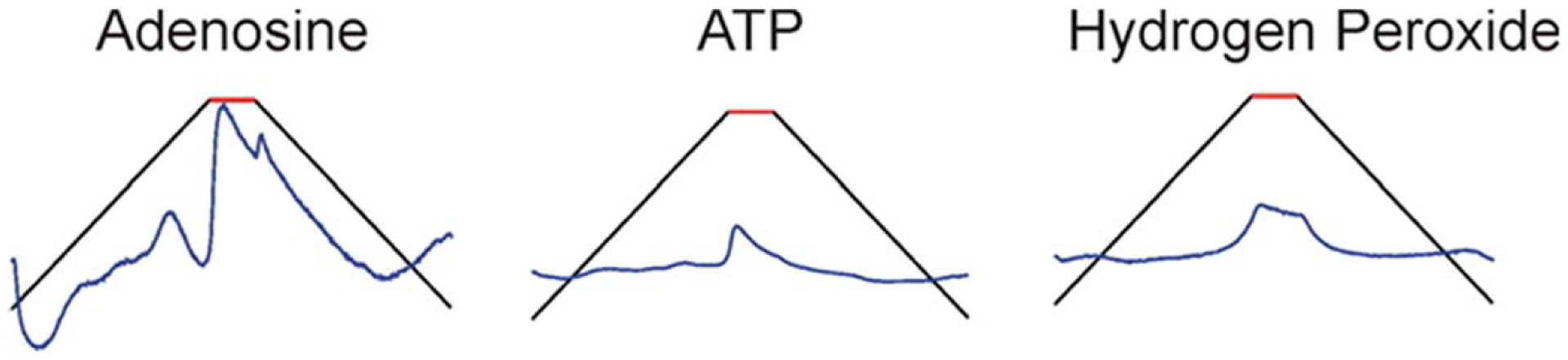
Fast scan cyclic voltammetry (FSCV) is an analytical technique that was first developed over 30 years ago. Since then, it has been extensively used to detect dopamine using carbon fiber microelectrodes (CFMEs). More recently, electrode modifications and waveform refinement have enabled the detection of a wider variety of neurochemicals including nucleosides such as adenosine and guanosine, neurotransmitter metabolites of dopamine, and neuropeptides such as enkephalin. These alterations have facilitated the selectivity of certain biomolecules over others to enhance the measurement of the analyte of interest while excluding interferants. In this review, we detail these modifications and how specializing CFME sensors allows neuro-analytical researchers to develop tools to understand the neurochemistry of the brain in disease states and provide groundwork for translational work in clinical settings.
快速扫描循环伏安法(FSCV)是一种30多年前首次开发的分析技术。从那时起,它就被广泛用于使用碳纤维微电极(CFME)检测多巴胺。最近,电极修饰和波形优化使得能够检测更广泛的神经化学物质,包括核苷如腺苷和鸟苷、多巴胺的神经递质代谢物以及神经肽如脑啡肽。这些改变促进了某些生物分子相对于其他生物分子的选择性,以增强对感兴趣分析物的测量,同时排除干扰物。在这篇综述中,我们详细介绍了这些修饰,以及专门的CFME传感器如何使神经分析研究人员能够开发工具来理解疾病状态下大脑的神经化学,并为临床环境中的转化工作奠定基础。