
结合多组学和药物扰动谱鉴定治疗脊髓性肌萎缩症的肌肉特异性疗法。
Combining multiomics and drug perturbation profiles to identify muscle-specific treatments for spinal muscular atrophy.
机构信息
Department of Physiology, Anatomy and Genetics, University of Oxford, Oxford, United Kingdom.
Gene Therapy Center, University of Massachusetts Medical School, Worcester, Massachusetts, USA.
出版信息
JCI Insight. 2021 Jul 8;6(13):e149446. doi: 10.1172/jci.insight.149446.
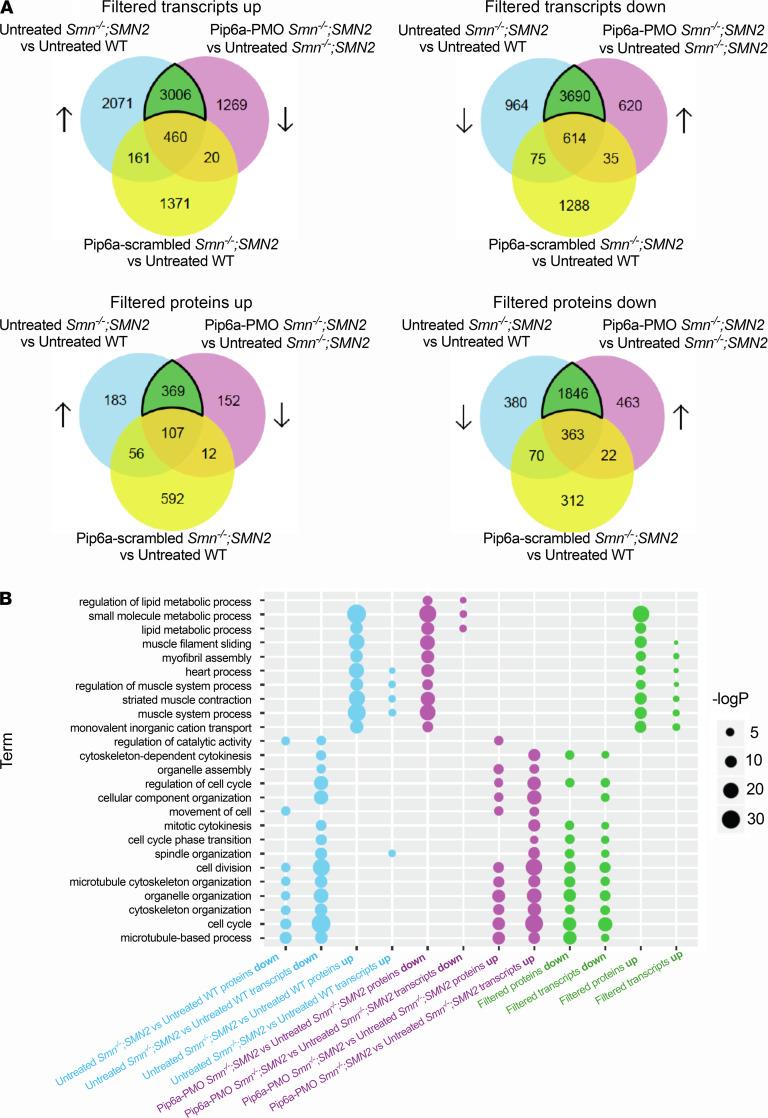
Spinal muscular atrophy (SMA) is a neuromuscular disorder caused by loss of survival motor neuron (SMN) protein. While SMN restoration therapies are beneficial, they are not a cure. We aimed to identify potentially novel treatments to alleviate muscle pathology combining transcriptomics, proteomics, and perturbational data sets. This revealed potential drug candidates for repurposing in SMA. One of the candidates, harmine, was further investigated in cell and animal models, improving multiple disease phenotypes, including lifespan, weight, and key molecular networks in skeletal muscle. Our work highlights the potential of multiple and parallel data-driven approaches for the development of potentially novel treatments for use in combination with SMN restoration therapies.
脊髓性肌萎缩症(SMA)是一种由运动神经元存活(SMN)蛋白缺失引起的神经肌肉疾病。虽然 SMN 修复疗法有益,但它们并非治愈方法。我们旨在通过转录组学、蛋白质组学和扰动数据集相结合,来识别潜在的新型治疗方法以缓解肌肉病理。这揭示了在 SMA 中重新利用的潜在药物候选物。候选物之一的哈林因在细胞和动物模型中进一步研究,改善了多种疾病表型,包括寿命、体重和骨骼肌中的关键分子网络。我们的工作强调了多种和并行的数据驱动方法对于开发潜在的新型治疗方法的潜力,这些方法可与 SMN 修复疗法联合使用。




 Zotero 插件