
配置流程和试剂用量,用于吉尔森ite 浮选获得超低灰分精矿。
Configuration of flowsheet and reagent dosage for gilsonite flotation towards the ultra-low-ash concentrate.
机构信息
Department of Mining Engineering, Faculty of Engineering, Urmia University, P.O. Box 57561/51818, Urmia, Iran.
Faculty of Engineering, University of Kashan, Kashan, Iran.
出版信息
Sci Rep. 2021 Jul 29;11(1):15469. doi: 10.1038/s41598-021-95074-8.
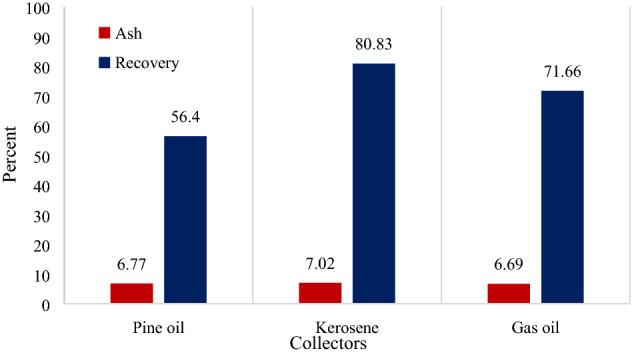
Gilsonite has a wide variety of applications in the industry, including the manufacture of electrodes, paints and resins, as well as the production of asphalt and roof-waterproofing material. Gilsonite ash is a determining parameter for its application in some industries (e.g., gilsonite with ash content < 5% used as an additive in drilling fluids, resins). Due to the shortage of high grade (low ash) gilsonite reserves, the aim of this study is to develop a processing flowsheet for the production of ultra-low-ash gilsonite (< 5%), based on process mineralogy studies and processing tests. For this purpose, mineralogical studies and flotation tests have been performed on a sample of gilsonite with an average ash content of 15%. According to mineralogical studies, carbonates and clay minerals are the main associated impurities (more than 90 vol.%). Furthermore, sulfur was observed in two forms of mineral (pyrite and marcasite) and organic in the structure of gilsonite. Most of these impurities are interlocked with gilsonite in size fractions smaller than 105 µm. The size fraction of + 105 - 420 µm has a higher pure gilsonite (approximately 90%) than other size fractions. By specifying the gangue minerals with gilsonite and the manner and extent of their interlocking with gilsonite, + 75 - 420 µm size fraction selected to perform flotation tests. Flotation tests were performed using different reagents including collector (Gas oil, Kerosene and Pine oil), frother (MIBC) and depressant (sodium silicate, tannic acid, sulfuric acid and sodium cyanide) in different dosages. Based on the results, the use of kerosene collector, MIBC frother and a mixture of sodium silicate, tannic acid, sulfuric acid and sodium cyanide depressant had the most favorable results in gilsonite flotation in the rougher stage. Cleaner and recleaner flotation stages for the rougher flotation concentrate resulted in a product with an ash content of 4.89%. Due to the interlocking of gilsonite with impurities in size fractions - 105 µm, it is better to re-grinding the concentrate of the rougher stage beforehand flotation in the cleaner and recleaner stages. Finally, based on the results of mineralogical studies and processing tests, a processing flowsheet including crushing and initial granulation of gilsonite, flotation in rougher, cleaner and recleaner stages has been proposed to produce gilsonite concentrate with < 5% ash content.
地沥青在工业中有广泛的应用,包括制造电极、油漆和树脂,以及生产沥青和屋顶防水材料。地沥青灰分是其在某些行业应用的一个决定因素(例如,灰分含量 < 5%的地沥青用作钻井液、树脂中的添加剂)。由于高品位(低灰分)地沥青储量短缺,本研究的目的是基于工艺矿物学研究和加工试验,开发一种生产超低灰分地沥青( < 5%)的工艺流程。为此,对平均灰分含量为 15%的地沥青样品进行了矿物学研究和浮选试验。根据矿物学研究,碳酸盐和粘土矿物是主要的伴生杂质(超过 90%)。此外,在结构中观察到硫以黄铁矿和白铁矿两种矿物形式和有机形式存在。这些杂质中的大多数与小于 105μm 的地沥青粒度大小交织在一起。+105-420μm 的粒度分级比其他粒度分级具有更高的纯地沥青(约 90%)。通过指定与地沥青共生的脉石矿物以及它们与地沥青交织的方式和程度,选择+75-420μm 粒度分级进行浮选试验。浮选试验采用不同的试剂进行,包括捕收剂(瓦斯油、煤油和松油)、起泡剂(MIBC)和抑制剂(硅酸钠、单宁酸、硫酸和氰化钠),用量不同。根据结果,在粗选阶段使用煤油捕收剂、MIBC 起泡剂和硅酸钠、单宁酸、硫酸和氰化钠抑制剂混合物对地沥青浮选效果最好。粗选浮选精矿的精选和再精选浮选阶段得到了灰分含量为 4.89%的产品。由于地沥青与小于 105μm 粒度分级中的杂质交织在一起,因此最好在精选和再精选阶段浮选之前对地沥青粗选精矿进行再磨。最后,根据矿物学研究和加工试验的结果,提出了包括地沥青破碎和初步造粒、粗选、精选和再精选浮选阶段的工艺流程,以生产灰分含量 < 5%的地沥青精矿。




 Zotero 插件