
磁场和电场加速浮萍植物萃取铜。
Magnetic and electric field accelerate Phytoextraction of copper Lemna minor duckweed.
机构信息
Civil Engineering Institute, Peter the Great Saint Petersburg Polytechnic University, Saint Petersburg, Russian Federation.
出版信息
PLoS One. 2021 Aug 4;16(8):e0255512. doi: 10.1371/journal.pone.0255512. eCollection 2021.
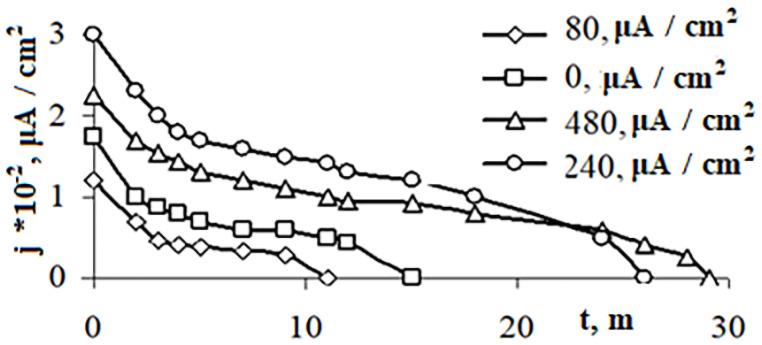
In accordance with the opinion of the World Health Organization and the World Water Council the development of effective technologies for the treatment of wastewater from heavy metals for their discharge into water bodies or reuse is an urgent task nowadays. Phytoremediation biotechnologies is the most environmentally friendly and cheapest way of the treatment of wastewater, suitable for sustainable development principals. The main disadvantage of the phytoremediation is the slow speed of the process. A method for accelerating the process of phytoremediation by the combined effect of magnetic and weak electric fields is proposed. The purpose of this study is to determine the values of the parameters of the magnetic and weak electric fields that are most suitable for extracting cuprum ions from wastewater using the higher aqua plants (Lemna minor). A corresponding technological process based on the results of the study is proposed. The results have shown that the removal of copper cations from sulfate solutions effectively occurs in the initial period of time (1-5 hours) under the influence of a magnetic field with an intensity of H = 2 kA/m. Under the combined influence of an electrical current with density j = 240 μA/cm2 and a magnetic field (H = 2 kA/m) the highest rate of copper extraction by duckweed leaves is achieved. Under these conditions, the greatest growth and development of plant leaves occurs. The paper presents the results of determining of the parameters of the electrochemical release from the eluate of the spent phytomass of duckweed. It has been determined that the release of metal occurs at E = 0.32 V. An original scheme for wastewater treatment from copper with subsequent separation of copper from the spent phytomass of duckweed is proposed. In general, the presented results are a scientific justification of wastewater treatment technologies and a contribution to resolving the crisis in the field of fresh water supply. An important contribution in the circular economy is a technology recommendation proposed for recovering copper from duckweed after wastewater treatment.
根据世界卫生组织和世界水资源理事会的意见,开发有效处理废水中重金属的技术,以便将其排放到水体或再利用,是当今的一项紧迫任务。植物修复生物技术是处理废水的最环保和最便宜的方法,适合可持续发展原则。植物修复的主要缺点是处理速度慢。提出了一种通过磁场和弱电场的联合作用来加速植物修复过程的方法。本研究的目的是确定最适合使用高等水生植物(浮萍)从废水中提取铜离子的磁场和弱电场参数值。根据研究结果提出了相应的工艺流程。结果表明,在磁场强度为 H = 2 kA/m 的影响下,铜阳离子从硫酸盐溶液中有效地去除发生在初始时间段(1-5 小时)内。在电流密度为 j = 240 μA/cm2 和磁场(H = 2 kA/m)的联合影响下,浮萍叶片对铜的提取率最高。在这些条件下,植物叶片的生长和发育达到最佳状态。本文介绍了从浮萍耗尽植物生物质的洗脱液中电化学释放参数的测定结果。已确定金属的释放发生在 E = 0.32 V。提出了一种从废水中处理铜并随后从浮萍耗尽植物生物质中分离铜的原始方案。总的来说,所呈现的结果为废水处理技术提供了科学依据,并为解决淡水供应领域的危机做出了贡献。在循环经济中做出了重要贡献,建议在废水处理后从浮萍中回收铜的技术。


 Zotero 插件