
越南一名青少年首例抗α-氨基-3-羟基-5-甲基-4-异恶唑丙酸(AMPA)受体脑炎报告
First Reported Case of Anti-Ampa Receptor Encephalitis in a Vietnamese Adolescent.
作者信息
Trung Hieu Nguyen Le, Minh Duc Nguyen, Tra My Thieu-Thi, Hieu Anh Bui, Tan Lien Bang Mai, Minh Thong Pham
机构信息
Department of Neurology, University of Medicine and Pharmacy at Ho Chi Minh City, Ho Chi Minh City, Vietnam.
Department of Radiology, Pham Ngoc Thach University of Medicine, Ho Chi Minh City, Vietnam.
出版信息
Clin Med Insights Case Rep. 2021 Aug 6;14:11795476211037782. doi: 10.1177/11795476211037782. eCollection 2021.
INTRODUCTION
Autoimmune encephalitis refers to a group of diseases characterized by the presence of antibodies that directly attack receptors on the neuron surface and are associated with cognitive and behavioral disorders. Alpha-amino-3-hydroxy-5-methyl-4-isoxazole propionic acid (AMPA) receptor autoimmune encephalitis is very rare and has been reported in only a few individual cases, with little clinical experience.
CASE REPORT
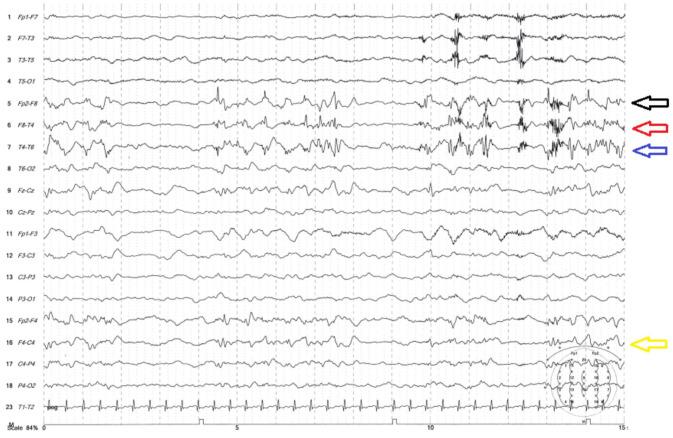
We describe the clinical manifestation and disease course of the first diagnosed case of anti-AMPA receptor encephalitis at the Neurology Department of Children's Hospital 2 in November 2020. A previously healthy 10-year-old presented with symptoms over 2 periods. During each period, the patient presented with multiple focal seizures, a cognitive-behavioral disorder, and amnesia. The brain magnetic resonance imaging (MRI) results were persistently normal. Electroencephalography (EEG) recorded many focal spikes and spike waves. Antibodies against N-methyl D-aspartate (NMDA) were not detected. Antibodies against AMPA receptors were detected in the serum and cerebrospinal fluid using an indirect fluorescent antibody test. This patient was treated with immunotherapy, including methylprednisolone and intravenous immunoglobulin (IVIG), and antiepileptic drugs, such as oxcarbazepine, topiramate, and levetiracetam. The seizures were controlled, but the cognitive-behavioral disorder was only partially resolved.
CONCLUSION
This case report contributes to the clinical understanding of anti-AMPA receptor encephalitis disease manifestation, the response to the immunotherapy, and relapse.
引言
自身免疫性脑炎是指一组以存在直接攻击神经元表面受体的抗体为特征,并与认知和行为障碍相关的疾病。α-氨基-3-羟基-5-甲基-4-异恶唑丙酸(AMPA)受体自身免疫性脑炎非常罕见,仅在少数个别病例中有报道,临床经验较少。
病例报告
我们描述了2020年11月在儿童医院2神经内科首次诊断的抗AMPA受体脑炎病例的临床表现和病程。一名此前健康的10岁儿童在两个阶段出现症状。在每个阶段,患者均出现多次局灶性癫痫发作、认知行为障碍和失忆。脑磁共振成像(MRI)结果一直正常。脑电图(EEG)记录到许多局灶性尖波和棘波。未检测到抗N-甲基-D-天冬氨酸(NMDA)抗体。使用间接荧光抗体试验在血清和脑脊液中检测到抗AMPA受体抗体。该患者接受了免疫治疗,包括甲泼尼龙和静脉注射免疫球蛋白(IVIG),以及抗癫痫药物,如奥卡西平、托吡酯和左乙拉西坦。癫痫发作得到控制,但认知行为障碍仅部分得到缓解。
结论
本病例报告有助于临床了解抗AMPA受体脑炎的疾病表现、对免疫治疗的反应及复发情况。


 Zotero 插件