Department of Pediatrics, Aflac Cancer and Blood Disorders Center, Winship Cancer Institute, Children's Healthcare of Atlanta, Emory University School of Medicine, Atlanta, GA.
Department of Hematology, Third Xiangya Hospital, Central South University, Changsha, China; and.
Blood Adv. 2022 Jan 11;6(1):200-206. doi: 10.1182/bloodadvances.2021005089.
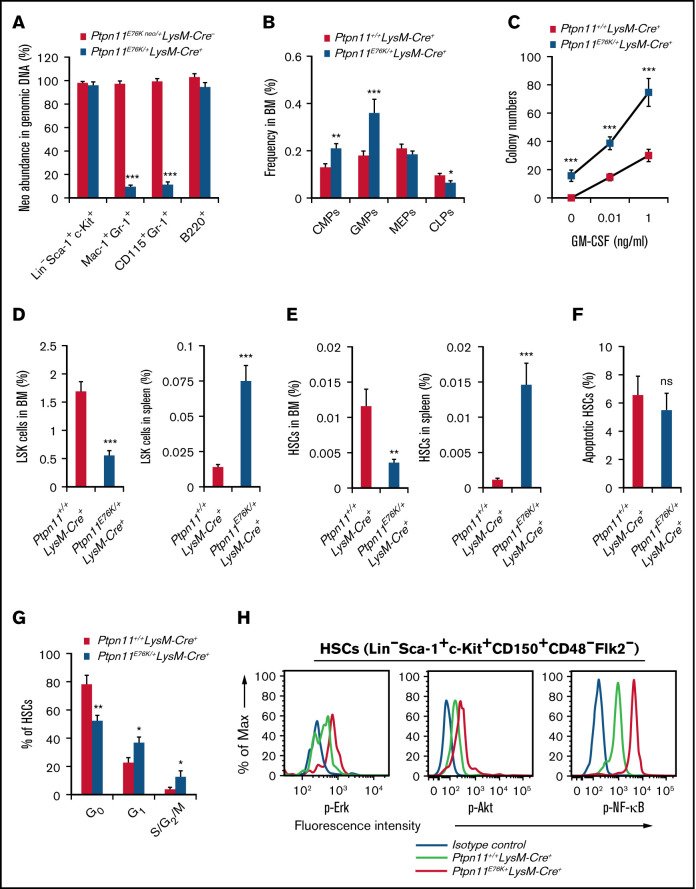
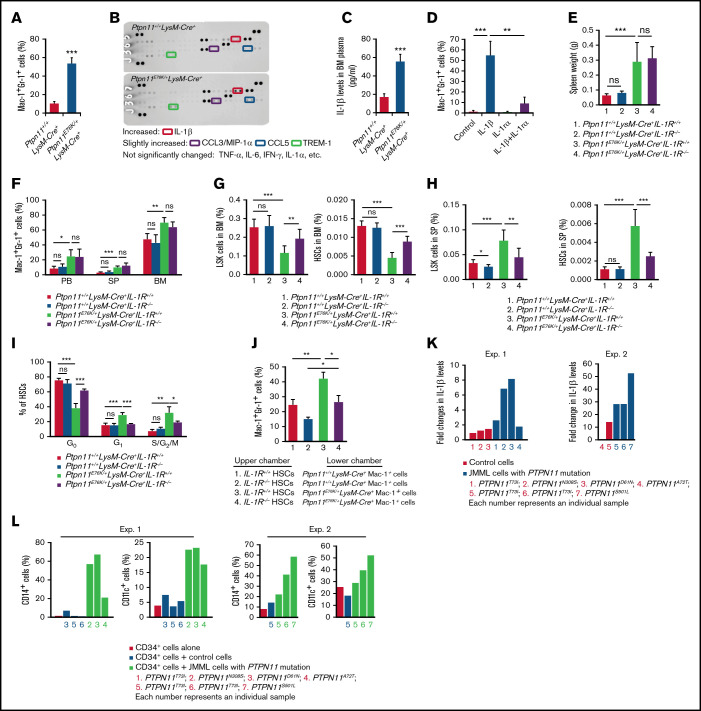
Development of normal blood cells is often suppressed in juvenile myelomonocytic leukemia (JMML), a myeloproliferative neoplasm (MPN) of childhood, causing complications and impacting therapeutic outcomes. However, the mechanism underlying this phenomenon remains uncharacterized. To address this question, we induced the most common mutation identified in JMML (Ptpn11E76K) specifically in the myeloid lineage with hematopoietic stem cells (HSCs) spared. These mice uniformly developed a JMML-like MPN. Importantly, HSCs in the same bone marrow (BM) microenvironment were aberrantly activated and differentiated at the expense of self-renewal. As a result, HSCs lost quiescence and became exhausted. A similar result was observed in wild-type (WT) donor HSCs when co-transplanted with Ptpn11E76K/+ BM cells into WT mice. Co-culture testing demonstrated that JMML/MPN cells robustly accelerated differentiation in mouse and human normal hematopoietic stem/progenitor cells. Cytokine profiling revealed that Ptpn11E76K/+ MPN cells produced excessive IL-1β, but not IL-6, T NF-α, IFN-γ, IL-1α, or other inflammatory cytokines. Depletion of the IL-1β receptor effectively restored HSC quiescence, normalized their pool size, and rescued them from exhaustion in Ptpn11E76K/+/IL-1R-/- double mutant mice. These findings suggest IL-1β signaling as a potential therapeutic target for preserving normal hematopoietic development in JMML.
在儿童骨髓增生性肿瘤(MPN)幼年髓单核细胞白血病(JMML)中,正常血细胞的发育通常受到抑制,导致并发症并影响治疗效果。然而,这种现象的机制尚未阐明。为了解决这个问题,我们使用造血干细胞(HSCs)特异性地诱导 JMML 中最常见的突变(Ptpn11E76K),而不影响 HSCs。这些小鼠均匀地发展出 JMML 样 MPN。重要的是,骨髓(BM)微环境中的 HSCs 异常激活并分化,以牺牲自我更新为代价。结果,HSCs 失去静止并变得衰竭。当将 Ptpn11E76K/+BM 细胞与 WT 供体 HSCs 共同移植到 WT 小鼠中时,也观察到 WT 供体 HSCs 出现类似结果。共培养试验表明,JMML/MPN 细胞可强力加速小鼠和人类正常造血干/祖细胞的分化。细胞因子分析表明,Ptpn11E76K/+MPN 细胞产生过量的 IL-1β,但不产生 IL-6、TNF-α、IFN-γ、IL-1α 或其他炎症细胞因子。IL-1β 受体的耗竭可有效恢复 HSC 静止,使它们的池大小正常化,并挽救 Ptpn11E76K/+/IL-1R-/-双突变小鼠中的 HSC 衰竭。这些发现表明,IL-1β 信号通路可能是保留 JMML 中正常造血发育的潜在治疗靶点。