Division of Applied Life Science, Plant Molecular Biology and Biotechnology Research Center (PMBBRC), Gyeongsang National University (GNU), 501 Jinju-daero, Jinju 52828, Korea.
Division of Life Sciences, Department of Bio & Medical Big Data (BK4 Program), Research Institute of Natural Sciences (RINS), Gyeongsang National University (GNU), 501 Jinju-daero, Jinju 52828, Korea.
Mar Drugs. 2021 Oct 18;19(10):581. doi: 10.3390/md19100581.
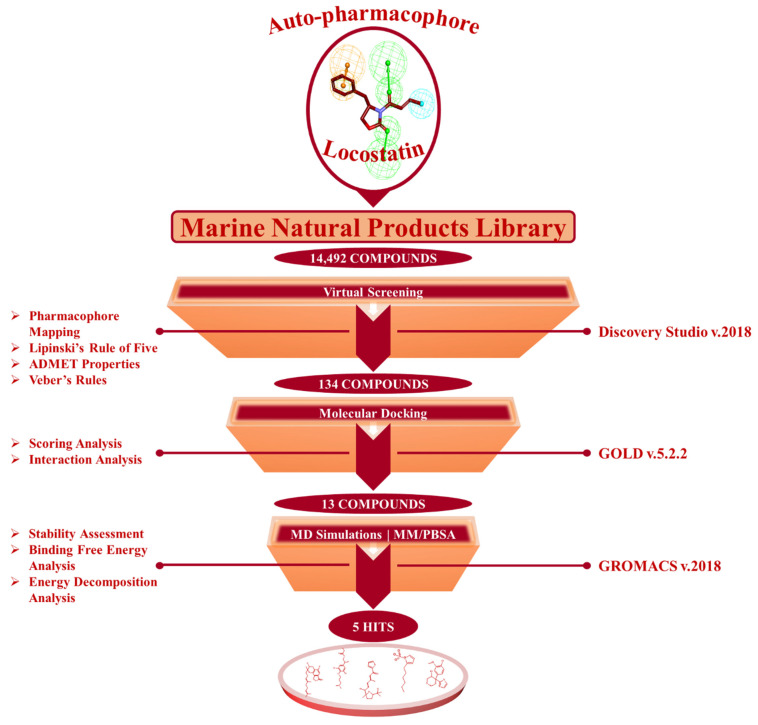
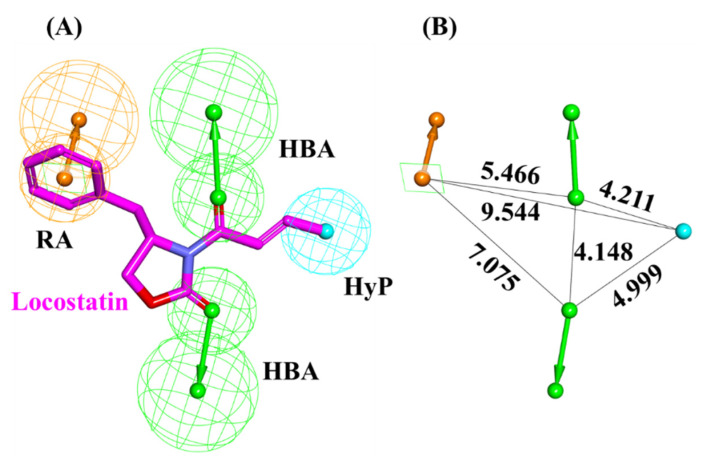
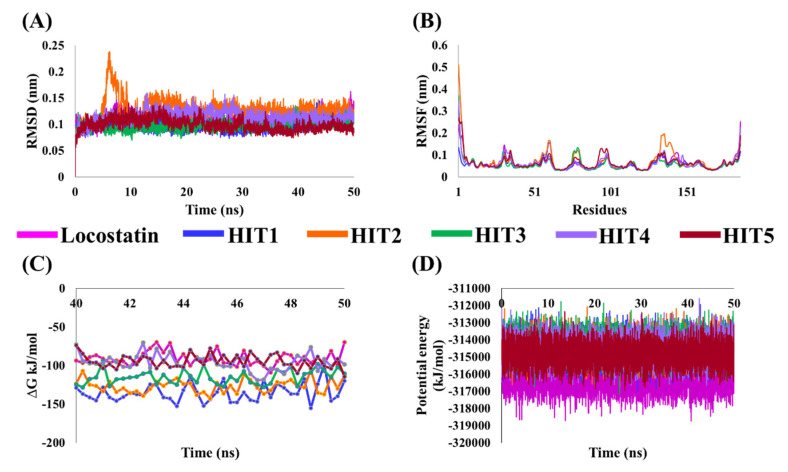
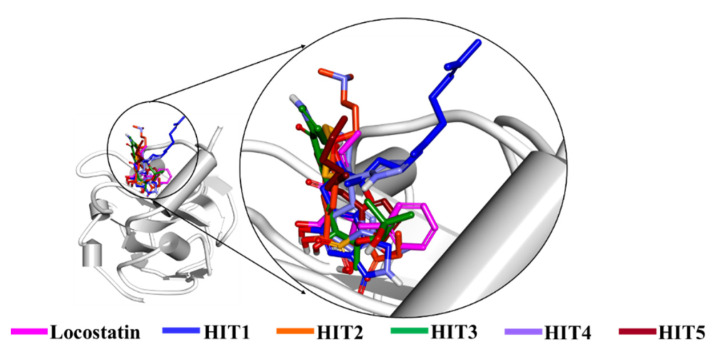
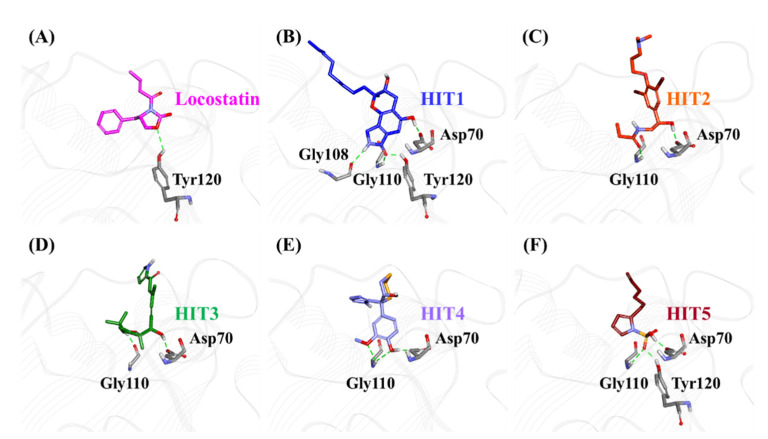
Raf kinase inhibitory protein (RKIP) is an essential regulator of the Ras/Raf-1/MEK/ERK signaling cascade and functions by directly interacting with the Raf-1 kinase. The abnormal expression of RKIP is linked with numerous diseases including cancers, Alzheimer's and diabetic nephropathy. Interestingly, RKIP also plays an indispensable role as a tumor suppressor, thus making it an attractive therapeutic target. To date, only a few small molecules have been reported to modulate the activity of RKIP, and there is a need to explore additional scaffolds. In order to achieve this objective, a pharmacophore model was generated that explores the features of locostatin, the most potent RKIP modulator. Correspondingly, the developed model was subjected to screening, and the mapped compounds from Marine Natural Products (MNP) library were retrieved. The mapped MNPs after ensuing drug-likeness filtration were escalated for molecular docking, where locostatin was regarded as a reference. The MNPs exhibiting higher docking scores than locostatin were considered for molecular dynamics simulations, and their binding affinity towards RKIP was computed via MM/PBSA. A total of five molecules revealed significantly better binding free energy scores than compared to locostatin and, therefore, were reckoned as hits. The hits from the present in silico investigation could act as potent RKIP modulators and disrupt interactions of RKIP with its binding proteins. Furthermore, the identification of potent modulators from marine natural habitat can act as a future drug-discovery source.
Raf 激酶抑制蛋白(RKIP)是 Ras/Raf-1/MEK/ERK 信号级联的重要调节因子,通过与 Raf-1 激酶直接相互作用发挥作用。RKIP 的异常表达与包括癌症、阿尔茨海默病和糖尿病肾病在内的许多疾病有关。有趣的是,RKIP 还作为肿瘤抑制因子发挥不可或缺的作用,因此成为有吸引力的治疗靶点。迄今为止,仅报道了少数小分子能够调节 RKIP 的活性,因此需要探索其他支架。为了实现这一目标,生成了一个药效团模型,该模型探索了最有效的 RKIP 调节剂 locostatin 的特征。相应地,对开发的模型进行了筛选,并从海洋天然产物 (MNP) 库中检索了映射化合物。对随后进行药物相似性过滤的映射 MNPs 进行了分子对接,将 locostatin 作为参考。将对接得分高于 locostatin 的 MNPs 用于分子动力学模拟,并通过 MM/PBSA 计算它们与 RKIP 的结合亲和力。总共发现了五个分子的结合自由能评分明显优于 locostatin,因此被认为是命中分子。来自本计算机研究的命中分子可以作为有效的 RKIP 调节剂,破坏 RKIP 与其结合蛋白的相互作用。此外,从海洋天然栖息地中识别出的有效调节剂可以作为未来药物发现的来源。