Department of Biochemistry and Molecular Biology, University of Texas Medical Branch (UTMB), Galveston, TX 77555, USA.
Department of Radiation Oncology, University of Texas Medical Branch (UTMB), Galveston, TX 77555, USA.
Int J Mol Sci. 2021 Oct 30;22(21):11806. doi: 10.3390/ijms222111806.
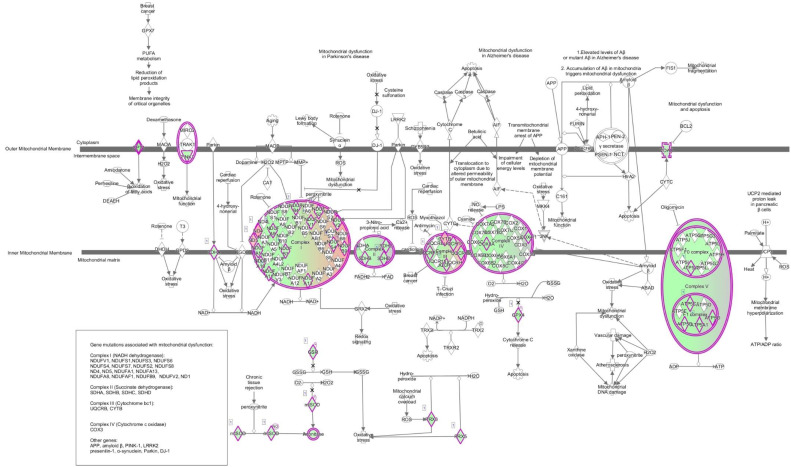
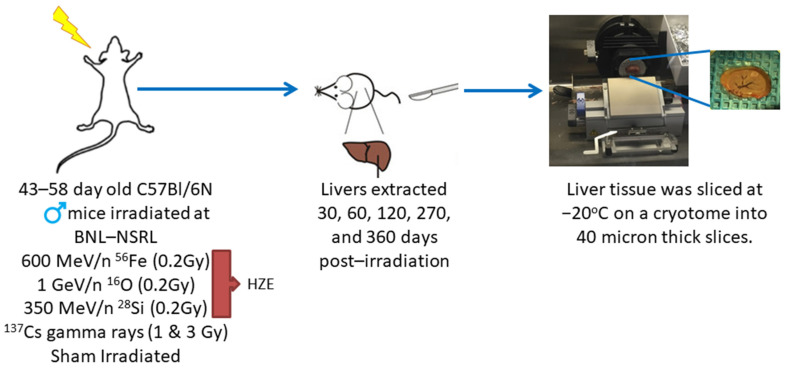
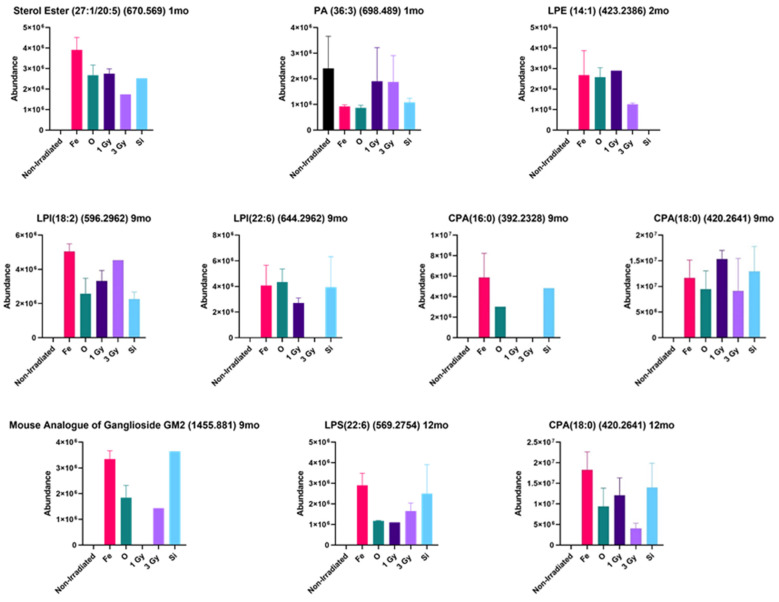
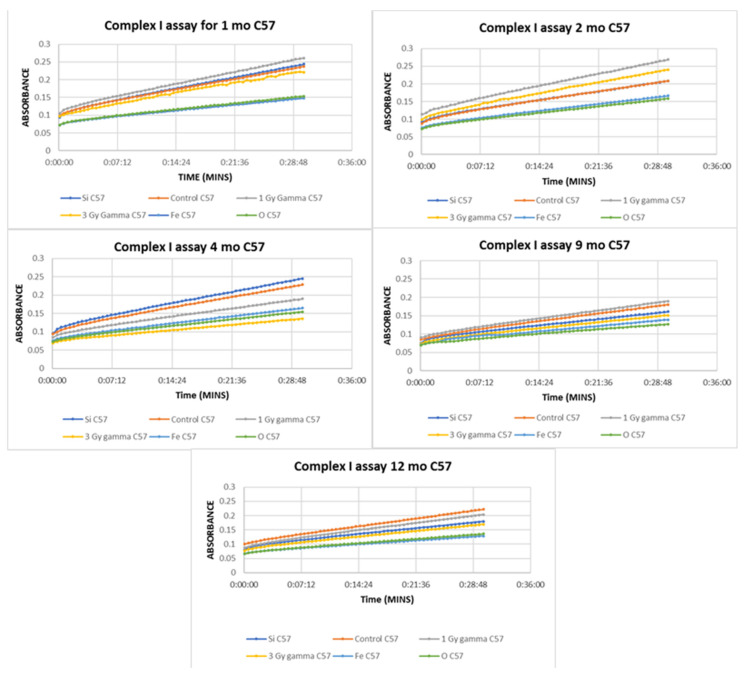
Galactic cosmic rays are primarily composed of protons (85%), helium (14%), and high charge/high energy ions (HZEs) such as Fe, Si, and O. HZE exposure is a major risk factor for astronauts during deep-space travel due to the possibility of HZE-induced cancer. A systems biology integrated omics approach encompassing transcriptomics, proteomics, lipidomics, and functional biochemical assays was used to identify microenvironmental changes induced by HZE exposure. C57BL/6 mice were placed into six treatment groups and received the following irradiation treatments: 600 MeV/n Fe (0.2 Gy), 1 GeV/n O (0.2 Gy), 350 MeV/n Si (0.2 Gy), Cs (1.0 Gy) gamma rays, Cs (3.0 Gy) gamma rays, and sham irradiation. Left liver lobes were collected at 30, 60, 120, 270, and 360 days post-irradiation. Analysis of transcriptomic and proteomic data utilizing ingenuity pathway analysis identified multiple pathways involved in mitochondrial function that were altered after HZE irradiation. Lipids also exhibited changes that were linked to mitochondrial function. Molecular assays for mitochondrial Complex I activity showed significant decreases in activity after HZE exposure. HZE-induced mitochondrial dysfunction suggests an increased risk for deep space travel. Microenvironmental and pathway analysis as performed in this research identified possible targets for countermeasures to mitigate risk.
银河宇宙射线主要由质子(85%)、氦(14%)和高电荷/高能离子(HZEs)组成,如铁、硅和氧。由于 HZE 诱导癌症的可能性,HZE 暴露是宇航员在深空旅行中的主要危险因素。采用涵盖转录组学、蛋白质组学、脂质组学和功能生化分析的系统生物学综合组学方法,鉴定 HZE 暴露诱导的微环境变化。将 C57BL/6 小鼠置于六个处理组中,并接受以下照射处理:600 MeV/n Fe(0.2 Gy)、1 GeV/n O(0.2 Gy)、350 MeV/n Si(0.2 Gy)、Cs(1.0 Gy)γ射线、Cs(3.0 Gy)γ射线和假照射。在照射后 30、60、120、270 和 360 天采集左肝叶。利用 Ingenuity 通路分析对转录组和蛋白质组数据进行分析,鉴定出多个与线粒体功能相关的通路,这些通路在 HZE 照射后发生改变。脂质也表现出与线粒体功能相关的变化。线粒体复合物 I 活性的分子测定显示,HZE 暴露后活性显著降低。HZE 诱导的线粒体功能障碍表明深空旅行的风险增加。本研究中进行的微环境和途径分析确定了可能的风险缓解对策的靶标。