Instituto International de Investigaciones Prehistóricas Cantabria, Universidad de Cantabria (IIIPC), Edificio Interfacultativo, Avda. de los Castros, s/n, 39005, Santander, Cantabria, Spain.
UMR7194 MNHN-CNRS/Département Homme et Environnement, Musée de l'Homme, Palais de Chaillot, 75016, Paris, France.
Sci Rep. 2021 Nov 23;11(1):22727. doi: 10.1038/s41598-021-02127-z.
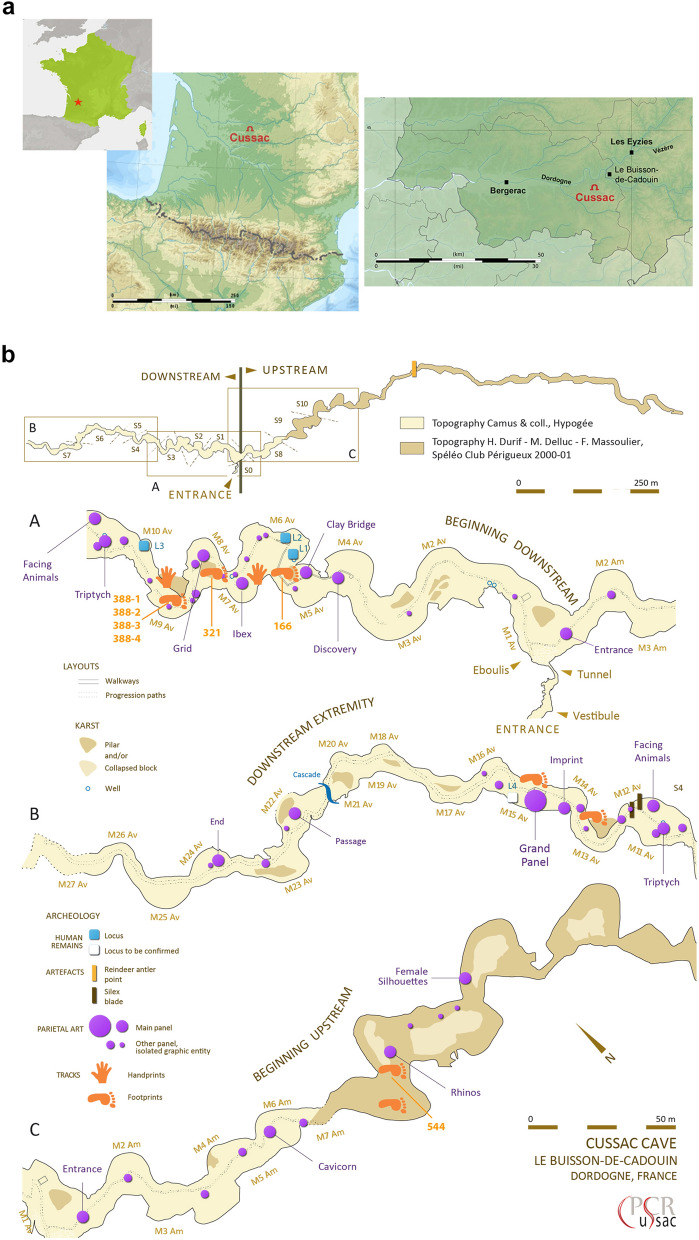
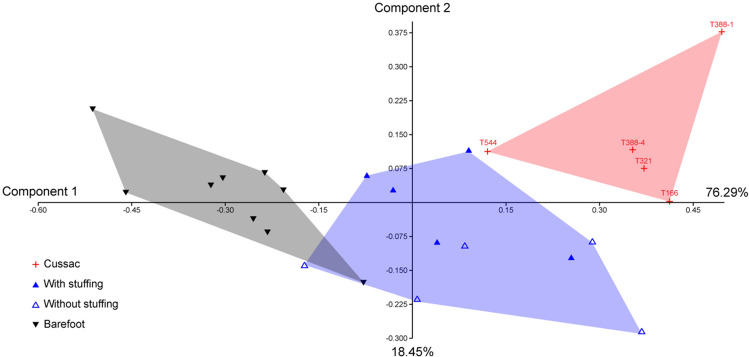
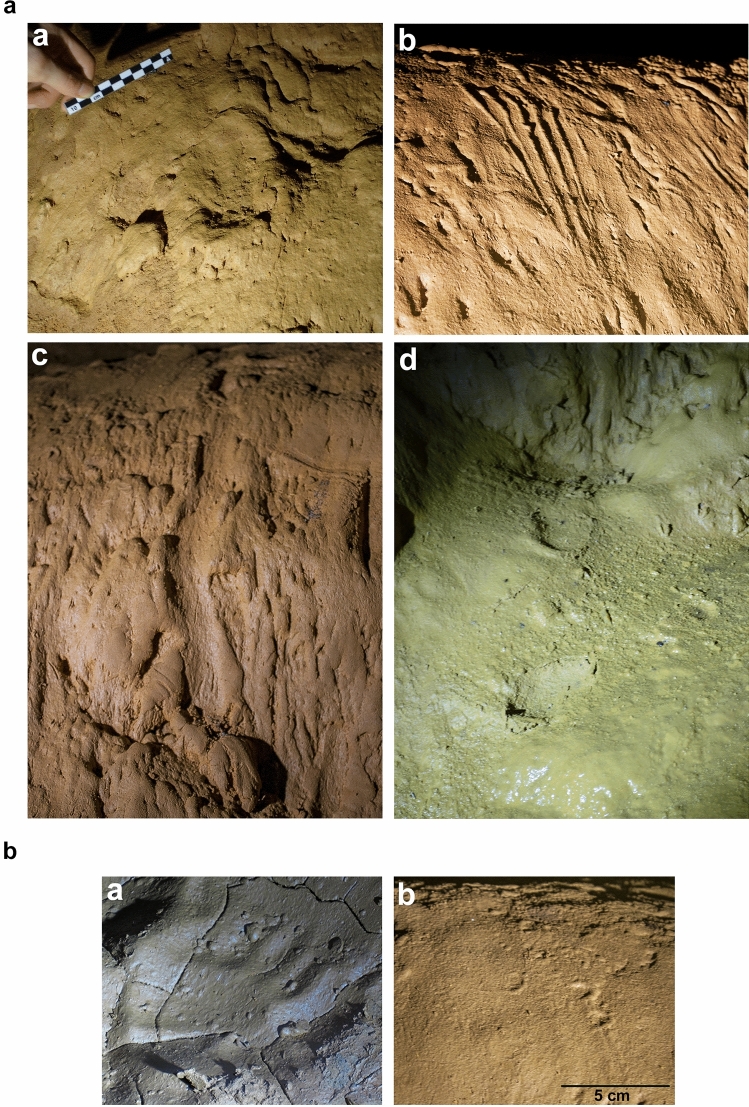
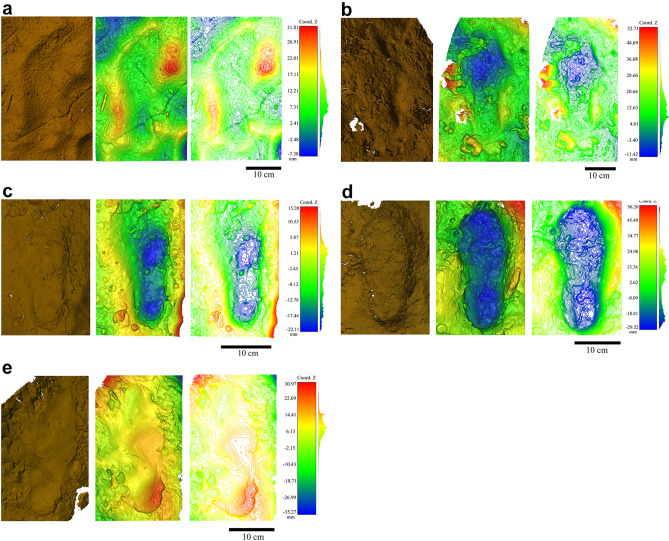
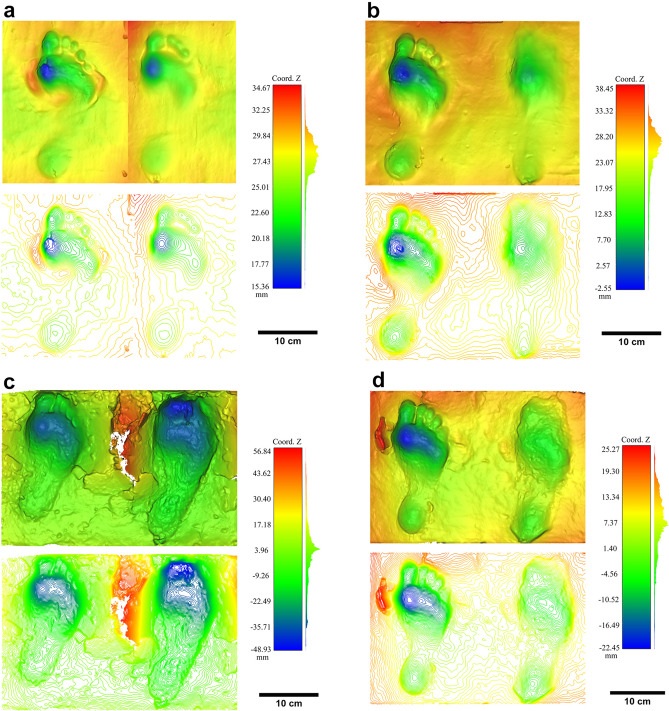
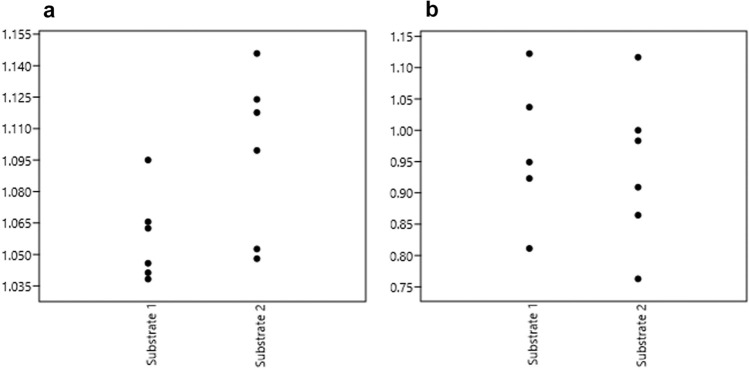
Humans appear to have regularly worn footwear since at least the Early Upper Palaeolithic. However, due to the perishable nature of footwear, the archaeological record of its presence during the Pleistocene is poor. While footwear would have played an essential role in protecting the foot, it could also have been used as ornamentation and/or as a social marker. Footprints may provide the most relevant insight regarding the origin and function of footwear. Here we report the discovery of footprints in Cussac Cave (southwest France) at 28-31 ka cal BP and the results of a multi-focal approach, including experimentation, that demonstrate that Gravettian people most likely wore footwear while moving through the cave. These singular footprints would constitute one of the oldest cases of indirect evidence for this unusual practice in decorated Palaeolithic caves and reinforce the exceptional nature of Cussac already attested by the presence of monumental engravings and funerary deposits.
人类似乎自旧石器时代晚期以来就经常穿鞋。然而,由于鞋类的易腐性,在更新世时期,其存在的考古记录很少。虽然鞋类在保护脚部方面发挥了重要作用,但它也可能被用作装饰和/或社会标志。足迹可能是关于鞋类起源和功能的最相关的线索。在这里,我们报告了在法国西南部的库萨克洞穴(Cussac Cave)发现了 28-31ka cal BP 的足迹,以及包括实验在内的多焦点方法的结果,这些结果表明,在穿过洞穴时,格拉维特(Gravettian)人很可能穿着鞋类。这些独特的足迹将成为装饰性旧石器时代洞穴中这种不寻常做法的最早间接证据之一,并且通过存在的纪念性雕刻和丧葬沉积物进一步加强了库萨克洞穴的特殊性质。