Zhang Zhiwei, Cui Zihan, Xie Zhuolin, Li Chang, Xu Chun, Guo Xia, Yu Jie, Chen Tengfei, Facchinetti Francesco, Bohnenberger Hanibal, Leong Tracy L, Xie Yufeng, Mao Xinliang, Zhao Jun
Department of Thoracic Surgery, the First Affiliated Hospital of Soochow University, Suzhou, China.
Department of Pathology, the First Affiliated Hospital of Soochow University, Suzhou, China.
Transl Lung Cancer Res. 2021 Oct;10(10):3995-4011. doi: 10.21037/tlcr-21-767.
Cyclin D1 (CCND1) is overexpressed in non-small cell lung cancer (NSCLC) and contributes to its tumorigenesis and progression. Accumulating evidence shows that ubiquitin-specific protease 5 (USP5), an important member of the USP family, acts as a tumor promoter by deubiquitinating and stabilizing oncoproteins. However, neither the mechanism for dysregulated turnover of CCND1 protein nor the association of CCND1 with USP5 in NSCLC is well understood.
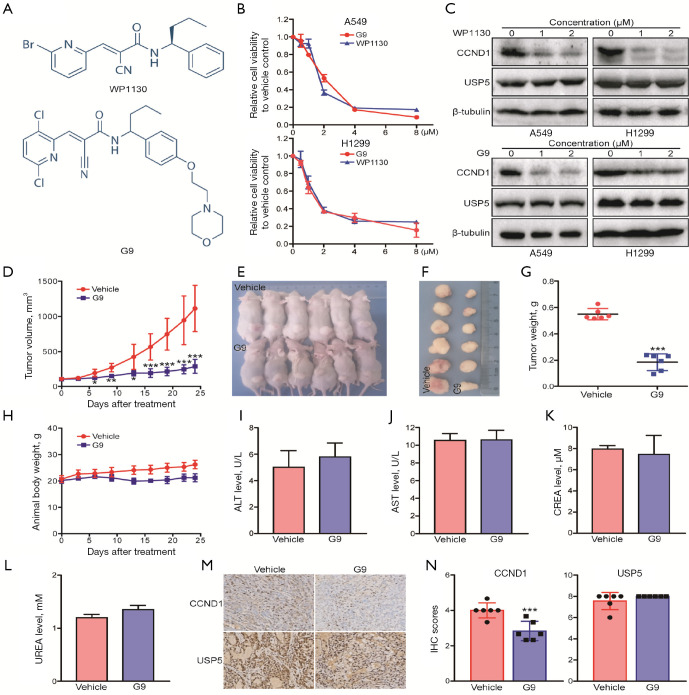
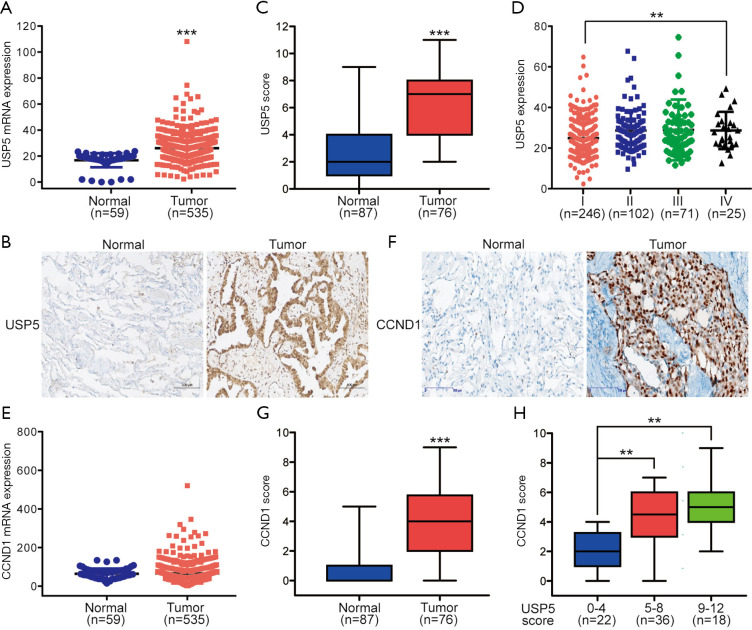
The association of USP5 with CCND1 in human NSCLC cells and clinical tissues was determined by immunoprecipitation/immunoblotting, immunohistochemistry (IHC), and The Cancer Genome Atlas database analyses. The effect of USP5 knockdown or overexpression on NSCLC cell proliferation was assessed by Cell Counting Kit-8, flow cytometry-based cell cycle, and colony formation assays. The effect of the USP5 inhibitor EOAI3402143 (G9) on NSCLC proliferation was analyzed by CCK-8 assay. The effect of G9 on NSCLC xenograft tumor growth was also examined , using athymic BALB/c nude mice.
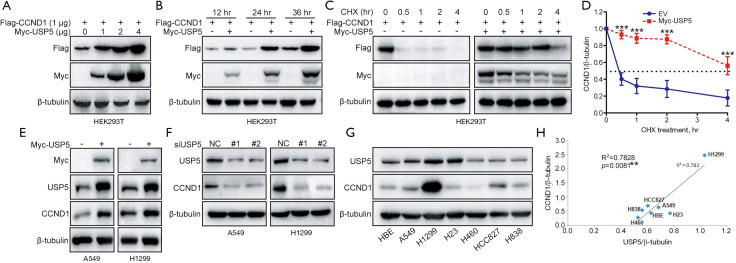
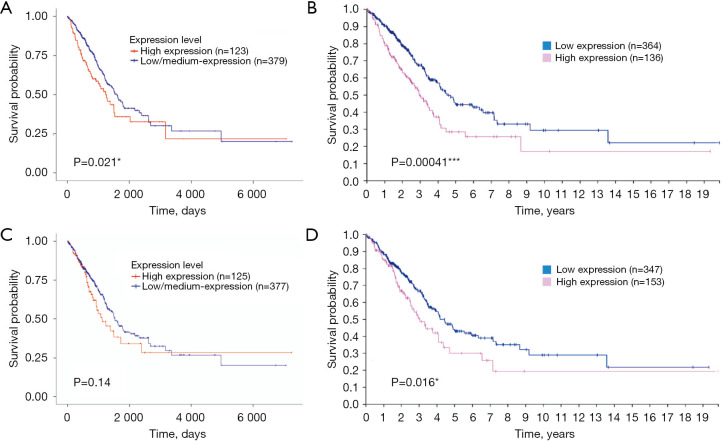
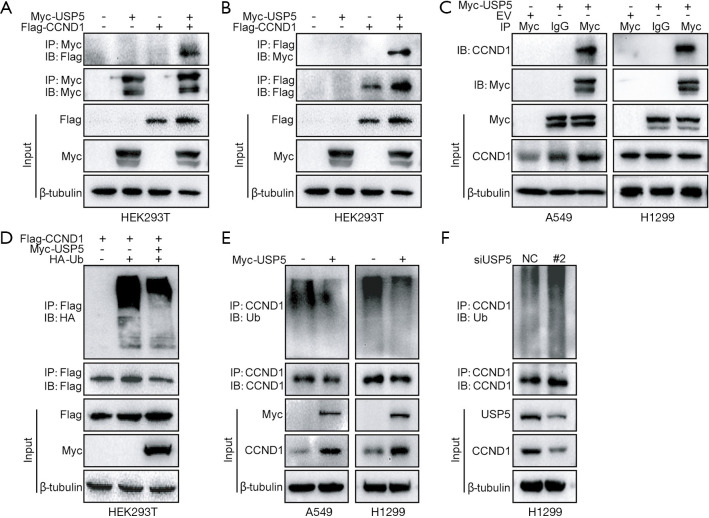
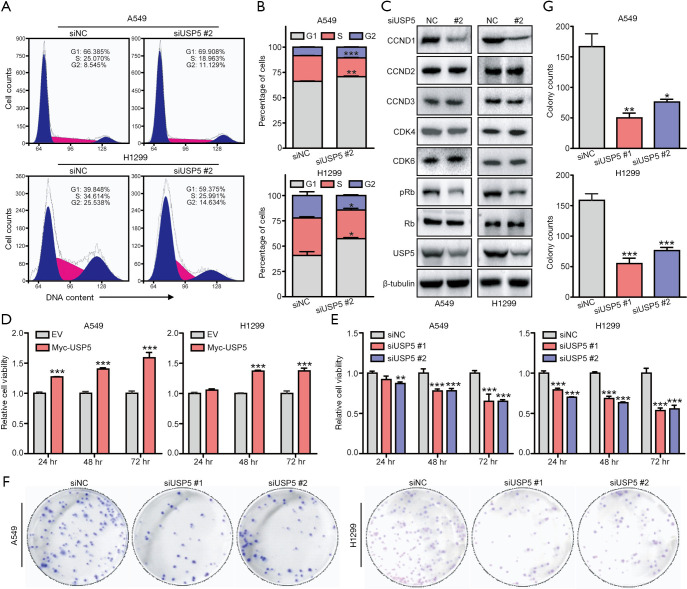
USP5 physically bound to CCND1 and decreased its polyubiquitination level, thereby stabilizing CCND1 protein. This USP5-CCND1 axis promoted NSCLC cell proliferation and colony formation. Further, knockdown of USP5 led to CCND1 degradation and cell cycle arrest in NSCLC cells. Importantly, this tumor-suppressive effect elicited by USP5 knockdown in NSCLC cells was validated and through chemical inhibition of USP5 activity using G9. Consistently, G9 downregulated the protein levels of CCND1 in NSCLC cells and xenograft tumor tissues. Also, the expression level of USP5 was positively associated with the protein level of CCND1 in human clinical NSCLC tissues.
This study has provided the first evidence that CCND1 is a novel substrate of USP5. The USP5-CCND1 axis could be a potential target for the treatment of NSCLC.
细胞周期蛋白D1(CCND1)在非小细胞肺癌(NSCLC)中过表达,促进其肿瘤发生和进展。越来越多的证据表明,泛素特异性蛋白酶5(USP5)作为USP家族的重要成员,通过去泛素化和稳定癌蛋白发挥肿瘤促进作用。然而,CCND1蛋白周转失调的机制以及NSCLC中CCND1与USP5的关联尚不清楚。
通过免疫沉淀/免疫印迹、免疫组织化学(IHC)和癌症基因组图谱数据库分析,确定USP5与人类NSCLC细胞及临床组织中CCND1的关联。通过细胞计数试剂盒-8、基于流式细胞术的细胞周期分析和集落形成试验,评估USP5敲低或过表达对NSCLC细胞增殖的影响。通过CCK-8试验分析USP5抑制剂EOAI3402143(G9)对NSCLC增殖的影响。使用无胸腺BALB/c裸鼠,检测G9对NSCLC异种移植瘤生长的影响。
USP5与CCND1发生物理结合并降低其多聚泛素化水平,从而稳定CCND1蛋白。该USP5-CCND1轴促进NSCLC细胞增殖和集落形成。此外,USP5敲低导致NSCLC细胞中CCND1降解和细胞周期停滞。重要的是,通过使用G9化学抑制USP5活性,在NSCLC细胞中验证了USP5敲低引发的这种肿瘤抑制作用。同样,G9下调NSCLC细胞和异种移植瘤组织中CCND1的蛋白水平。此外,在人类临床NSCLC组织中,USP5的表达水平与CCND1的蛋白水平呈正相关。
本研究首次证明CCND1是USP5的新底物。USP5-CCND1轴可能是NSCLC治疗的潜在靶点。