Kardas Przemysław, Lichwierowicz Aneta, Urbański Filip, Chudzyńska Ewa, Czech Marcin, Kardas Grzegorz
Department of Family Medicine, Medical University of Lodz, Łódź, Poland.
National Health Fund, Warsaw, Poland.
Front Pharmacol. 2021 Nov 18;12:739740. doi: 10.3389/fphar.2021.739740. eCollection 2021.
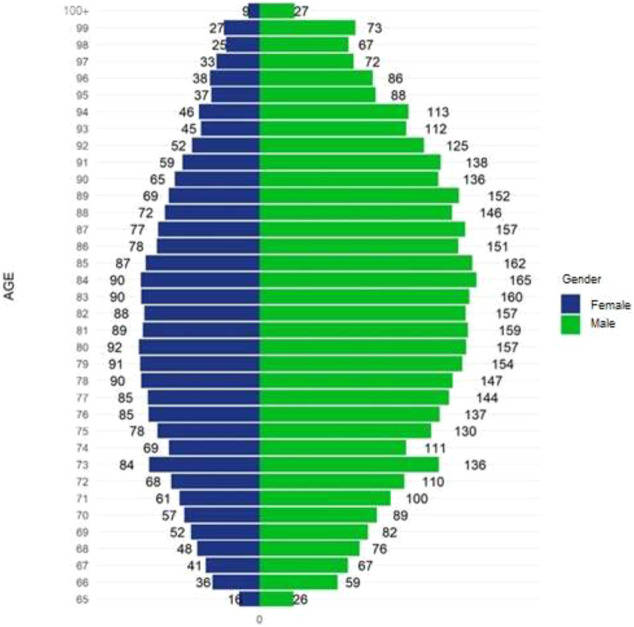
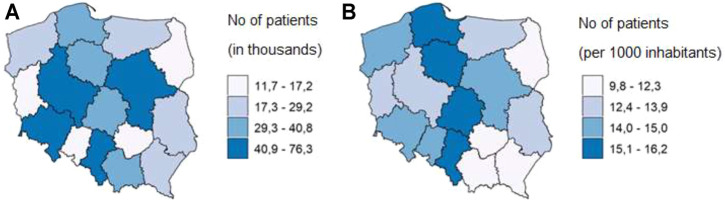
Multimorbidity often comes with age, making elderly people particularly prone to polypharmacy. Polypharmacy, in turn, is a risk factor for adverse drug reactions, drug-drug interactions, non-adherence to medication, negative health outcomes, and increased healthcare services utilization. The longer the exposure to polypharmacy is, the higher the risk of these consequences is. Therefore, a detailed assessment of the prevalence and drivers of chronic polypharmacy in the elderly is particularly important. To find out the prevalence of chronic polypharmacy in the elderly population of Poland, and to characterize the subgroup with the highest risk of this problem, using real-world data. A retrospective analysis of data on dispensation and healthcare services utilization held by the national payer organization for the year 2018. Chronic polypharmacy was defined as possession, as a result of dispensation, of five or more prescribed drugs within 80% of each of the consecutive 6 months. Chronic polypharmacy was found in 554.1 thousand patients, i.e. in 19.1% of the national 65+ cohort. On average, those patients were 76 years old, and 49.3% of them were female. The vast majority (68.6%) continued their polypharmacy for the period of the whole year. There was a marked variation in geographical distribution of chronic polypharmacy with the highest value of 1.7 thousand per 100,000 inhabitants in the Łódź Voivodeship. Patients exposed to chronic polypharmacy filled prescriptions from 4.5±2.36 healthcare professionals. The average number of drugs they used was 8.3±3.84 DDD per patient per day. The most often prescribed drugs were Metformin, Atorvastatin and Pantoprazole. The average annual hospitalisation rate in those patients was 1.03±2.4. This study was the first of this kind involving a nationwide assessment of chronic polypharmacy in Polish elderly people. We found that this problem affected one fifth of Polish older adults and it remains stable due to its direct relation to chronic conditions. Thus, our results confirm that this phenomenon is highly important for the national health policy and requires relevant interventions. The planned introduction of pharmaceutical care in Poland is expected to help in solving the problem.
多重疾病往往随着年龄增长而出现,这使得老年人特别容易出现多重用药的情况。反过来,多重用药又是药物不良反应、药物相互作用、不遵医嘱用药、负面健康结果以及医疗服务利用率增加的一个风险因素。接触多重用药的时间越长,出现这些后果的风险就越高。因此,详细评估老年人慢性多重用药的患病率及其驱动因素尤为重要。为了利用真实世界数据找出波兰老年人群中慢性多重用药的患病率,并对该问题风险最高的亚组进行特征描述。对国家医保支付机构持有的2018年配药和医疗服务利用数据进行回顾性分析。慢性多重用药被定义为在连续6个月中,每个月80%的时间内通过配药拥有5种或更多处方药。在55.41万名患者中发现了慢性多重用药情况,即占全国65岁及以上人群的19.1%。这些患者平均年龄为76岁,其中49.3%为女性。绝大多数(68.6%)患者在一整年的时间里持续多重用药。慢性多重用药的地理分布存在显著差异,罗兹省每10万居民中慢性多重用药患者数量最多,为1700人。接触慢性多重用药的患者从4.5±2.36名医疗专业人员处开具处方。他们平均每天使用的药物剂量为8.3±3.84限定日剂量。最常开具的药物是二甲双胍、阿托伐他汀和泮托拉唑。这些患者的平均年住院率为1.03±2.4。这项研究是首次对波兰老年人慢性多重用药进行全国性评估。我们发现这个问题影响了五分之一的波兰老年人,并且由于其与慢性病的直接关系,该问题依然存在。因此,我们的结果证实这一现象对国家卫生政策非常重要,需要采取相关干预措施。波兰计划引入药学服务,预计将有助于解决这一问题。