
高强度电工钢在连续冷轧中钢带撕裂原因分析
Analysis of the Reasons for the Tearing of Strips of High-Strength Electrical Steels in Tandem Cold Rolling.
作者信息
Petryshynets Ivan, Kováč František, Falat Ladislav
机构信息
Institute of Materials Research, Slovak Academy of Sciences, Watsonova 47, 04001 Košice, Slovakia.
出版信息
Materials (Basel). 2021 Nov 23;14(23):7124. doi: 10.3390/ma14237124.
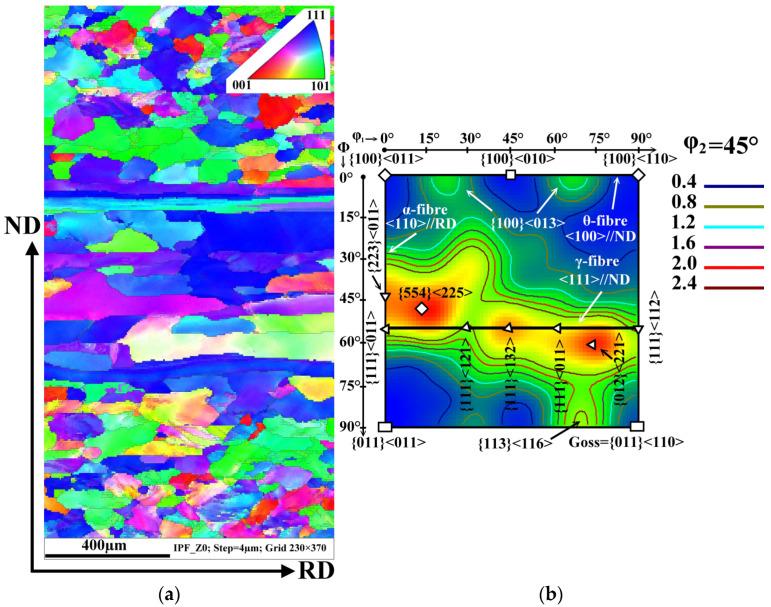
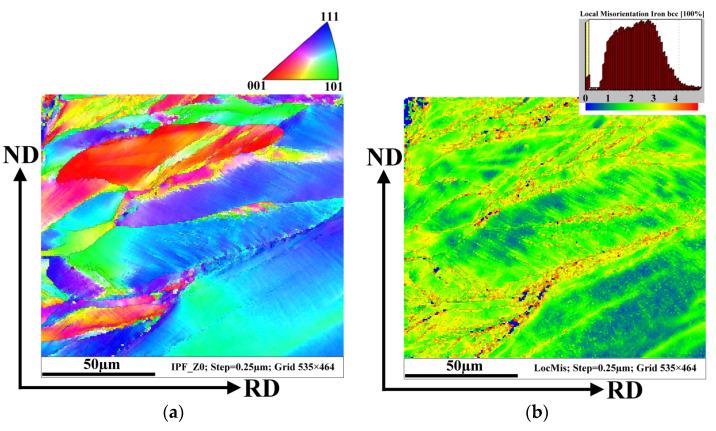
High-strength non-oriented electro-technical steels with a low thickness possess excellent isotropy of electromagnetic and mechanical properties which is highly required in the production of high-efficiency electric motors. The manufacturing process of this type of steel includes very important and technologically complex routes such as hot rolling, cold rolling, temper rolling, or final heat treatment. The final thickness is responsible for the decrease in eddy-current losses and is effectively achieved during cold rolling by the tandem rolling mill. Industrial production of thin sheets of high-strength silicon steels in high-speed tandem rolling mills is a rather demanding technological operation due to the increased material brittleness that is mainly caused by the intensive solid solution and deformation strengthening processes, making the dislocation motion more complex. The main objective of this work was to investigate the distribution of local mechanical strains through the thickness of high silicon steel hot bands, generated during the cold rolling. The experimental samples were analysed by means of electron back-scattered diffraction and scanning electron microscopy. From the performed analyses, the correlation between the material workability and the nucleation of cracks causing the observed steel strip failure during the tandem cold rolling was characterized. Specifically, the microstructural, textural, misorientation, and fractographic analyses clearly show that the investigated hot band was characterized by a bimodal distribution of ferrite grains and the formation of intergranular cracks took place only between the grains with recrystallized and deformed structures.
低厚度高强度无取向电工钢具有优异的电磁和机械性能各向同性,这在高效电动机生产中是非常需要的。这类钢的制造工艺包括非常重要且技术复杂的工序,如热轧、冷轧、平整轧制或最终热处理。最终厚度决定了涡流损耗的降低,并且在冷轧过程中通过连轧机可有效实现。由于主要由强化固溶体和变形强化过程导致材料脆性增加,使得位错运动更加复杂,在高速连轧机中工业生产高强度硅钢薄板是一项要求颇高的技术操作。这项工作的主要目的是研究冷轧过程中在高硅钢热轧带材厚度方向上局部机械应变的分布。通过电子背散射衍射和扫描电子显微镜对实验样品进行了分析。从所进行的分析中,确定了材料可加工性与在连轧过程中导致观察到的钢带失效的裂纹形核之间的相关性。具体而言,微观结构、织构、取向差和断口分析清楚地表明,所研究的热轧带材具有铁素体晶粒的双峰分布,并且沿晶裂纹仅在具有再结晶和变形结构的晶粒之间形成。




 Zotero 插件