
我们应如何优化利用因子浓缩物治疗血友病患者?
How do we optimally utilize factor concentrates in persons with hemophilia?
机构信息
Division of Hematology and Hematologic Malignancies, Department of Internal Medicine, University of Utah, Salt Lake City, UT.
出版信息
Hematology Am Soc Hematol Educ Program. 2021 Dec 10;2021(1):206-214. doi: 10.1182/hematology.2021000310.
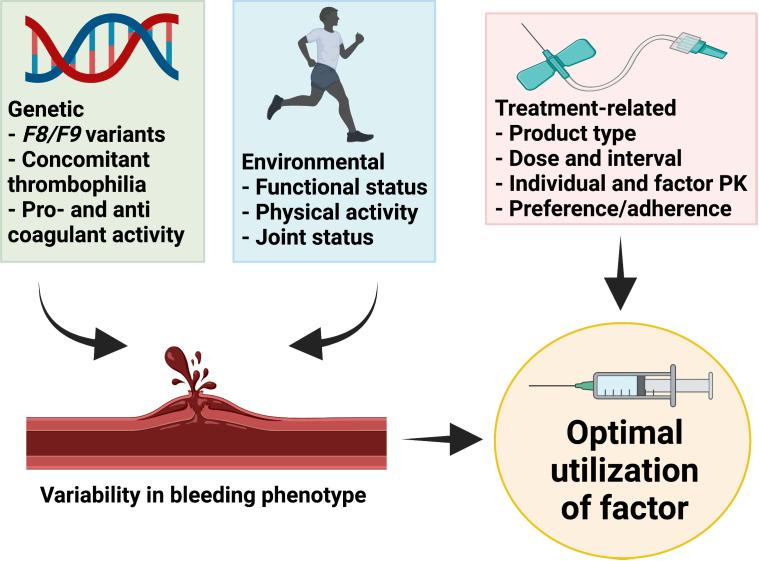
The current mainstay of therapy for hemophilia is to replace the deficient clotting factor with the intravenous administration of exogenous clotting factor concentrates. Prophylaxis factor replacement therapy is now considered the standard of care in both pediatric and adult patients with hemophilia with a severe phenotype to protect musculoskeletal health and improve quality of life. Heterogeneity in bleeding presentation among patients with hemophilia due to genetic, environmental, and treatment-related factors has been well described. Accordingly, the World Federation of Hemophilia recommends an individualized prophylaxis regimen that considers the factors mentioned above to meet the clinical needs of the patient, which can vary over time. This review focuses on the practical points of choosing the type of factor concentrate, dose, and interval while evaluating appropriate target trough factor levels and bleeding triggers such as level of physical activity and joint status. We also discuss the use of a pharmacokinetics assessment and its incorporation in the clinic for a tailored approach toward individualized management. Overall, adopting an individualized prophylaxis regimen leads to an optimal utilization of factor concentrates with maximum efficacy and minimum waste.
目前,血友病的主要治疗方法是通过静脉输注外源性凝血因子浓缩物来替代缺失的凝血因子。预防因子替代疗法现在被认为是严重表型血友病儿童和成年患者的标准治疗方法,以保护肌肉骨骼健康并提高生活质量。由于遗传、环境和治疗相关因素的影响,血友病患者的出血表现存在异质性,这一点已得到充分描述。因此,世界血友病联盟建议制定个体化的预防方案,考虑上述因素以满足患者的临床需求,这些需求可能会随时间而变化。本文重点讨论了在评估适当的目标低谷因子水平和出血触发因素(如身体活动水平和关节状况)时,选择因子浓缩物类型、剂量和间隔的实用要点。我们还讨论了药代动力学评估的使用及其在临床中的应用,以实现个体化管理。总的来说,采用个体化预防方案可以优化凝血因子浓缩物的利用,实现最大疗效和最小浪费。
 Zotero 插件