• 文献检索
  • 文档翻译
  • 深度研究
  • 学术资讯
  • Suppr Zotero 插件Zotero 插件
  • 邀请有礼
  • 套餐&价格
  • 历史记录
应用&插件
Suppr Zotero 插件Zotero 插件浏览器插件Mac 客户端Windows 客户端微信小程序
定价
高级版会员购买积分包购买API积分包
服务
文献检索文档翻译深度研究API 文档MCP 服务
关于我们
关于 Suppr公司介绍联系我们用户协议隐私条款
关注我们

Suppr 超能文献

核心技术专利:CN118964589B侵权必究
粤ICP备2023148730 号-1Suppr @ 2026

文献检索

告别复杂PubMed语法,用中文像聊天一样搜索,搜遍4000万医学文献。AI智能推荐,让科研检索更轻松。

立即免费搜索

文件翻译

保留排版,准确专业,支持PDF/Word/PPT等文件格式,支持 12+语言互译。

免费翻译文档

深度研究

AI帮你快速写综述,25分钟生成高质量综述,智能提取关键信息,辅助科研写作。

立即免费体验

循环生物标志物在铂耐药性卵巢癌中的作用。

Role of Circulating Biomarkers in Platinum-Resistant Ovarian Cancer.

机构信息

Department of Maternal and Child Health and Urological Sciences, "Sapienza" University of Rome, Polyclinic Umberto I, 00161 Rome, Italy.

出版信息

Int J Mol Sci. 2021 Dec 20;22(24):13650. doi: 10.3390/ijms222413650.

DOI:10.3390/ijms222413650
PMID:34948446
原文链接:https://pmc.ncbi.nlm.nih.gov/articles/PMC8707281/
Abstract

Ovarian cancer (OC) is the second most common cause of death in women with gynecological cancer. Considering the poor prognosis, particularly in the case of platinum-resistant (PtR) disease, a huge effort was made to define new biomarkers able to help physicians in approaching and treating these challenging patients. Currently, most data can be obtained from tumor biopsy samples, but this is not always available and implies a surgical procedure. On the other hand, circulating biomarkers are detected with non-invasive methods, although this might require expensive techniques. Given the fervent hope in their value, here we focused on the most studied circulating biomarkers that could play a role in PtR OC.

摘要

卵巢癌 (OC) 是妇科癌症患者死亡的第二大主要原因。鉴于其预后较差,尤其是铂类耐药 (PtR) 疾病的情况下,人们做出了巨大努力来定义新的生物标志物,以帮助医生治疗这些具有挑战性的患者。目前,大多数数据可从肿瘤活检样本中获得,但这并非总是可行,且需要进行手术。另一方面,循环生物标志物可通过非侵入性方法检测,但这可能需要昂贵的技术。鉴于人们对它们的价值寄予厚望,我们在此重点关注最有研究价值的循环生物标志物,它们可能在铂类耐药 OC 中发挥作用。
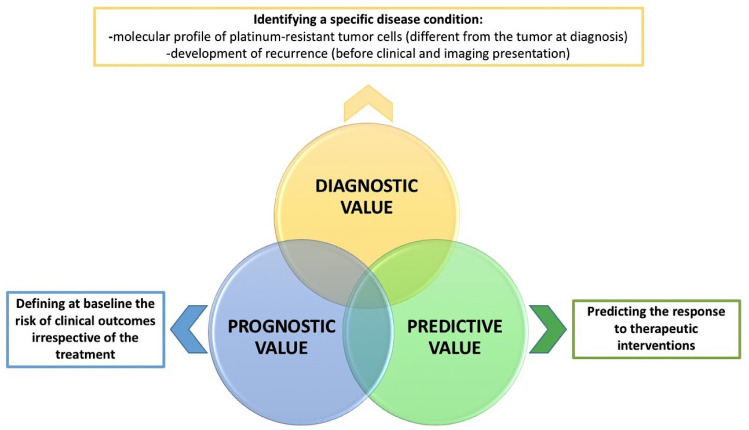
https://cdn.ncbi.nlm.nih.gov/pmc/blobs/e28a/8707281/c6c4dbb1b896/ijms-22-13650-g004.jpg
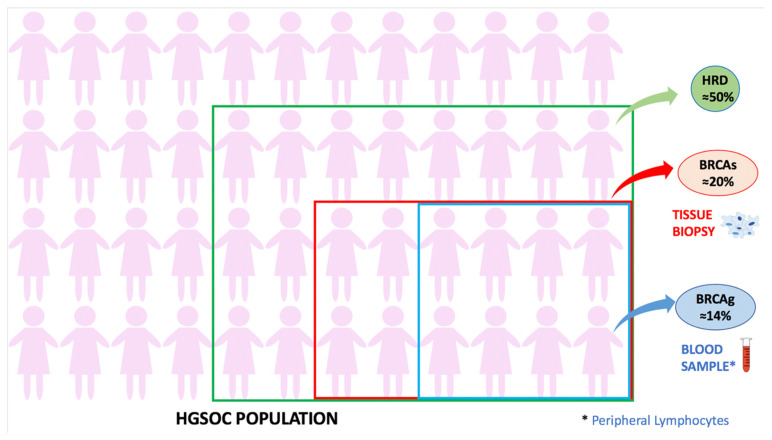
https://cdn.ncbi.nlm.nih.gov/pmc/blobs/e28a/8707281/c9b8feb71205/ijms-22-13650-g001.jpg
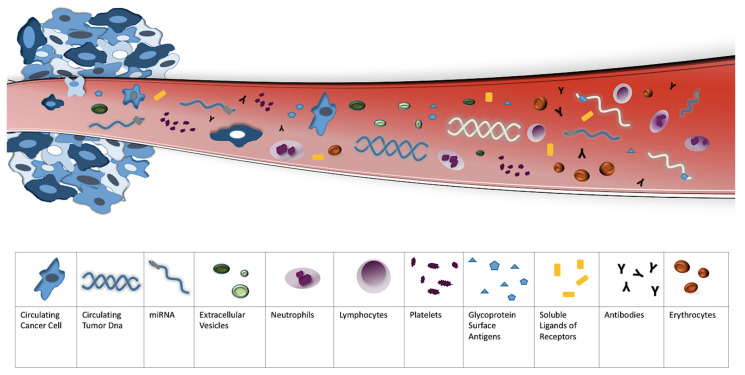
https://cdn.ncbi.nlm.nih.gov/pmc/blobs/e28a/8707281/c6fe271aac4d/ijms-22-13650-g002.jpg
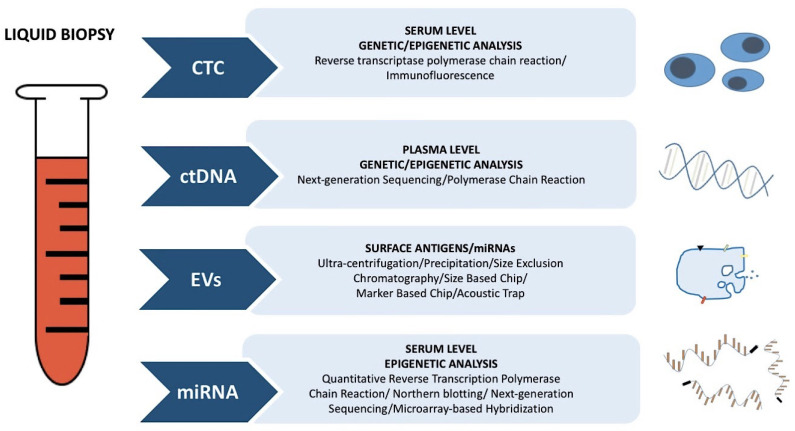
https://cdn.ncbi.nlm.nih.gov/pmc/blobs/e28a/8707281/cdec32c29b32/ijms-22-13650-g003.jpg
https://cdn.ncbi.nlm.nih.gov/pmc/blobs/e28a/8707281/c6c4dbb1b896/ijms-22-13650-g004.jpg
https://cdn.ncbi.nlm.nih.gov/pmc/blobs/e28a/8707281/c9b8feb71205/ijms-22-13650-g001.jpg
https://cdn.ncbi.nlm.nih.gov/pmc/blobs/e28a/8707281/c6fe271aac4d/ijms-22-13650-g002.jpg
https://cdn.ncbi.nlm.nih.gov/pmc/blobs/e28a/8707281/cdec32c29b32/ijms-22-13650-g003.jpg
https://cdn.ncbi.nlm.nih.gov/pmc/blobs/e28a/8707281/c6c4dbb1b896/ijms-22-13650-g004.jpg