Ramnarine Stephen D B Jr, Jayaraman Jayaraj, Ramsubhag Adesh
Department of Life Sciences, The University of the West Indies, St. Augustine, Trinidad and Tobago.
PeerJ. 2022 Jan 3;9:e12632. doi: 10.7717/peerj.12632. eCollection 2022.
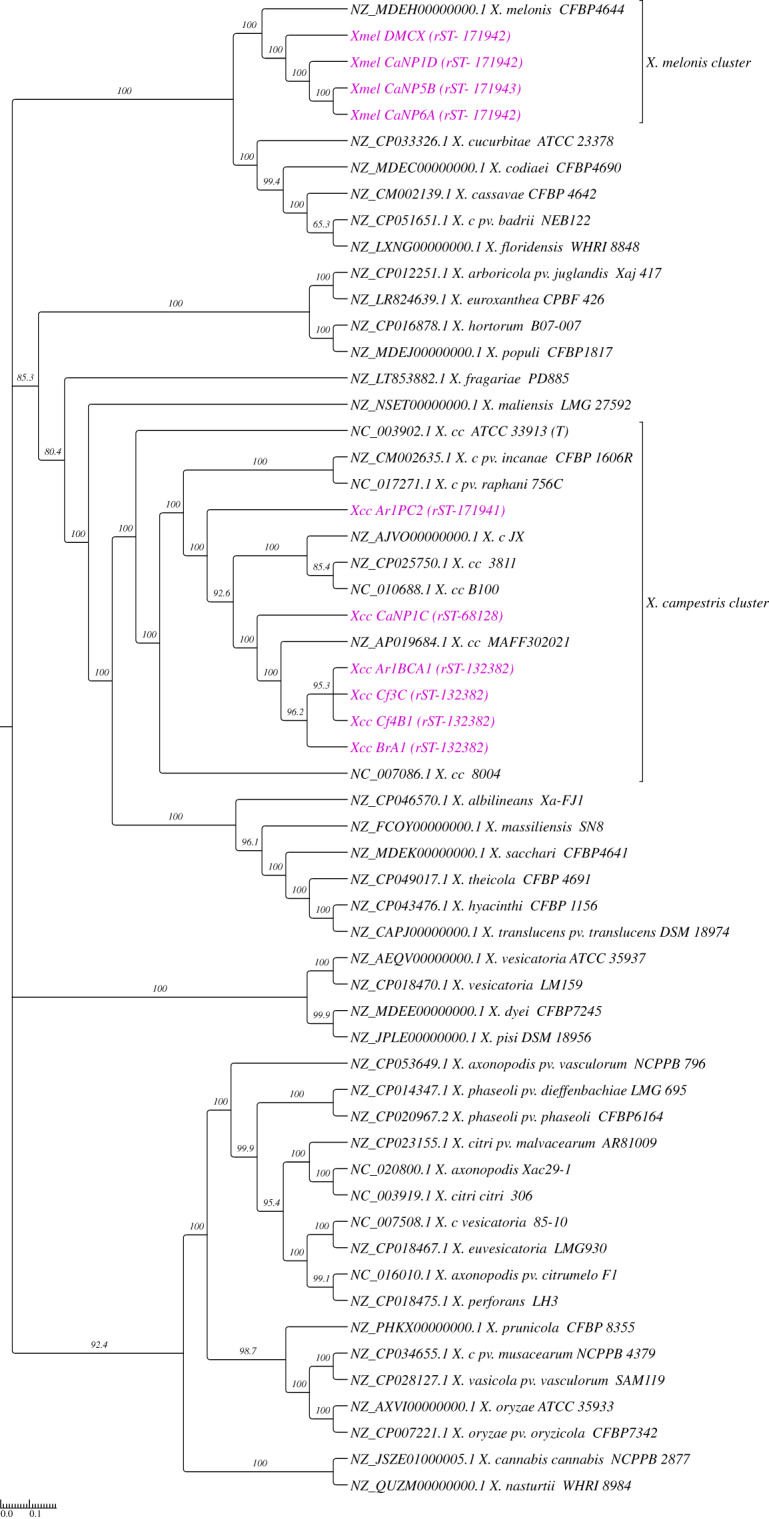
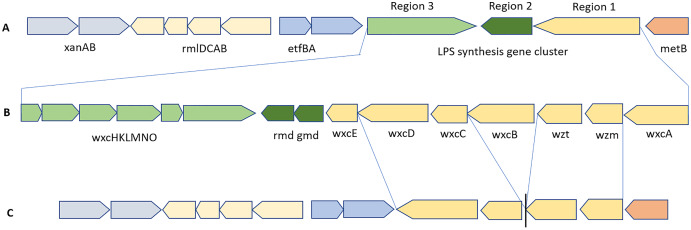
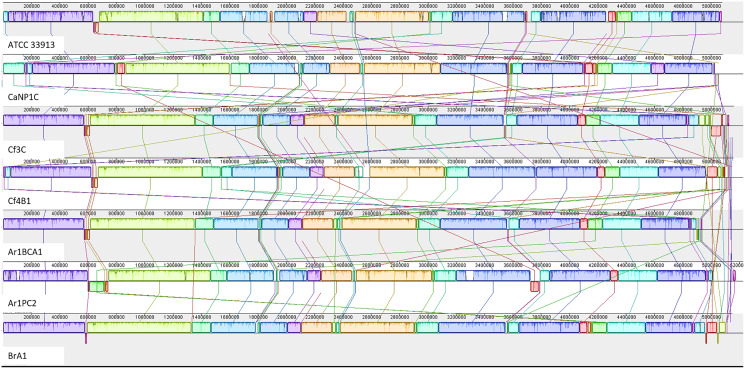
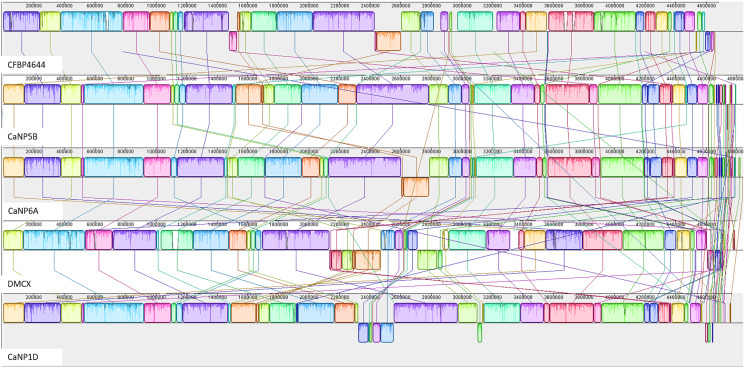
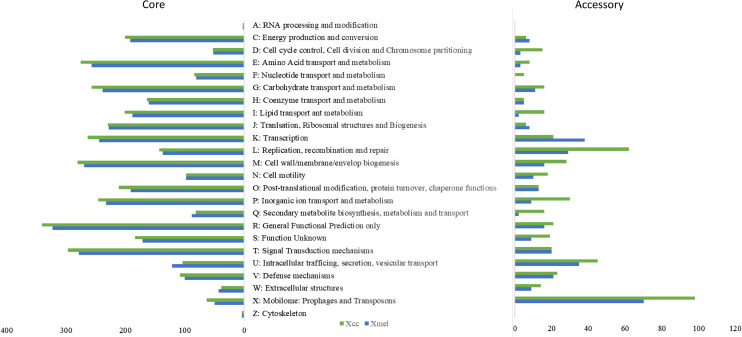
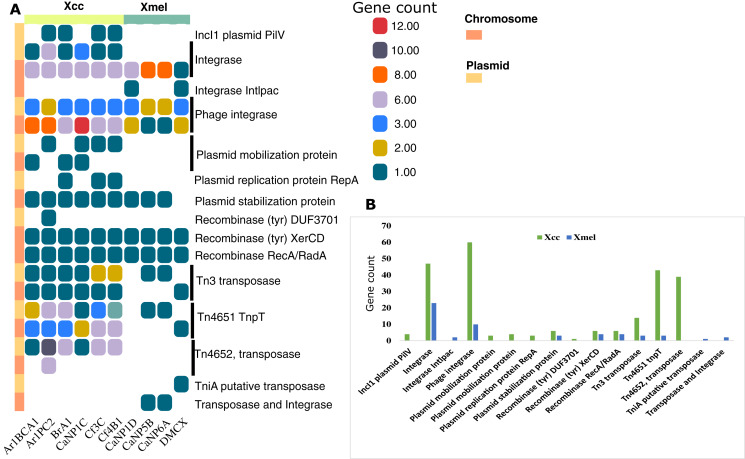
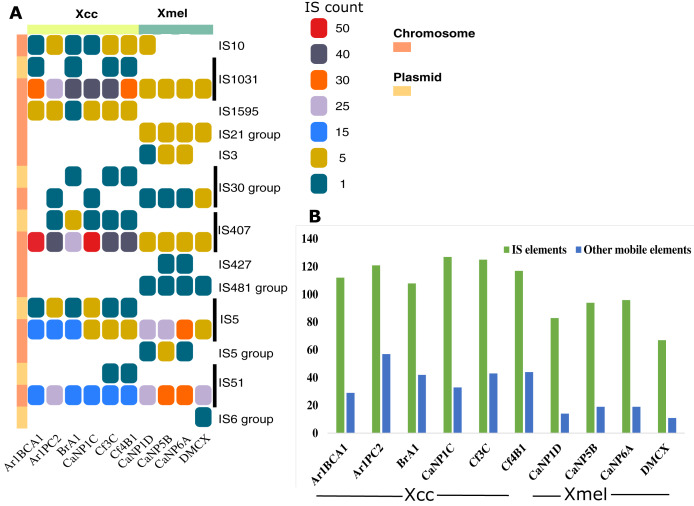
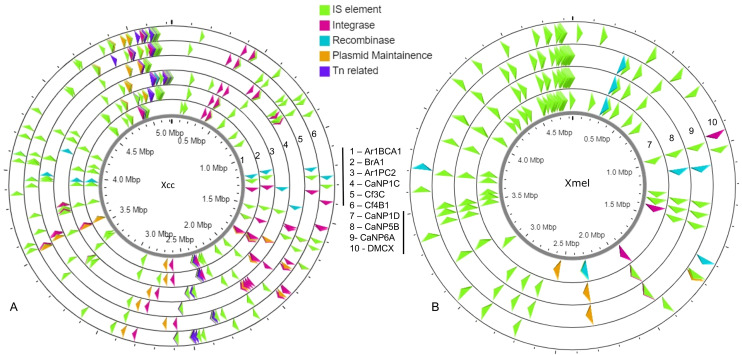
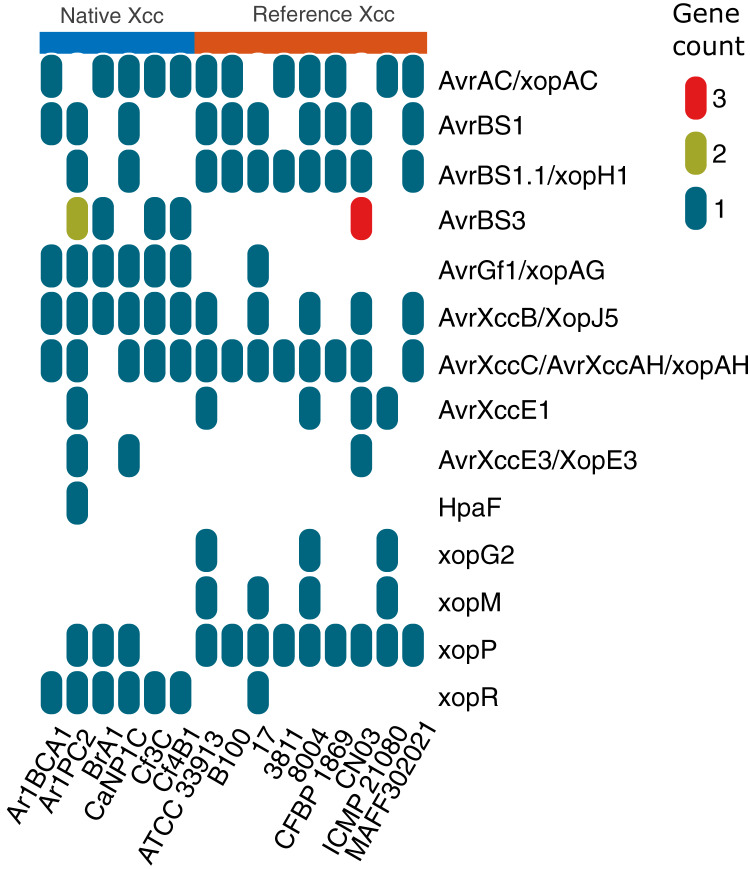
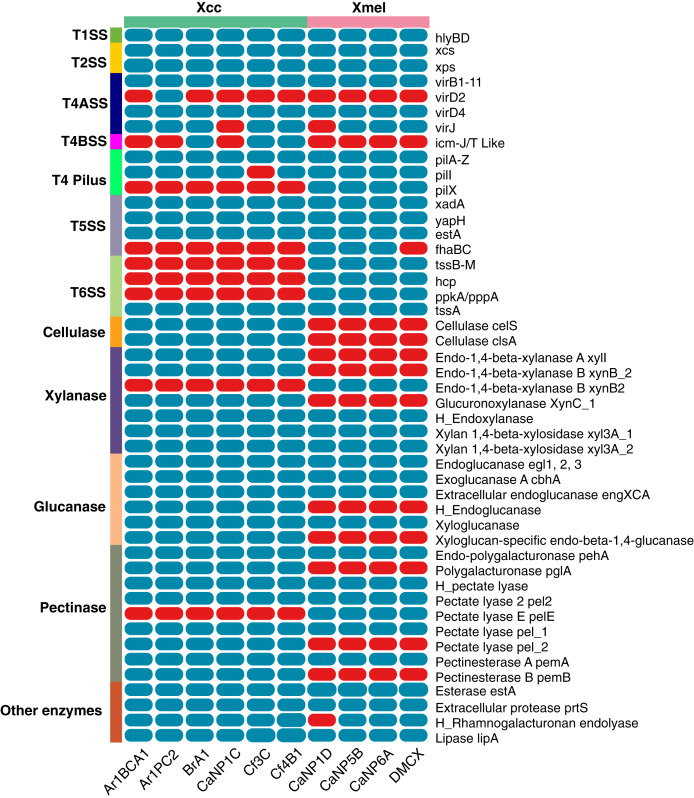
Black-rot disease caused by the phytopathogen pv. (Xcc) continues to have considerable impacts on the productivity of cruciferous crops in Trinidad and Tobago and the wider Caribbean region. While the widespread occurrence of resistance of Xcc against bactericidal agrochemicals can contribute to the high disease burdens, the role of virulence and pathogenicity features of local strains on disease prevalence and severity has not been investigated yet. In the present study, a comparative genomic analysis was performed on 6 pathogenic Xcc and 4 co-isolated non-pathogenic (Xmel) strains from diseased crucifer plants grown in fields with heavy chemical use in Trinidad. Native isolates were grouped into two known and four newly assigned ribosomal sequence types (rST). Mobile genetic elements were identified which belonged to the IS3, IS5 family, Tn3 transposon, resolvases, and T4SS gene clusters. Additionally, exogenous plasmid derived sequences with origins from other bacterial species were characterised. Although several instances of genomic rearrangements were observed, native Xcc and Xmel isolates shared a significant level of structural homology with reference genomes, Xcc ATCC 33913 and Xmel CFBP4644, respectively. Complete T1SS , T2SS, T4SS and T5SS , and gene clusters were identified in both species. Only Xmel strains contained a complete T6SS but no T3SS. Both species contained a complex repertoire of extracellular cell wall degrading enzymes. Native Xcc strains contained 37 T3SS and effector genes but a variable and unique profile of 8 , 4 and 1 genes. Interestingly, Xmel strains contained several T3SS effectors with low similarity to references including (89%), (73%), (90%) and (87%). Furthermore, only Xmel genomes contained a CRISPR-Cas I-F array, but no lipopolysaccharide gene cluster. Xmel strains were confirmed to be non-pathogenic by pathogenicity assays. The results of this study will be useful to guide future research into virulence mechanisms, agrochemical resistance, pathogenomics and the potential role of the co-isolated non-pathogenic strains on Xcc infections.
由植物病原体野油菜黄单胞菌野油菜致病变种(Xcc)引起的黑腐病,持续对特立尼达和多巴哥以及更广泛的加勒比地区十字花科作物的产量产生重大影响。虽然Xcc对杀菌农用化学品的抗性广泛存在,可能导致疾病负担居高不下,但当地菌株的毒力和致病性特征对疾病流行率和严重程度的作用尚未得到研究。在本研究中,对来自特立尼达化学使用量大的田间患病十字花科植物的6株致病性Xcc菌株和4株共同分离的非致病性野油菜黄单胞菌(Xmel)菌株进行了比较基因组分析。本地分离株被分为两种已知的和四种新指定的核糖体序列类型(rST)。鉴定出了属于IS3、IS5家族、Tn3转座子、解离酶和IV型分泌系统(T4SS)基因簇的移动遗传元件。此外,还对源自其他细菌物种的外源质粒衍生序列进行了表征。尽管观察到了几例基因组重排,但本地Xcc和Xmel分离株分别与参考基因组Xcc ATCC 33913和Xmel CFBP4644具有显著水平的结构同源性。在两个物种中都鉴定出了完整的I型分泌系统(T1SS)、II型分泌系统(T2SS)、IV型分泌系统(T4SS)和V型分泌系统(T5SS)以及基因簇。只有Xmel菌株含有完整的VI型分泌系统(T6SS),但没有III型分泌系统(T3SS)。两个物种都含有复杂的细胞外细胞壁降解酶库。本地Xcc菌株含有37个T3SS和效应子基因,但有8个、4个和1个基因的可变且独特的图谱。有趣的是,Xmel菌株含有几个与参考序列相似度较低的T3SS效应子,包括(89%)、(73%)、(90%)和(87%)。此外,只有Xmel基因组含有CRISPR-Cas I-F阵列,但没有脂多糖基因簇。通过致病性测定证实Xmel菌株无致病性。本研究结果将有助于指导未来关于毒力机制、农用化学品抗性、病原基因组学以及共同分离的非致病性菌株对Xcc感染的潜在作用的研究。