Xu Miao, Fang Shuo, Ma Xiaorong
Department of Plastic and Reconstructive Surgery, Xinhua Hospital, Shanghai Jiao Tong University School of Medicine, Shanghai, China.
Department of Plastic and Reconstructive Surgery, Changhai Hospital, Naval Medical University, Shanghai, China.
Ann Transl Med. 2022 Jan;10(2):66. doi: 10.21037/atm-21-6557.
Reducing cutaneous scar formation is important for assessing the success of skin wound healing. Although it is generally accepted that adipose-derived mesenchymal stem cells (AMSCs) have substantial therapeutic potential, efforts are continuously made to improve the outcome of AMSC therapy. Post-transcriptional suppression of procollagen-lysine 1, 2-oxoglutarate 5-dioxygenase 1 (PLOD1) in AMSCs has been shown to greatly reduce scar formation during skin wound healing, likely through modulating macrophage polarization. In the present study, we tested whether a CD73 subpopulation of AMSCs could reduce scar formation compared with CD73 AMSCs.
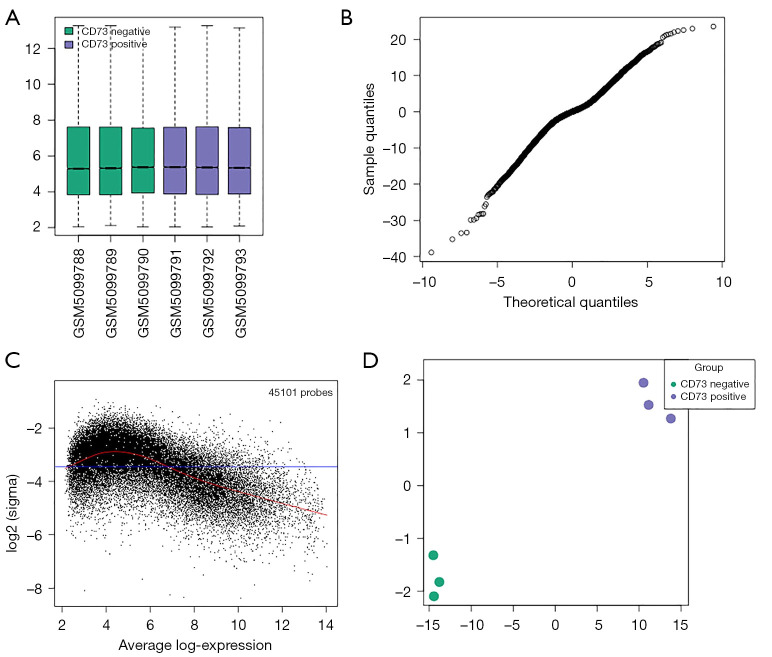
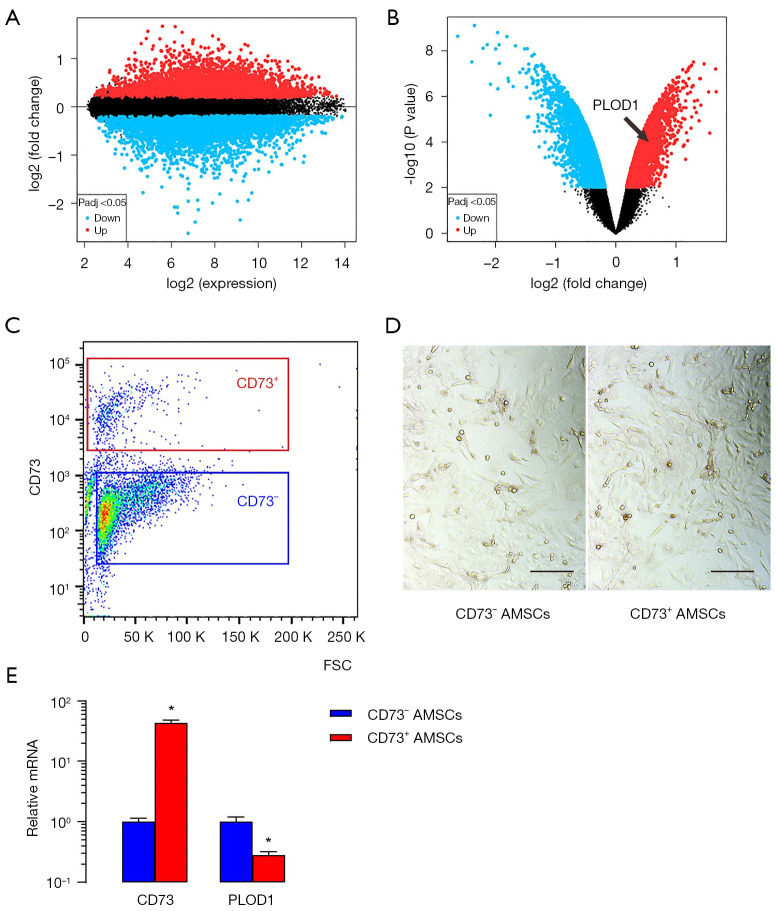
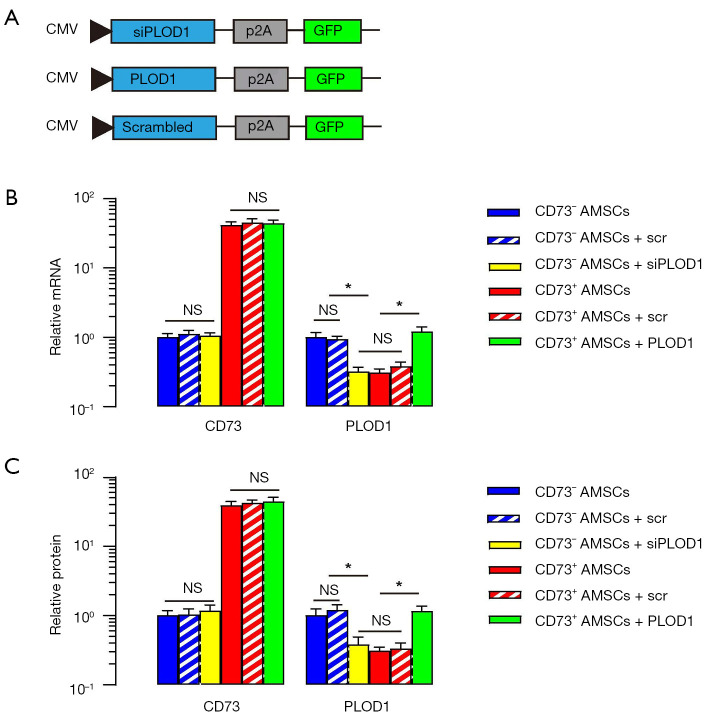
The gene profile of CD73 versus CD73 AMSCs was obtained from a validated public database, GSE167219. AMSCs were isolated from adipose tissue surrounding the groin of mice, after which CD73 versus CD73 AMSCs were sorted using flow cytometry. PLOD1 levels were determined in CD73 versus CD73 AMSCs. Then, PLOD1 in CD73 AMSCs was depleted by a short-hair interfering RNA against PLOD1 (sh-PLOD1), while PLOD1 in CD73 AMSCs was increased by expression of a PLOD1 transgene. A blade was used to induce a skin injury on the middle back of the mice. Either CD73 AMSCs or CD73 PLOD1 AMSCs or CD73 AMSCs or CD73 sh-PLOD1 AMSCs were intravenously transplanted into the injured region of the mice. Fibrosis and the underlying mechanisms were investigated. Co-immunoprecipitation was performed to evaluate interaction between CD73 and PLOD1.
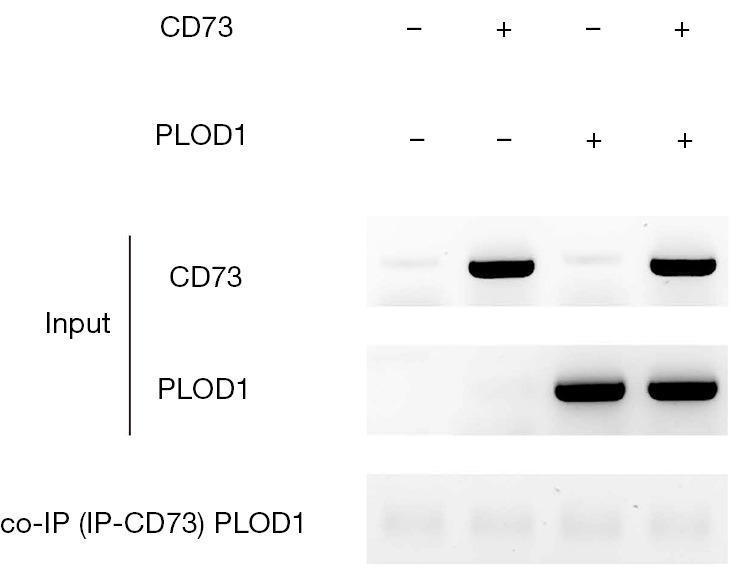
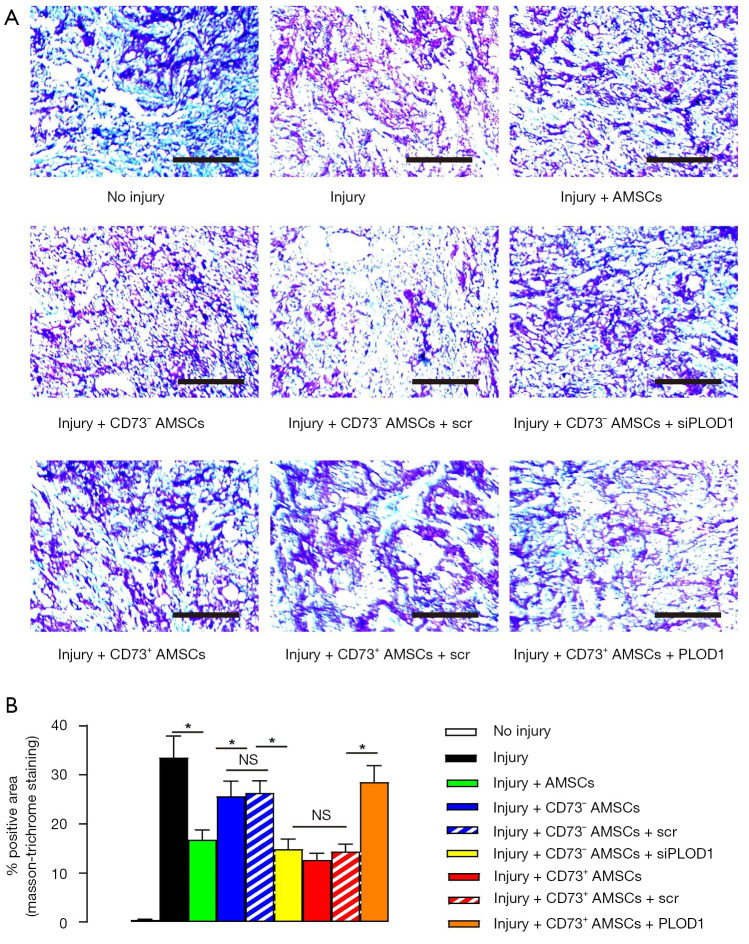
CD73 AMSCs expressed significantly lower levels of PLOD1, a potent stimulator of fibrosis, compared with CD73 AMSCs. Transplantation of CD73 AMSCs generated significantly reduced fibrosis at the skin injury site compared with CD73 AMSCs. However, expression of PLOD1 in CD73 AMSCs abolished its advantageous effects on fibrosis reduction, while depletion of PLOD1 in CD73 AMSCs improved the outcome of fibrosis to the levels of transplantation of CD73 AMSCs. Co-immunoprecipitation showed no direct protein interaction between CD73 and PLOD1.
CD73 AMSCs are a subgroup of AMSCs with better therapeutic effects on wound healing, and can inhibit scar formation through reduced PLOD1 in an indirect manner.
减少皮肤瘢痕形成对于评估皮肤伤口愈合的成功与否至关重要。尽管人们普遍认为脂肪来源的间充质干细胞(AMSCs)具有巨大的治疗潜力,但仍在不断努力改善AMSC治疗的效果。已表明,对AMSCs中的原胶原赖氨酸1,2-酮戊二酸5-双加氧酶1(PLOD1)进行转录后抑制,可能通过调节巨噬细胞极化,在皮肤伤口愈合过程中极大地减少瘢痕形成。在本研究中,我们测试了与CD73 AMSCs相比,AMSCs的CD73亚群是否能减少瘢痕形成。
从经过验证的公共数据库GSE167219中获取CD73与CD73 AMSCs的基因谱。从小鼠腹股沟周围的脂肪组织中分离出AMSCs,然后使用流式细胞术对CD73与CD73 AMSCs进行分选。测定CD73与CD73 AMSCs中的PLOD1水平。然后,用针对PLOD1的短发夹干扰RNA(sh-PLOD1)耗尽CD73 AMSCs中的PLOD1,同时通过PLOD1转基因的表达增加CD73 AMSCs中的PLOD1。用刀片在小鼠背部中部诱导皮肤损伤。将CD73 AMSCs或CD73 PLOD1 AMSCs或CD73 AMSCs或CD73 sh-PLOD1 AMSCs静脉注射到小鼠的受伤区域。研究纤维化及其潜在机制。进行免疫共沉淀以评估CD73与PLOD1之间的相互作用。
与CD73 AMSCs相比,CD73 AMSCs表达的PLOD1水平显著降低,PLOD1是一种强大的纤维化刺激因子。与CD73 AMSCs相比,移植CD73 AMSCs在皮肤损伤部位产生的纤维化明显减少。然而,CD73 AMSCs中PLOD1的表达消除了其对减少纤维化的有利作用,而CD73 AMSCs中PLOD1的缺失将纤维化的结果改善到了CD73 AMSCs移植的水平。免疫共沉淀显示CD73与PLOD1之间没有直接的蛋白质相互作用。
CD