Laboratory of Plant Virology, Department of Biological Resource Science, Faculty of Agriculture, Saga University, 1-banchi, Honjo-machi, Saga 840-8502, Japan.
The United Graduate School of Agricultural Sciences, Kagoshima University, 1-21-24 Korimoto, Kagoshima 890-0065, Japan.
Viruses. 2022 Mar 11;14(3):582. doi: 10.3390/v14030582.
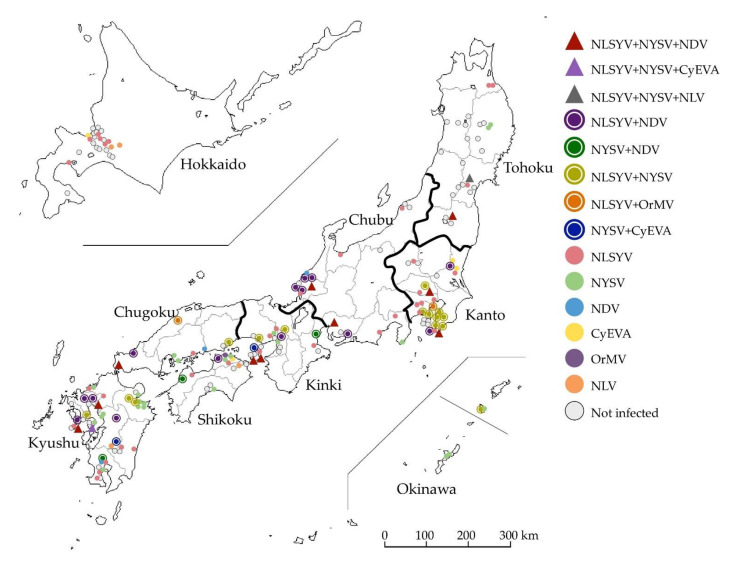
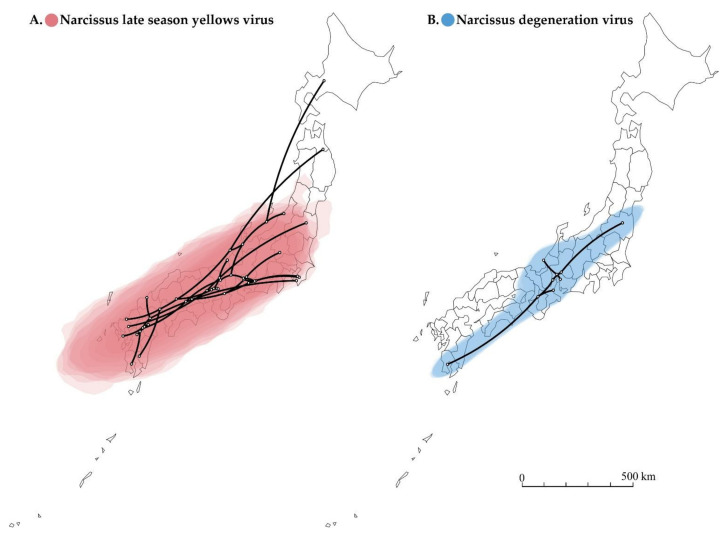
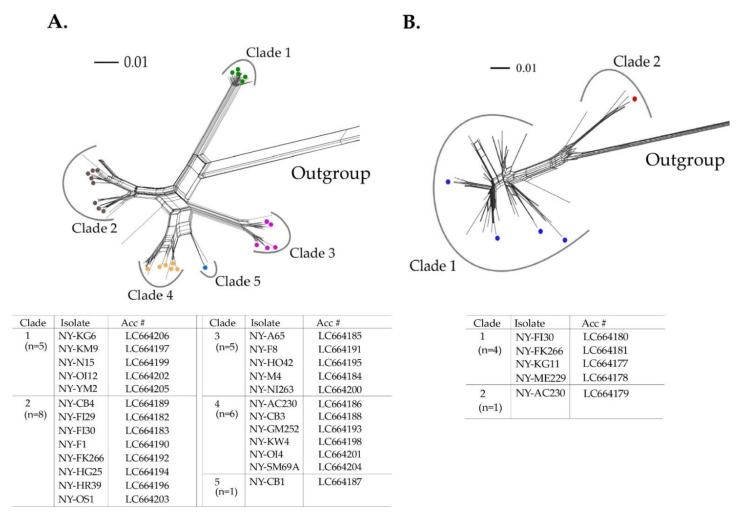
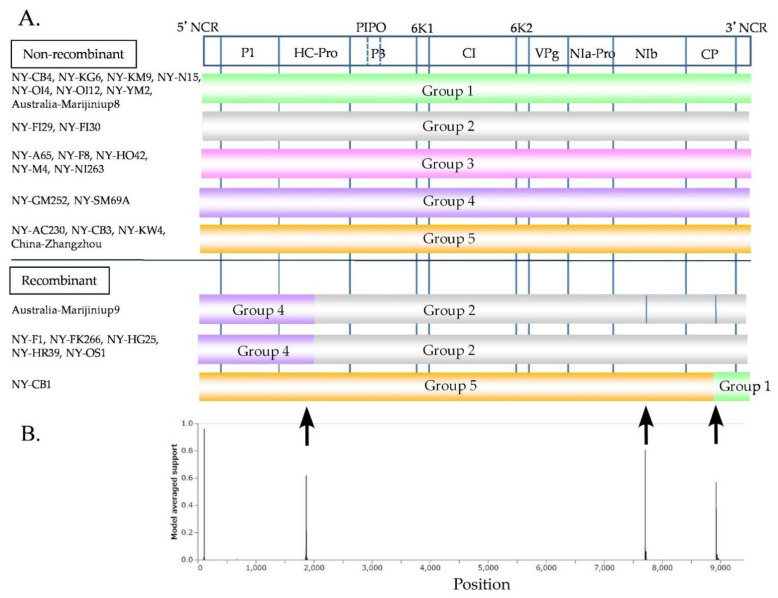
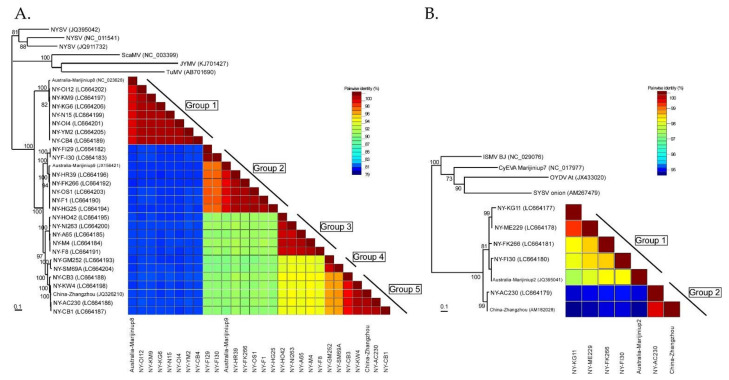
Our paper presents detailed evolutionary analyses of narcissus viruses from wild and domesticated plants in Japan. Narcissus late season yellows virus (NLSYV) and narcissus degeneration virus (NDV) are major viruses of plants, causing serious disease outbreaks in Japan. In this study, we collected plants showing mosaic or striped leaves along with asymptomatic plants in Japan for evolutionary analyses. Our findings show that (1) NLSYV is widely distributed, whereas the distribution of NDV is limited to the southwest parts of Japan; (2) the genomes of NLSYV isolates share nucleotide identities of around 82%, whereas those of NDV isolates are around 94%; (3) three novel recombination type patterns were found in NLSYV; (4) NLSYV comprises at least five distinct phylogenetic groups whereas NDV has two; and (5) infection with narcissus viruses often occur as co-infection with different viruses, different isolates of the same virus, and in the presence of quasispecies (mutant clouds) of the same virus in nature. Therefore, the wild and domesticated plants in Japan are somewhat like a melting pot of potyviruses and other viruses.
我们的论文对来自日本野生和栽培植物的水仙花病毒进行了详细的进化分析。水仙花晚期黄化病毒(NLSYV)和水仙花退化病毒(NDV)是主要的植物病毒,在日本引起了严重的疾病爆发。在这项研究中,我们收集了在日本表现出花叶或条纹叶以及无症状的植物进行进化分析。我们的研究结果表明:(1)NLSYV 分布广泛,而 NDV 的分布仅限于日本西南部;(2)NLSYV 分离株的基因组核苷酸同一性约为 82%,而 NDV 分离株的同一性约为 94%;(3)在 NLSYV 中发现了三种新的重组类型模式;(4)NLSYV 至少包含五个不同的系统发育群,而 NDV 则有两个;(5)水仙花病毒的感染通常是与不同病毒的共同感染、同一病毒的不同分离株以及同一病毒准种(突变云)的共存。因此,日本的野生和栽培植物在某种程度上像是马铃薯 Y 病毒科病毒和其他病毒的大熔炉。