
用于小儿前臂骨折固定的叠层三分之一管状钢板:一项生物力学研究。
Stacked 1/3 Tubular Plates for Fixation of Pediatric Forearm Fractures: A Biomechanical Study.
作者信息
Cooper Benjamin J, Wendling Alexander C, Isaacs-Pullins Sharon R, White Joel, Hollenbeck Steven M
机构信息
University of Kansas School of Medicine-Wichita, Wichita, KS.
Department of Orthopaedics.
出版信息
Kans J Med. 2022 Feb 9;15(1):63-66. doi: 10.17161/kjm.vol15.16207. eCollection 2022.
INTRODUCTION
Among operatively treated pediatric forearm fractures, many different fixation constructs are described. The goal of this study was to define the biomechanical properties of a double stacked 1/3 tubular plate construct used by the senior author for some fractures and to review available literature regarding the use of stacked plates.
METHODS
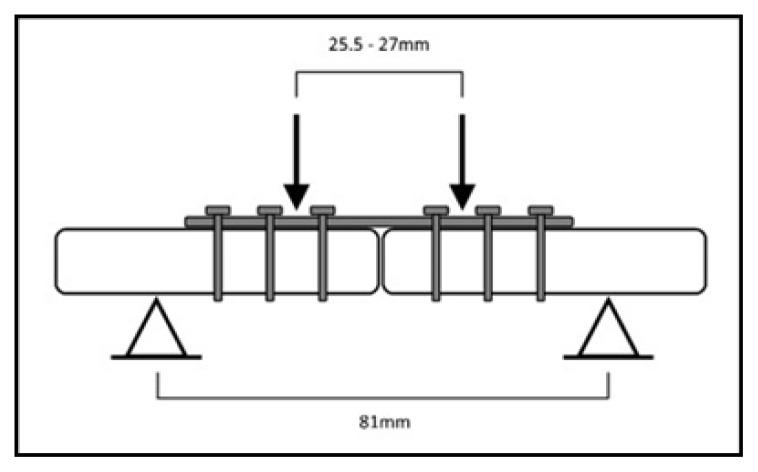
Biomechanical testing was performed by 4-point bending of three different plate constructs: 1/3 tubular plate, stacked 1/3 tubular plates, and 2.7 mm LC-DCP plate. Five test specimens were evaluated for each of the three plate constructs. From stress-strain curves, flexural stiffness (N/mm), force to cause plastic deformation (N), and force to cause 10° bend (N) were calculated and compared using standard t-test statistics.
RESULTS
Key outcome parameter means (± SD) for the three plate constructs (1/3 tubular plate, stacked 1/3 tubular plates, and 2.7 mm LC-DCP plate) were reported respectively as follows: flexural stiffness (55.4 ± 3.5 N/mm, 131.7 ± 3.5 N/mm, 113.3 ± 12.1 N/mm), force to cause plastic deformation (113.6 ± 11.0 N, 242.1 ± 13.0 N, 192.2 ± 17.9 N), and force to cause a 10° bend (140.0 ± 8.4 N, 299.4 ± 14.1 N, 265.5 ± 21.2 N). Mean values of all three measures were significantly larger for the stacked 1/3 tubular plates than for the other plate constructs.
CONCLUSIONS
The stacked 1/3 tubular plate construct was biomechanically superior to the other plate constructs tested. Stacked plating significantly improved stiffness of the fracture fixation construct supporting the use of this technique in selected trauma cases.
引言
在接受手术治疗的小儿前臂骨折中,有多种不同的固定结构。本研究的目的是确定资深作者用于某些骨折的双层1/3管状钢板结构的生物力学特性,并回顾有关使用堆叠钢板的现有文献。
方法
通过对三种不同钢板结构进行四点弯曲试验来进行生物力学测试:1/3管状钢板、堆叠1/3管状钢板和2.7 mm LC-DCP钢板。对三种钢板结构中的每一种都评估了五个测试样本。根据应力-应变曲线,计算弯曲刚度(N/mm)、引起塑性变形的力(N)和引起10°弯曲的力(N),并使用标准t检验统计量进行比较。
结果
三种钢板结构(1/3管状钢板、堆叠1/3管状钢板和2.7 mm LC-DCP钢板)的关键结果参数平均值(±标准差)分别如下:弯曲刚度(55.4±3.5 N/mm、131.7±3.5 N/mm、113.3±12.1 N/mm)、引起塑性变形的力(113.6±11.0 N、242.1±13.0 N、192.2±17.9 N)和引起10°弯曲的力(140.0±8.4 N、299.4±14.1 N、265.5±21.2 N)。对于堆叠1/3管状钢板,所有这三项测量的平均值均显著大于其他钢板结构。
结论
堆叠1/3管状钢板结构在生物力学上优于所测试的其他钢板结构。堆叠钢板显著提高了骨折固定结构的刚度,支持在特定创伤病例中使用该技术。




 Zotero 插件