
具有改善的可见光光催化性能的多孔BiVO空心球的简易制备
Facile fabrication of porous BiVO hollow spheres with improved visible-light photocatalytic properties.
作者信息
Mao Jun, Wu Qian, Tao Feifei, Xu Wen, Hong Tianjie, Dong Yali
机构信息
Department of Chemistry and Chemical Engineering, Shaoxing University Shaoxing 312000 P. R. China
Shanghai Advanced Research Institute, Chinese Academy of Sciences Shanghai 201210 P. R. China.
出版信息
RSC Adv. 2020 Feb 11;10(11):6395-6404. doi: 10.1039/d0ra00698j. eCollection 2020 Feb 7.
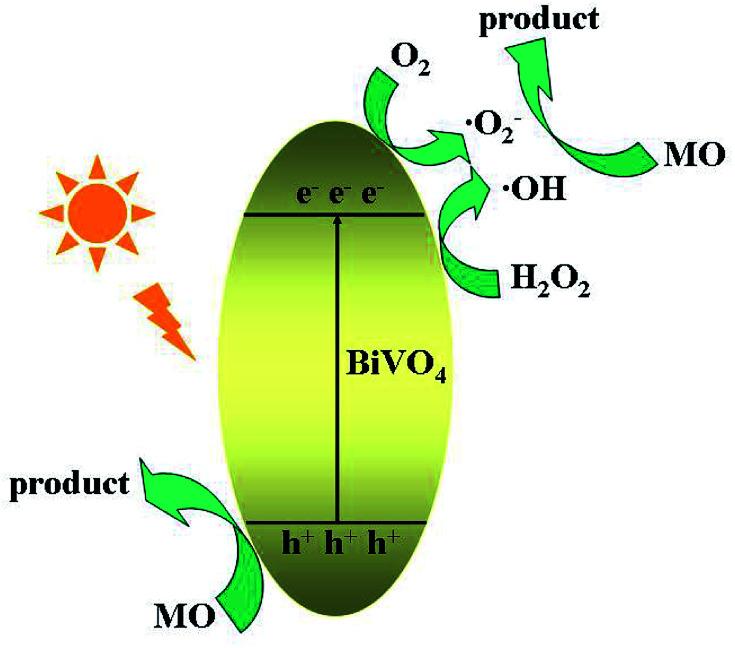
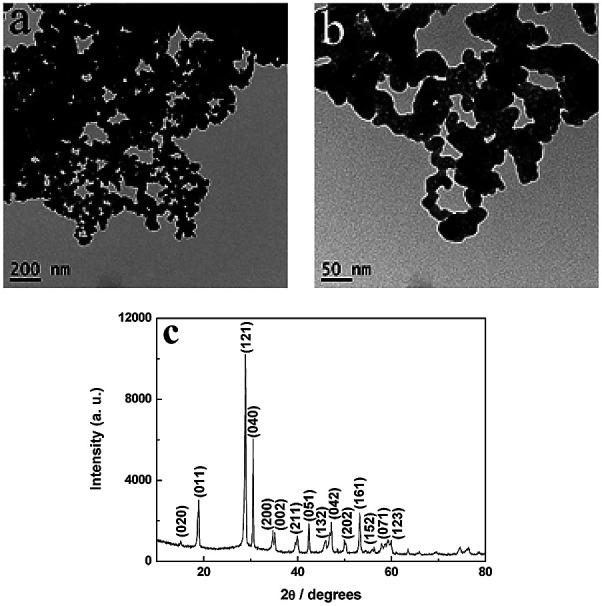
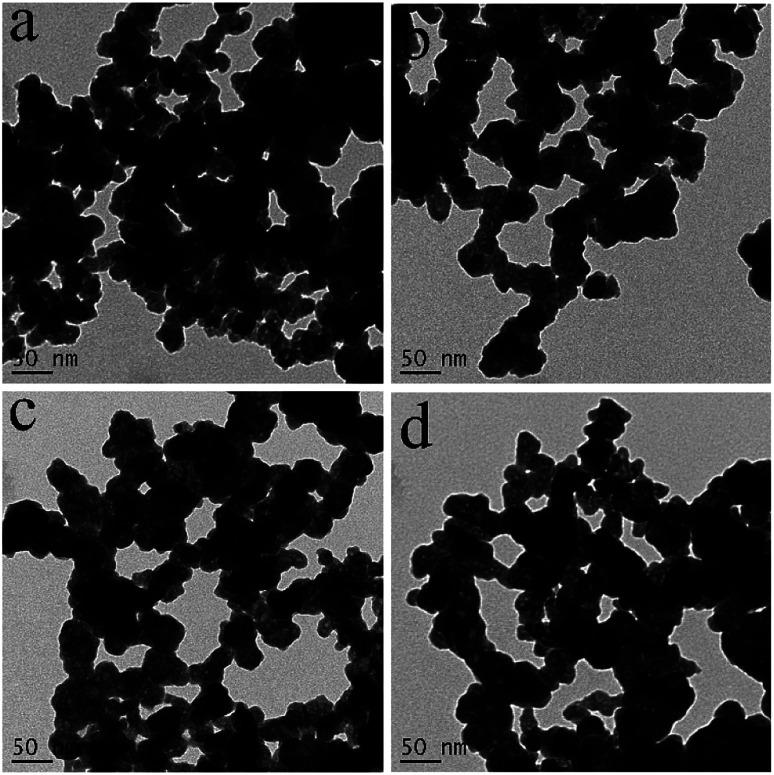
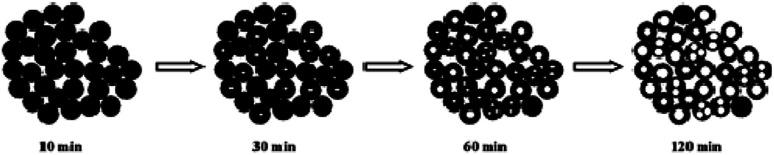
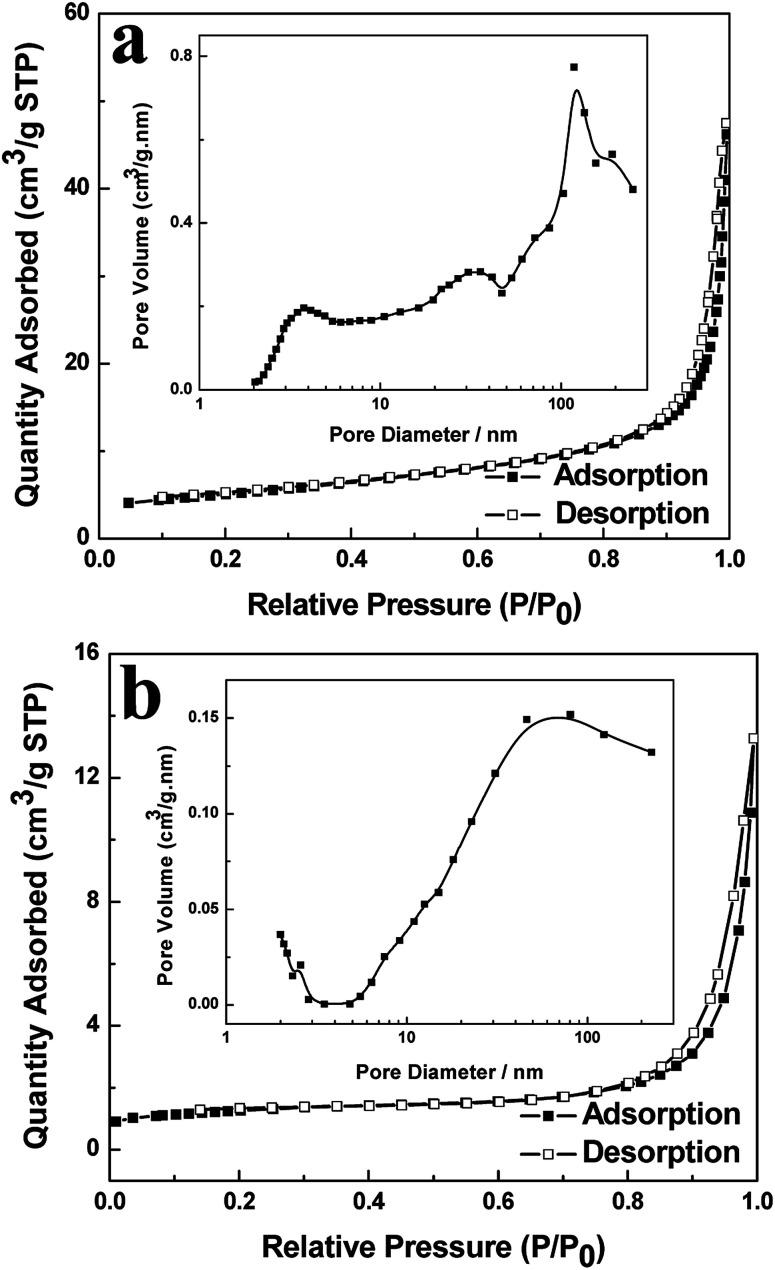
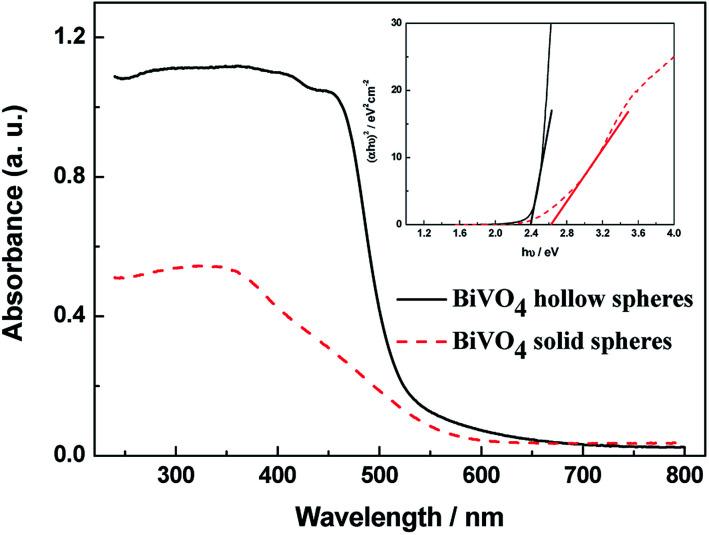
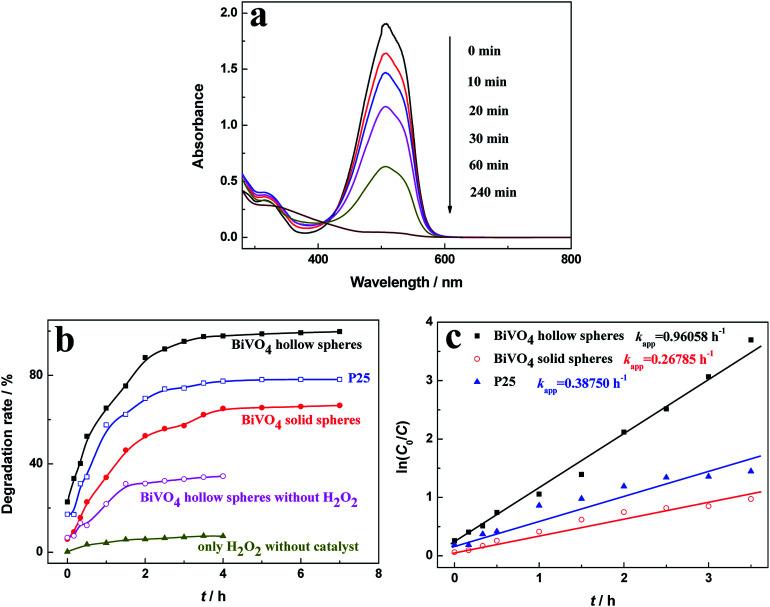
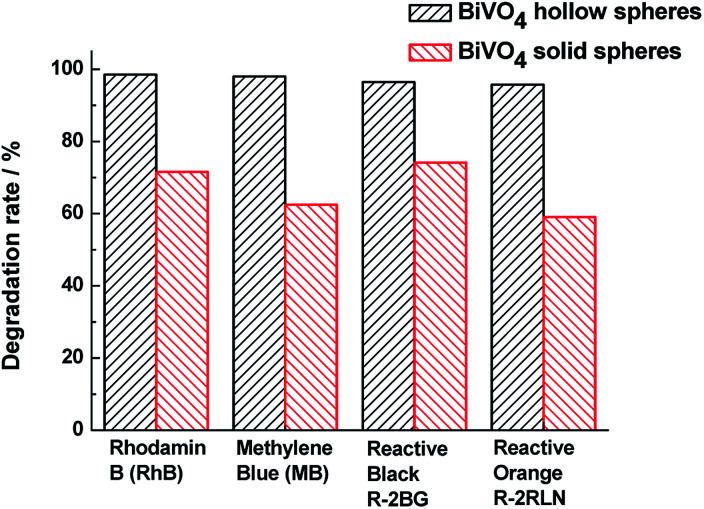
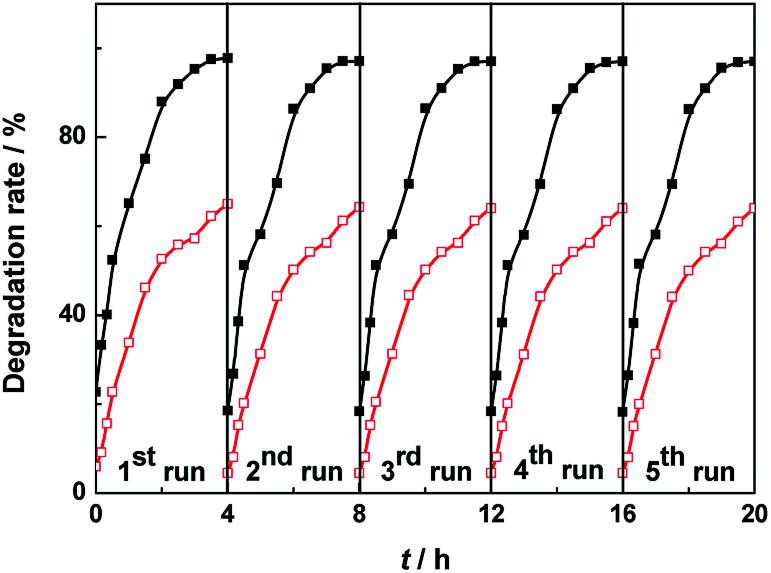
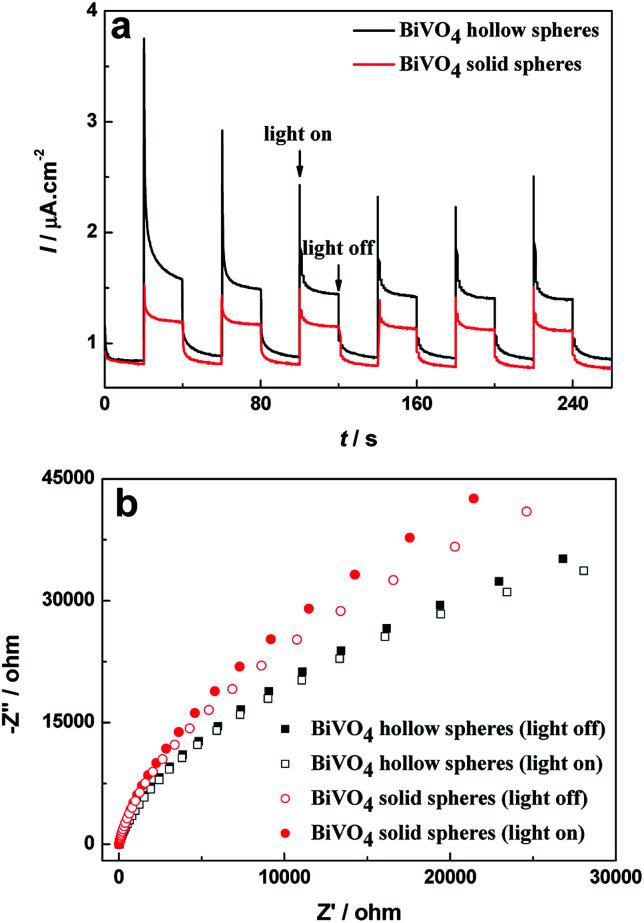
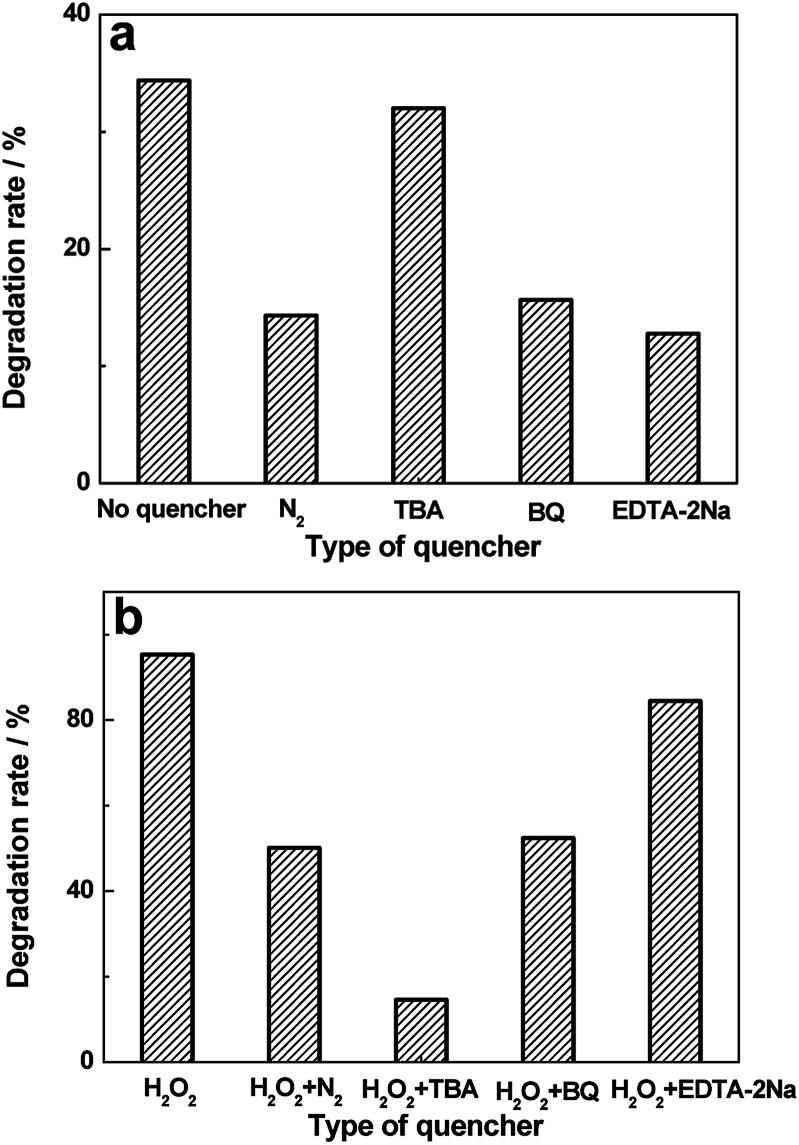
Bismuth vanadate (BiVO) hollow spheres with porous structure have been successfully fabricated by a one-step wet solution method with no surfactant and template. The structure, morphologies, and composition of the as-prepared products were studied with X-ray powder diffraction (XRD), transmission electron morphology (TEM), Brunauer-Emmett-Teller (BET), X-ray photoelectron spectroscopy (XPS) and UV-vis spectroscopy. Based upon the time-dependent experimental results, BiVO nanospheres with hollow and solid structures can be controlled effectively through the reaction time, and a reasonable formation process was suggested in this work. Moreover, the experiment of degrading methyl orange (MO) under visible-light illumination was conducted to evaluate the photocatalytic performance of the obtained BiVO samples. The porous BiVO hollow spheres exhibit superior visible-light photocatalytic properties for MO degradation than other photocatalysts under irradiation, and could be reused for up to five times without significant reduction in the photocatalytic activity. In addition, based on active group trapping experiments, ˙OH radicals as the main active species from HO molecules play a vital role in the photocatalytic degradation of MO, and a photocatalytic mechanism for the BiVO system was proposed. High photocatalytic activity, universality and stability suggest that the porous BiVO hollow spheres may have potential applications in wastewater treatment.
采用无表面活性剂和模板的一步湿溶液法成功制备了具有多孔结构的钒酸铋(BiVO)空心球。利用X射线粉末衍射(XRD)、透射电子显微镜(TEM)、布鲁诺尔-埃米特-泰勒(BET)法、X射线光电子能谱(XPS)和紫外可见光谱对所制备产物的结构、形貌和组成进行了研究。基于随时间变化的实验结果,通过反应时间可有效控制具有空心和实心结构的BiVO纳米球,并在此工作中提出了合理的形成过程。此外,进行了可见光照射下降解甲基橙(MO)的实验,以评估所制备的BiVO样品的光催化性能。多孔BiVO空心球在光照下对MO降解表现出比其他光催化剂更优异的可见光光催化性能,并且可以重复使用多达五次而光催化活性没有明显降低。此外,基于活性基团捕获实验,来自H₂O分子的˙OH自由基作为主要活性物种在MO的光催化降解中起着至关重要的作用,并提出了BiVO体系的光催化机理。高光催化活性、通用性和稳定性表明多孔BiVO空心球在废水处理中可能具有潜在应用。
 Zotero 插件