• 文献检索
  • 文档翻译
  • 深度研究
  • 学术资讯
  • Suppr Zotero 插件Zotero 插件
  • 邀请有礼
  • 套餐&价格
  • 历史记录
应用&插件
Suppr Zotero 插件Zotero 插件浏览器插件Mac 客户端Windows 客户端微信小程序
定价
高级版会员购买积分包购买API积分包
服务
文献检索文档翻译深度研究API 文档MCP 服务
关于我们
关于 Suppr公司介绍联系我们用户协议隐私条款
关注我们

Suppr 超能文献

核心技术专利:CN118964589B侵权必究
粤ICP备2023148730 号-1Suppr @ 2026

文献检索

告别复杂PubMed语法,用中文像聊天一样搜索,搜遍4000万医学文献。AI智能推荐,让科研检索更轻松。

立即免费搜索

文件翻译

保留排版,准确专业,支持PDF/Word/PPT等文件格式,支持 12+语言互译。

免费翻译文档

深度研究

AI帮你快速写综述,25分钟生成高质量综述,智能提取关键信息,辅助科研写作。

立即免费体验

通过互补决定区的诱变提高抗体亲和力。

Improving antibody affinity through mutagenesis in complementarity determining regions.

作者信息

Ye Wei, Liu Xiaoyu, He Ruiting, Gou Liming, Lu Ming, Yang Gang, Wen Jiaqi, Wang Xufei, Liu Fang, Ma Sujuan, Qian Weifeng, Jia Shaochang, Ding Tong, Sun Luan, Gao Wei

机构信息

Jiangsu Key Lab of Cancer Biomarkers, Prevention and Treatment, Collaborative Innovation Center for Personalized Cancer Medicine, Key Laboratory of Human Functional Genomics of Jiangsu Province, National Health Commission Key Laboratory of Antibody Techniques, School of Basic Medical Sciences, Nanjing Medical University, Nanjing, Jiangsu 211166, China.

The Affiliated Suzhou Hospital of Nanjing Medical University, Suzhou Municipal Hospital, Gusu School, Nanjing Medical University, Suzhou, Jiangsu 215001, China.

出版信息

J Biomed Res. 2022 Mar 28;36(3):155-166. doi: 10.7555/JBR.36.20220003.

DOI:10.7555/JBR.36.20220003
PMID:35545451
原文链接:https://pmc.ncbi.nlm.nih.gov/articles/PMC9179109/
Abstract

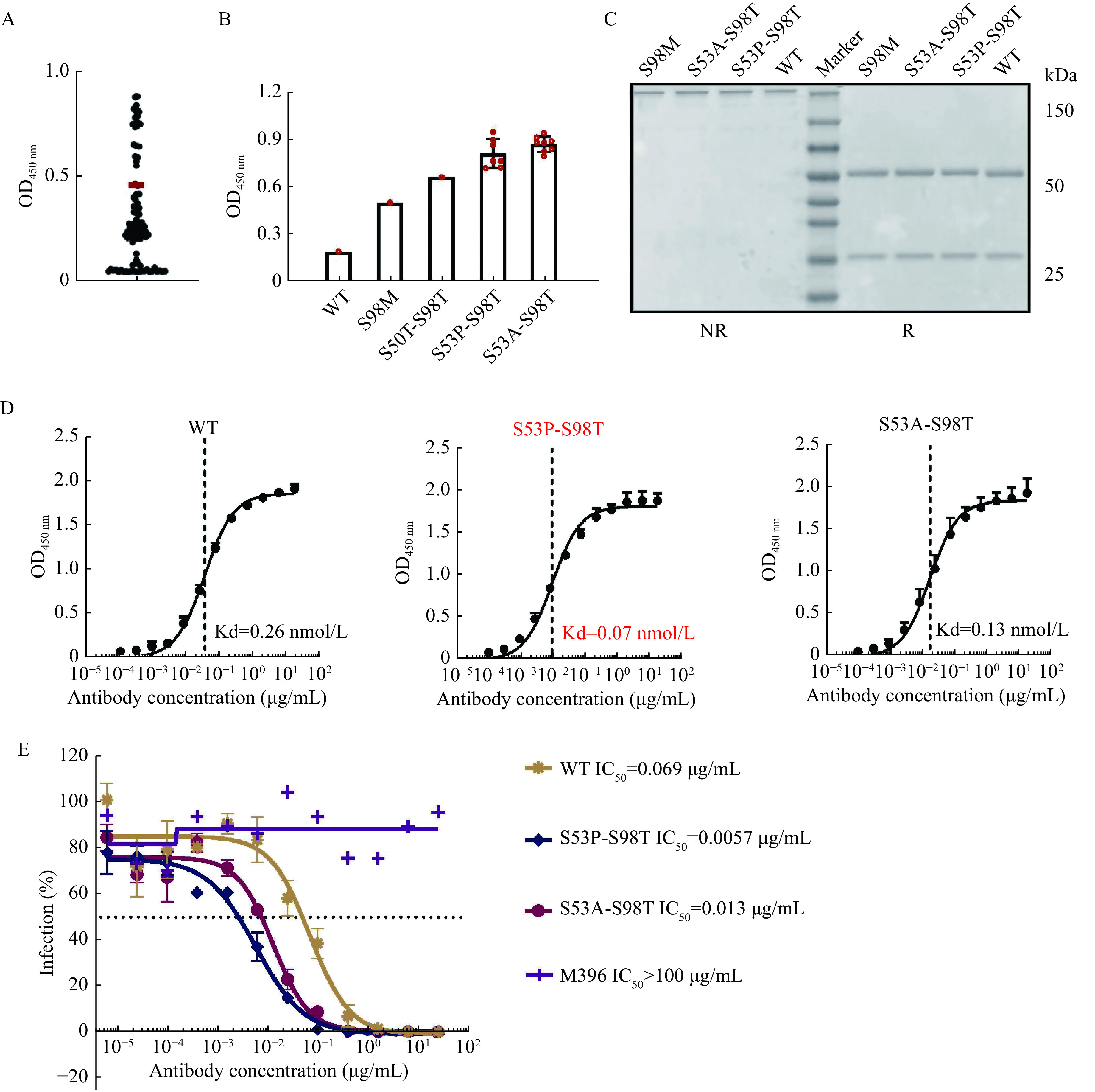
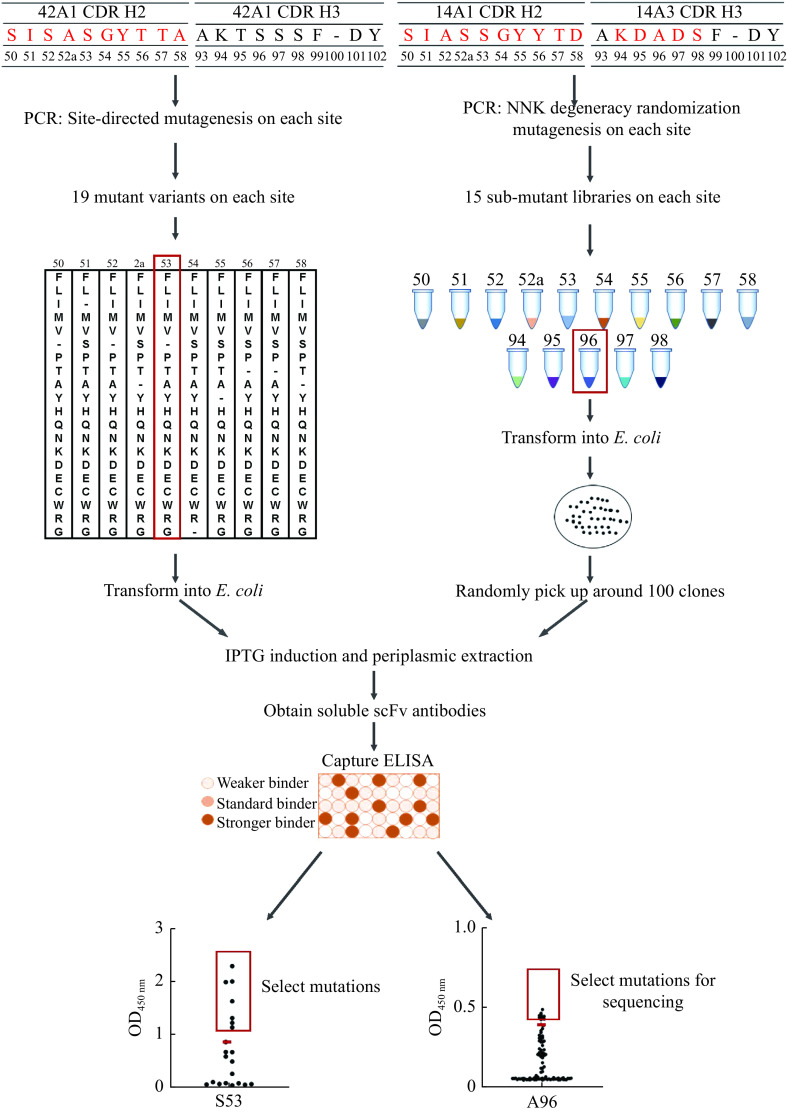
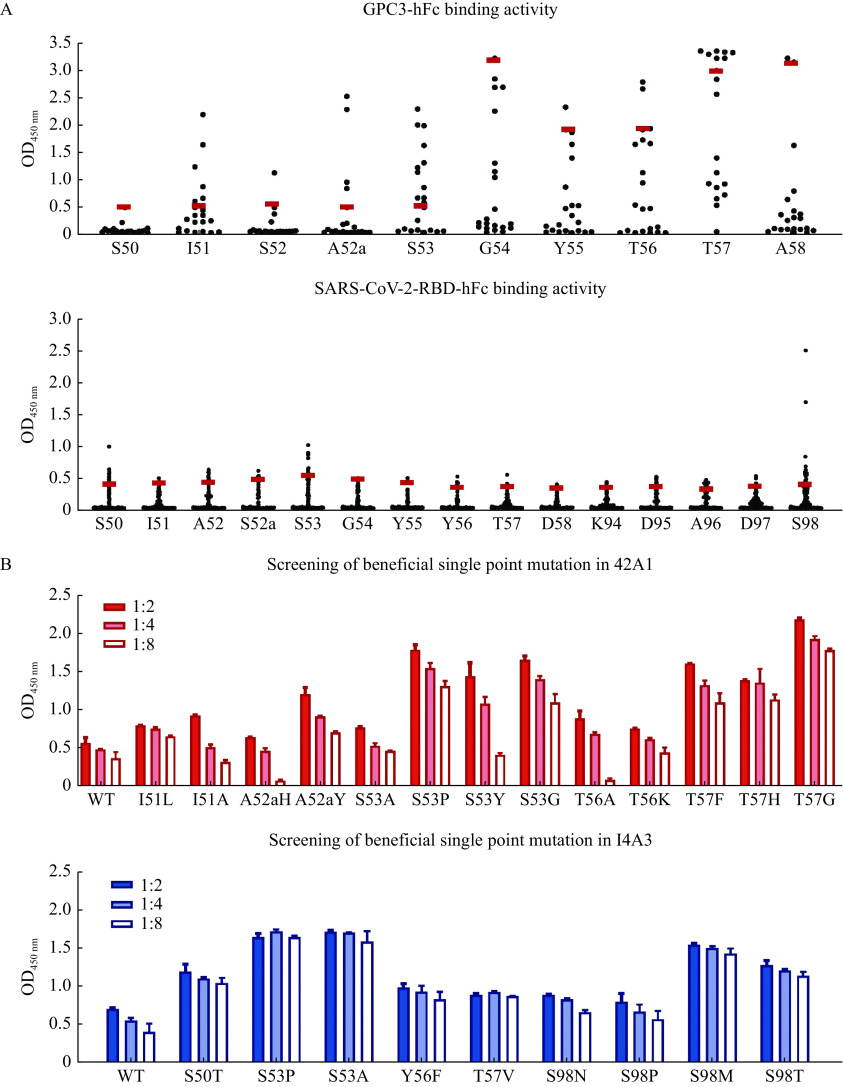
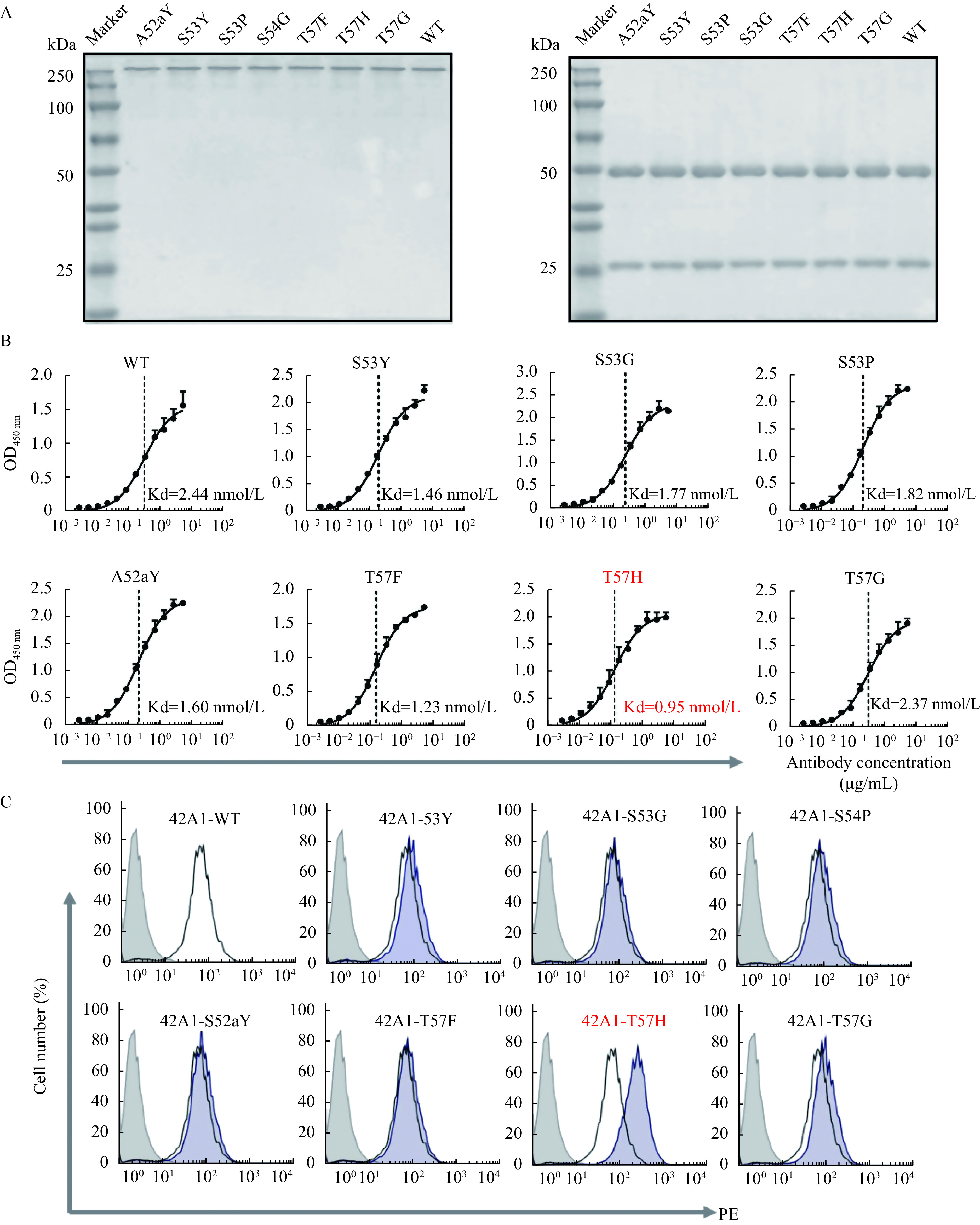
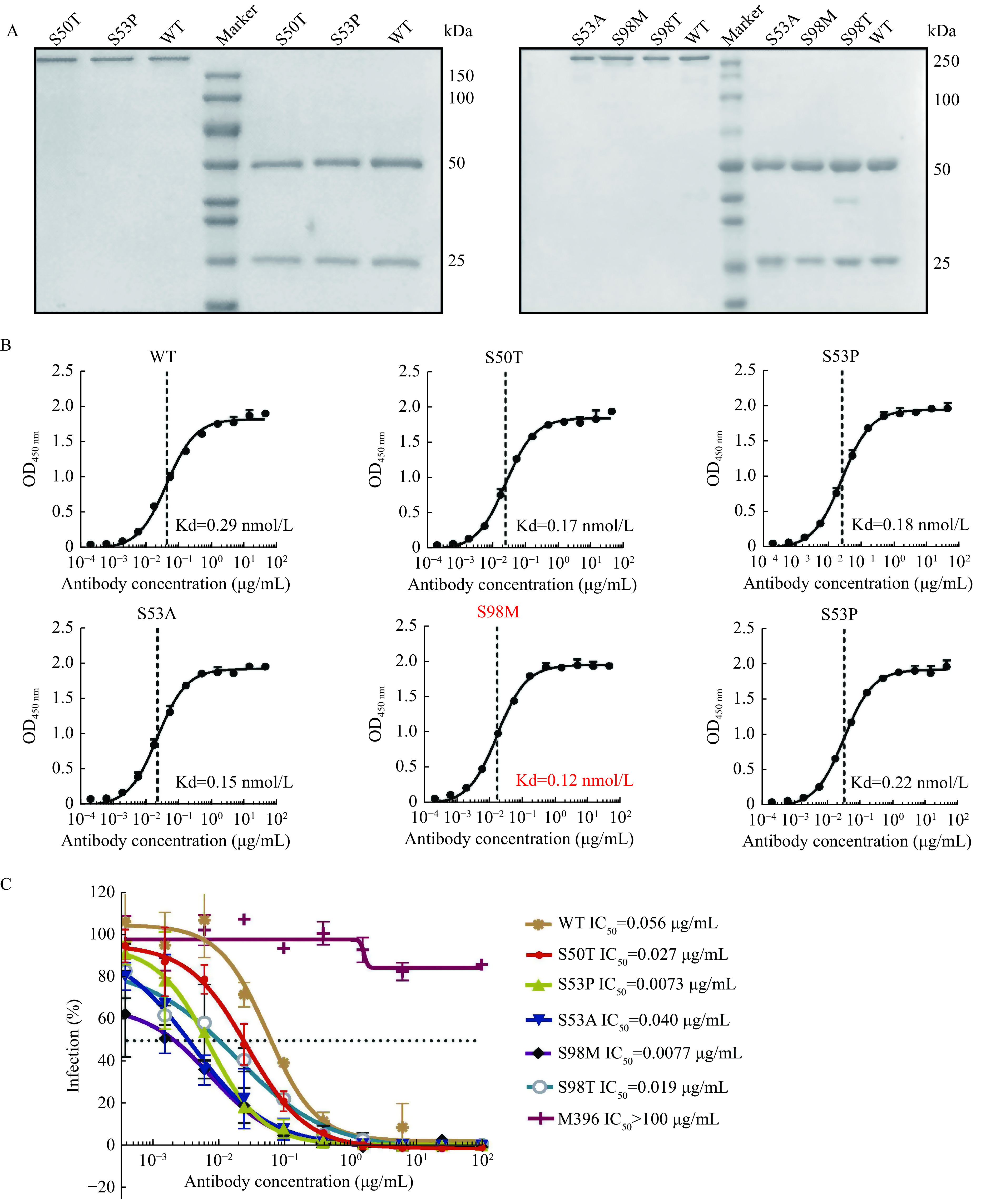
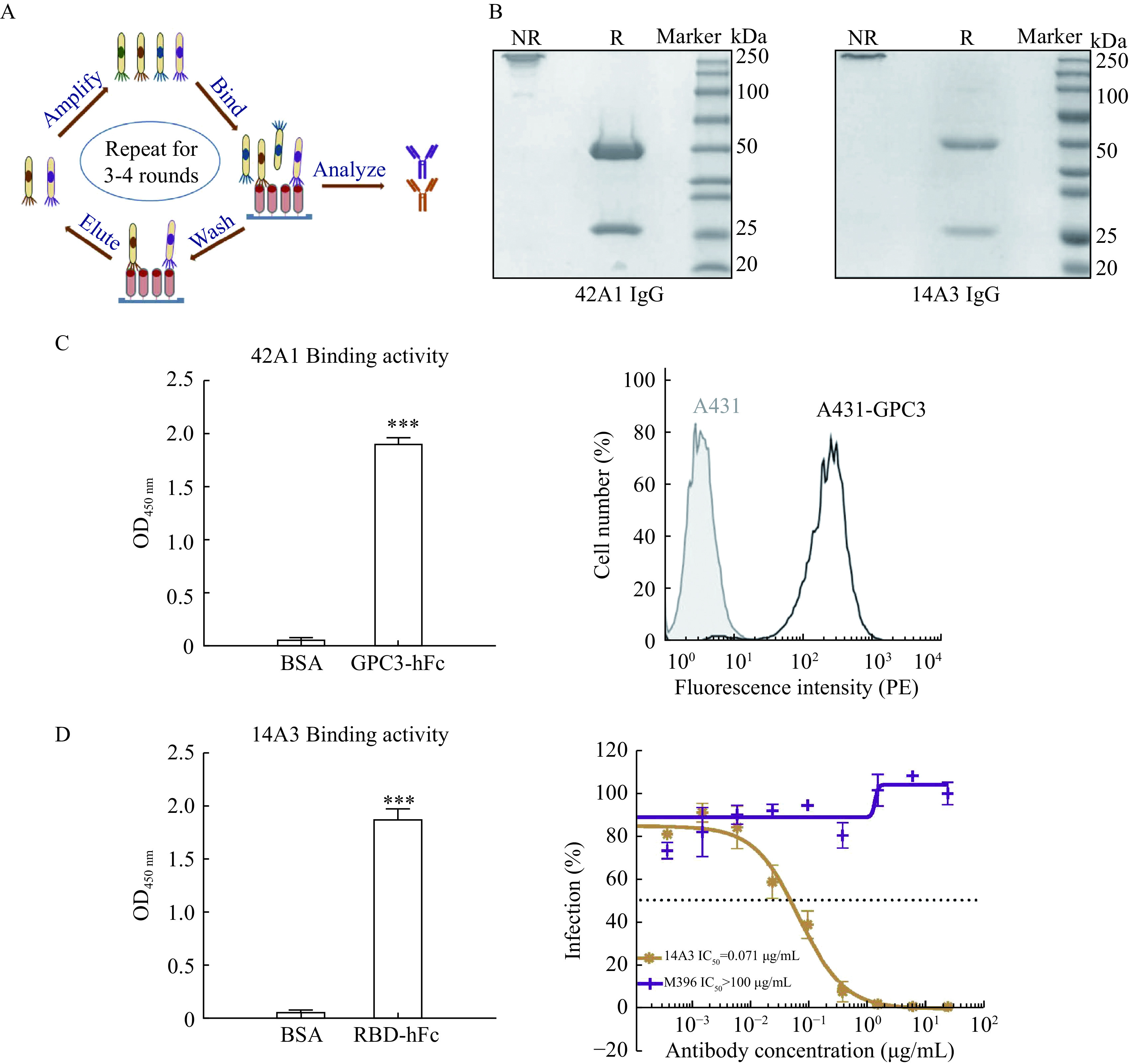
High-affinity antibodies are widely used in diagnostics and for the treatment of human diseases. However, most antibodies are isolated from semi-synthetic libraries by phage display and do not possess affinity maturation, which is triggered by antigen immunization. It is therefore necessary to engineer the affinity of these antibodies by way of assaying. In this study, we optimized the affinity of two human monoclonal antibodies which were isolated by phage display in a previous related study. For the 42A1 antibody, which targets the liver cancer antigen glypican-3, the variant T57H in the second complementarity-determining region of the heavy chain (CDR-H2) exhibited a 2.6-fold improvement in affinity, as well as enhanced cell-binding activity. For the I4A3 antibody to severe acute respiratory syndrome coronavirus 2, beneficial single mutations in CDR-H2 and CDR-H3 were randomly combined to select the best synergistic mutations. Among these, the mutation S53P-S98T improved binding affinity (about 3.7 fold) and the neutralizing activity (about 12 fold) compared to the parent antibody. Taken together, single mutations of key residues in antibody CDRs were enough to increase binding affinity with improved antibody functions. The mutagenic combination of key residues in different CDRs creates additive enhancements. Therefore, this study provides a safe and effective strategy for optimizing antibody affinity.

摘要

高亲和力抗体广泛应用于诊断和人类疾病治疗。然而,大多数抗体是通过噬菌体展示从半合成文库中分离出来的,并不具备由抗原免疫触发的亲和力成熟过程。因此,有必要通过检测来改造这些抗体的亲和力。在本研究中,我们优化了两种在先前相关研究中通过噬菌体展示分离得到的人源单克隆抗体的亲和力。对于靶向肝癌抗原磷脂酰肌醇蛋白聚糖-3的42A1抗体,重链第二互补决定区(CDR-H2)中的T57H变体在亲和力上提高了2.6倍,同时细胞结合活性也增强了。对于针对严重急性呼吸综合征冠状病毒2的I4A3抗体,将CDR-H2和CDR-H3中有益的单突变随机组合,以选择最佳的协同突变。其中,与亲本抗体相比,S53P-S98T突变提高了结合亲和力(约3.7倍)和中和活性(约12倍)。综上所述,抗体互补决定区关键残基的单突变足以提高结合亲和力并改善抗体功能。不同互补决定区关键残基的诱变组合产生了累加增强效应。因此,本研究为优化抗体亲和力提供了一种安全有效的策略。
https://cdn.ncbi.nlm.nih.gov/pmc/blobs/c358/9179109/e58ff5967533/jbr-36-3-155-final-6.jpg
https://cdn.ncbi.nlm.nih.gov/pmc/blobs/c358/9179109/c8380f1ec0cd/jbr-36-3-155-final-1.jpg
https://cdn.ncbi.nlm.nih.gov/pmc/blobs/c358/9179109/9ac8f6a1e225/jbr-36-3-155-final-2.jpg
https://cdn.ncbi.nlm.nih.gov/pmc/blobs/c358/9179109/4be81f91e5f9/jbr-36-3-155-final-3.jpg
https://cdn.ncbi.nlm.nih.gov/pmc/blobs/c358/9179109/0faecf55dcce/jbr-36-3-155-final-4.jpg
https://cdn.ncbi.nlm.nih.gov/pmc/blobs/c358/9179109/5c9958f646da/jbr-36-3-155-final-5.jpg
https://cdn.ncbi.nlm.nih.gov/pmc/blobs/c358/9179109/e58ff5967533/jbr-36-3-155-final-6.jpg
https://cdn.ncbi.nlm.nih.gov/pmc/blobs/c358/9179109/c8380f1ec0cd/jbr-36-3-155-final-1.jpg
https://cdn.ncbi.nlm.nih.gov/pmc/blobs/c358/9179109/9ac8f6a1e225/jbr-36-3-155-final-2.jpg
https://cdn.ncbi.nlm.nih.gov/pmc/blobs/c358/9179109/4be81f91e5f9/jbr-36-3-155-final-3.jpg
https://cdn.ncbi.nlm.nih.gov/pmc/blobs/c358/9179109/0faecf55dcce/jbr-36-3-155-final-4.jpg
https://cdn.ncbi.nlm.nih.gov/pmc/blobs/c358/9179109/5c9958f646da/jbr-36-3-155-final-5.jpg
https://cdn.ncbi.nlm.nih.gov/pmc/blobs/c358/9179109/e58ff5967533/jbr-36-3-155-final-6.jpg

相似文献

1
Improving antibody affinity through mutagenesis in complementarity determining regions.通过互补决定区的诱变提高抗体亲和力。
J Biomed Res. 2022 Mar 28;36(3):155-166. doi: 10.7555/JBR.36.20220003.
2
In vitro affinity maturation of a natural human antibody overcomes a barrier to in vivo affinity maturation.天然人源抗体的体外亲和力成熟克服了体内亲和力成熟的一个障碍。
MAbs. 2014 Mar-Apr;6(2):437-45. doi: 10.4161/mabs.27875. Epub 2014 Jan 16.
3
Arginine mutations in antibody complementarity-determining regions display context-dependent affinity/specificity trade-offs.抗体互补决定区中的精氨酸突变表现出依赖于上下文的亲和力/特异性权衡。
J Biol Chem. 2017 Oct 6;292(40):16638-16652. doi: 10.1074/jbc.M117.783837. Epub 2017 Aug 4.
4
Combinatorial mutagenesis with alternative CDR-L1 and -H2 loop lengths contributes to affinity maturation of antibodies.组合突变的 CDR-L1 和 -H2 环长度可促进抗体亲和力成熟。
N Biotechnol. 2021 Jan 25;60:173-182. doi: 10.1016/j.nbt.2020.09.002. Epub 2020 Oct 8.
5
Facile Affinity Maturation of Antibody Variable Domains Using Natural Diversity Mutagenesis.利用自然多样性诱变实现抗体可变区的简便亲和力成熟
Front Immunol. 2017 Sep 4;8:986. doi: 10.3389/fimmu.2017.00986. eCollection 2017.
6
Substitution of Heavy Complementarity Determining Region 3 (CDR-H3) Residues Can Synergistically Enhance Functional Activity of Antibody and Its Binding Affinity to HER2 Antigen.重链互补决定区3(CDR-H3)残基的替换可协同增强抗体的功能活性及其与HER2抗原的结合亲和力。
Mol Cells. 2016 Mar;39(3):217-28. doi: 10.14348/molcells.2016.2235. Epub 2016 Jan 7.
7
Improvement in affinity and thermostability of a fully human antibody against interleukin-17A by yeast-display technology and CDR grafting.通过酵母展示技术和互补决定区(CDR)移植提高全人源抗白细胞介素-17A抗体的亲和力和热稳定性。
Acta Pharm Sin B. 2019 Sep;9(5):960-972. doi: 10.1016/j.apsb.2019.02.007. Epub 2019 Feb 22.
8
Humanization of a murine monoclonal antibody by simultaneous optimization of framework and CDR residues.通过同时优化框架区和互补决定区残基对鼠单克隆抗体进行人源化。
J Mol Biol. 1999 Nov 19;294(1):151-62. doi: 10.1006/jmbi.1999.3141.
9
CDR walking mutagenesis for the affinity maturation of a potent human anti-HIV-1 antibody into the picomolar range.用于将一种强效人抗HIV-1抗体的亲和力成熟至皮摩尔范围的CDR步移诱变。
J Mol Biol. 1995 Dec 1;254(3):392-403. doi: 10.1006/jmbi.1995.0626.
10
Affinity maturation of a humanized rat antibody for anti-RAGE therapy: comprehensive mutagenesis reveals a high level of mutational plasticity both inside and outside the complementarity-determining regions.用于抗RAGE治疗的人源化大鼠抗体的亲和力成熟:全面诱变揭示了互补决定区内外的高度突变可塑性。
J Mol Biol. 2009 May 8;388(3):541-58. doi: 10.1016/j.jmb.2009.03.019. Epub 2009 Mar 13.

引用本文的文献

1
The Icarian flight of antibody-drug conjugates: target selection amidst complexity and tackling adverse impacts.抗体药物偶联物的伊卡洛斯式飞行:在复杂性中进行靶点选择并应对不良反应
Protein Cell. 2025 Jan 15. doi: 10.1093/procel/pwaf002.
2
Alzheimer's Disease Immunotherapy and Mimetic Peptide Design for Drug Development: Mutation Screening, Molecular Dynamics, and a Quantum Biochemistry Approach Focusing on Aducanumab::Aβ2-7 Binding Affinity.用于药物开发的阿尔茨海默病免疫疗法与模拟肽设计:聚焦阿杜卡努单抗与Aβ2-7结合亲和力的突变筛选、分子动力学及量子生物化学方法
ACS Chem Neurosci. 2024 Oct 2;15(19):3543-3562. doi: 10.1021/acschemneuro.4c00453. Epub 2024 Sep 20.
3
An in silico investigation on the binding site preference of PD-1 and PD-L1 for designing antibodies for targeted cancer therapy.
基于计算机的 PD-1 和 PD-L1 结合位点偏好性研究及其在设计靶向癌症治疗抗体中的应用
PLoS One. 2024 Jul 25;19(7):e0304270. doi: 10.1371/journal.pone.0304270. eCollection 2024.
4
Design and Production of a Novel Anti-PD-1 Nanobody by CDR Grafting and Site-Directed Mutagenesis Approach.通过CDR移植和定点诱变方法设计并生产新型抗PD-1纳米抗体
Mol Biotechnol. 2025 May;67(5):1843-1851. doi: 10.1007/s12033-024-01162-1. Epub 2024 May 12.
5
Improving the cytotoxicity of immunotoxins by reducing the affinity of the antibody in acidic pH.通过降低抗体在酸性 pH 值下的亲和力来提高免疫毒素的细胞毒性。
J Transl Med. 2023 Aug 25;21(1):572. doi: 10.1186/s12967-023-04210-7.