Diroll Benjamin T, Brumberg Alexandra, Schaller Richard D
Center for Nanoscale Materials, Argonne National Laboratory, 9700 S. Cass Avenue, Lemont, IL, 60439, USA.
Department of Chemistry, Northwestern University, 2145 Sheridan Road, Evanston, IL, 60208, USA.
Sci Rep. 2022 May 16;12(1):8016. doi: 10.1038/s41598-022-11882-6.
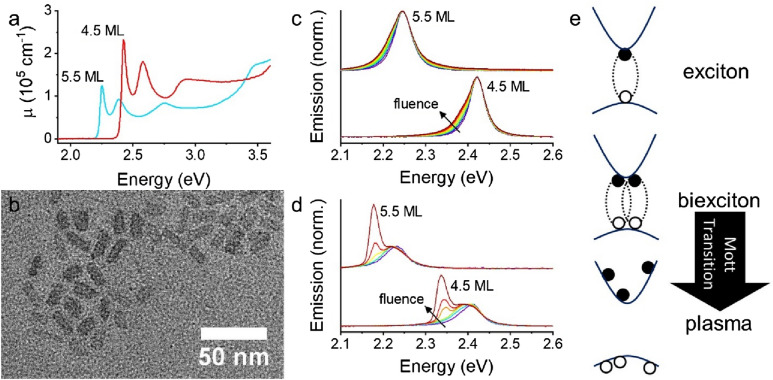
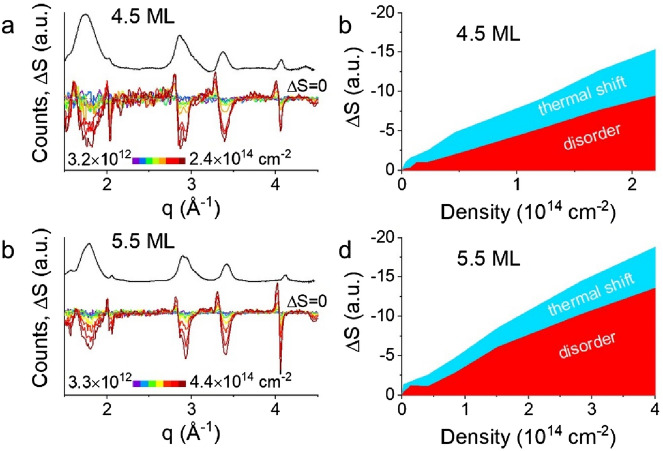
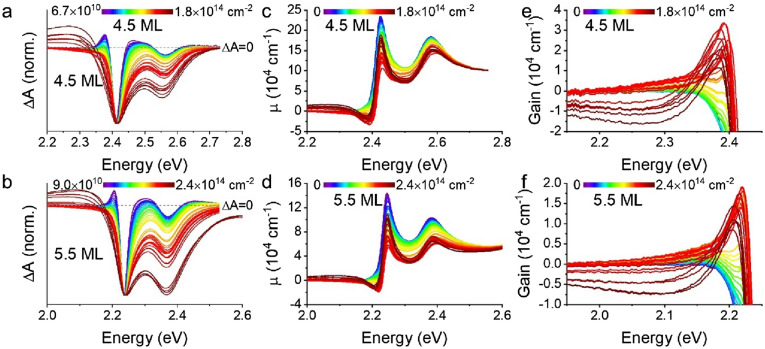
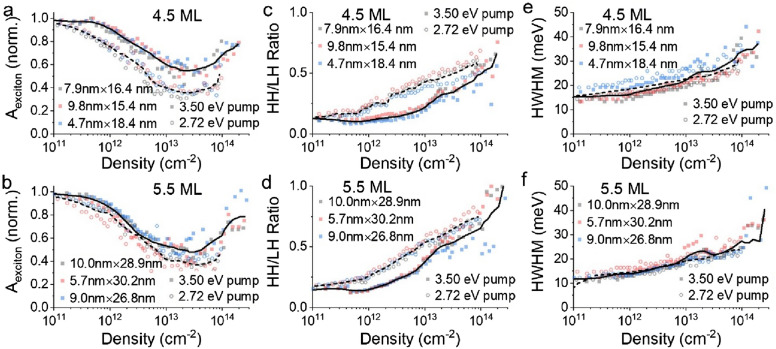
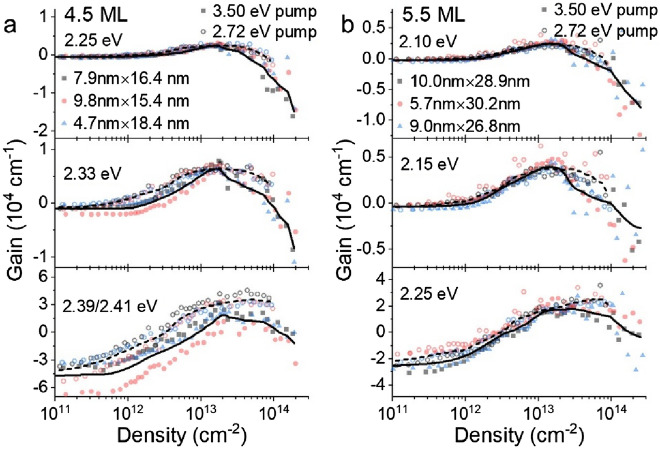
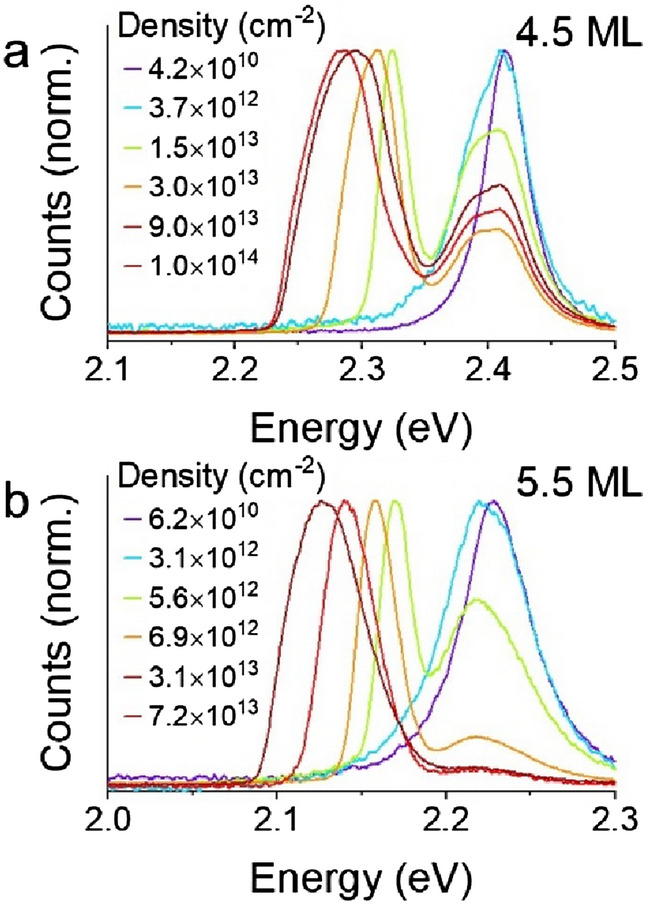
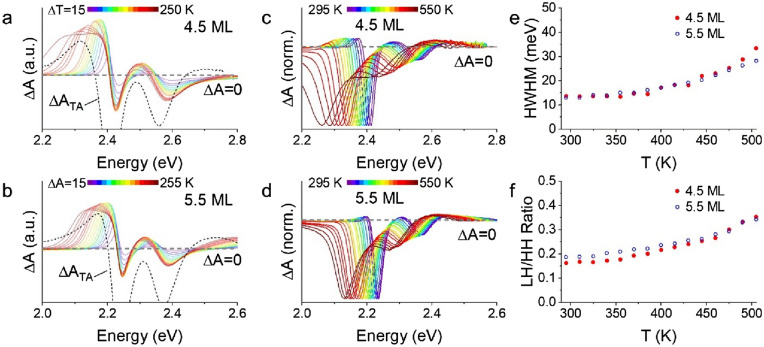
Colloidal quantum wells, or nanoplatelets, show among the lowest thresholds for amplified spontaneous emission and lasing among solution-cast materials and among the highest modal gains of any known materials. Using solution measurements of colloidal quantum wells, this work shows that under photoexcitation, optical gain increases with pump fluence before rolling off due to broad photoinduced absorption at energies lower than the band gap. Despite the common occurrence of gain induced by an electron-hole plasma found in bulk materials and epitaxial quantum wells, under no measurement conditions was the excitonic absorption of the colloidal quantum wells extinguished and gain arising from a plasma observed. Instead, like gain, excitonic absorption reaches a minimum intensity near a photoinduced carrier sheet density of 2 × 10 cm above which the absorption peak begins to recover. To understand the origins of these saturation and reversal effects, measurements were performed with different excitation energies, which deposit differing amounts of excess energy above the band gap. Across many samples, it was consistently observed that less energetic excitation results in stronger excitonic bleaching and gain for a given carrier density. Transient and static optical measurements at elevated temperatures, as well as transient X-ray diffraction of the samples, suggest that the origin of gain saturation and reversal is a heating and disordering of the colloidal quantum wells which produces sub-gap photoinduced absorption.
胶体量子阱,即纳米片,在溶液浇铸材料中表现出放大自发辐射和激光发射的最低阈值之一,并且在所有已知材料中具有最高的模式增益。通过对胶体量子阱进行溶液测量,这项工作表明,在光激发下,光增益随着泵浦通量的增加而增加,直到由于低于带隙能量处的宽光致吸收而下降。尽管在体材料和外延量子阱中普遍存在由电子 - 空穴等离子体引起的增益,但在任何测量条件下,胶体量子阱的激子吸收都没有消失,也没有观察到由等离子体产生的增益。相反,与增益一样,激子吸收在光致载流子面密度接近2×10¹² cm⁻²时达到最小强度,高于此值吸收峰开始恢复。为了理解这些饱和和反转效应的起源,使用不同的激发能量进行了测量,这些激发能量在带隙之上沉积了不同量的多余能量。在许多样品中,一致观察到对于给定的载流子密度,能量较低的激发会导致更强的激子漂白和增益。在高温下的瞬态和静态光学测量以及样品的瞬态X射线衍射表明,增益饱和和反转的起源是胶体量子阱的加热和无序化,这会产生亚带隙光致吸收。