Zhang Dezhen, Chi Wenjuan, Wang Cuicui, Dai Huijie, Li Jintang, Li Chunlei, Li Fajun
Shandong Facility Horticulture Bioengineering Research Center, Weifang University of Science and Technology, Weifang 262700, China.
Int J Genomics. 2022 May 20;2022:4522132. doi: 10.1155/2022/4522132. eCollection 2022.
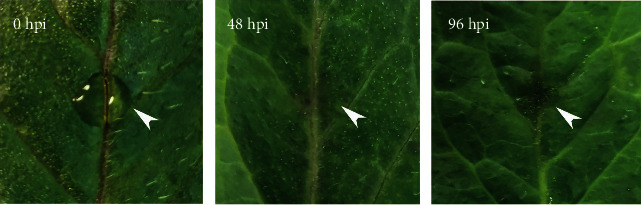
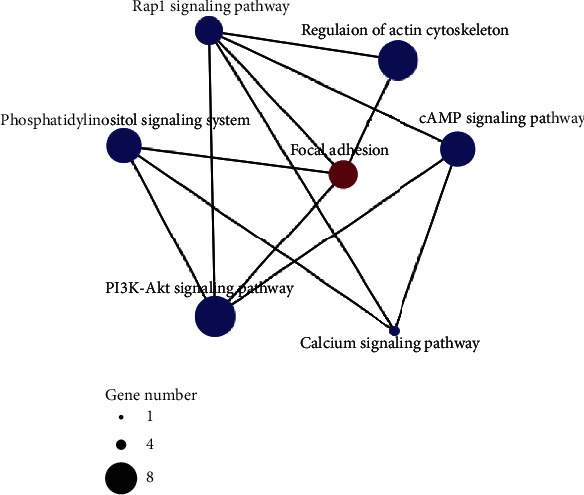
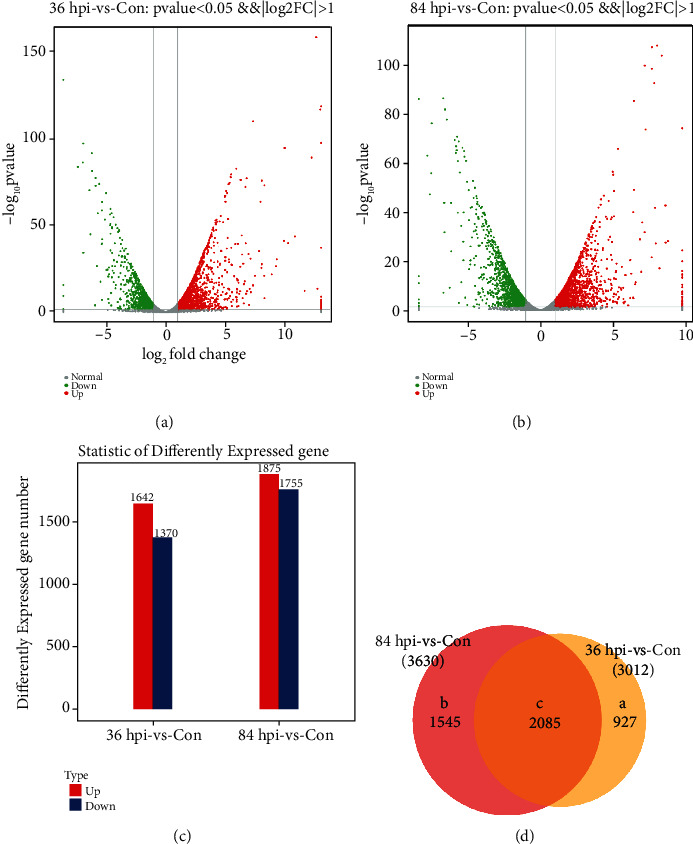
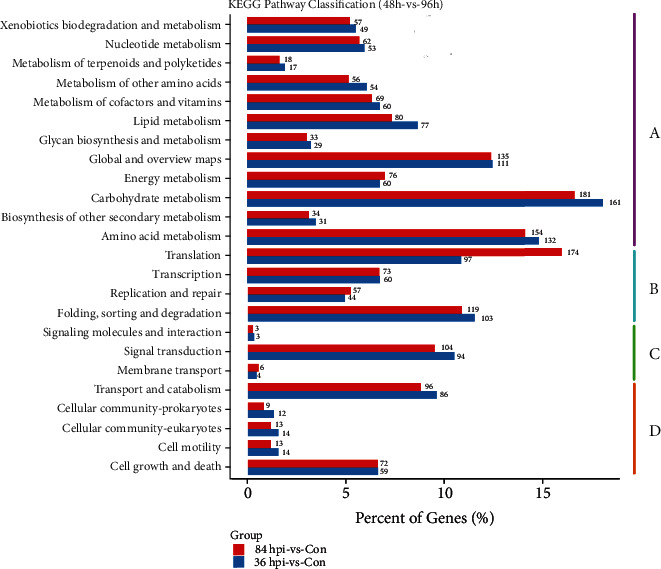
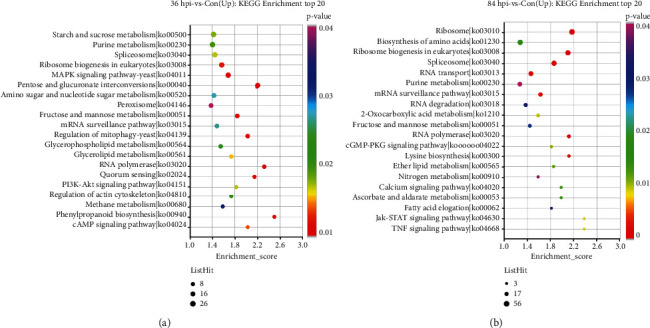
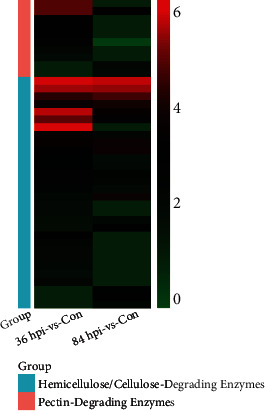
Tomato () gray leaf spot disease is a predominant foliar disease of tomato in China that is caused mainly by the necrotrophic fungal pathogen . Little is known regarding the pathogenic mechanisms of this broad-host-range pathogen. In this study, a comparative transcriptomic analysis was performed and more genetic information on the pathogenicity determinants of . during the infection process in tomato were obtained. Through an RNA sequencing (RNA-seq) analysis, 1,642 and 1,875 genes upregulated during the early infection and necrotrophic phases, respectively, were identified and significantly enriched in 44 and 24 pathways, respectively. The induction of genes associated with pectin degradation, adhesion, and colonization was notable during the early infection phase, whereas during the necrotrophic phase, some structural molecule activity-related genes were prominently induced. Additionally, some genes involved in signal regulation or encoding hemicellulose- and cellulose-degrading enzymes and extracellular proteases were commonly upregulated during pathogenesis. Overall, we present some putative key genes and processes that may be crucial for . pathogenesis. The abilities to adhere and colonize a host surface, effectively damage host cell walls, regulate signal transduction to manage infection, and survive in a hostile plant environment are proposed as important factors for the pathogenesis of . in tomato. The functional characterization of these genes provides an invaluable resource for analyses of this important pathosystem between . and tomato, and it may facilitate the generation of control strategies against this devastating disease.
番茄()灰叶斑病是中国番茄的一种主要叶部病害,主要由坏死营养型真菌病原体引起。关于这种广寄主范围病原体的致病机制知之甚少。在本研究中,进行了比较转录组分析,获得了更多关于该病原体在番茄感染过程中致病性决定因素的遗传信息。通过RNA测序(RNA-seq)分析,分别鉴定出在早期感染和坏死营养阶段上调的1642个和1875个基因,它们分别在44条和24条途径中显著富集。在早期感染阶段,与果胶降解、黏附及定殖相关的基因诱导显著,而在坏死营养阶段,一些与结构分子活性相关的基因被显著诱导。此外,一些参与信号调节或编码半纤维素和纤维素降解酶及细胞外蛋白酶的基因在发病过程中普遍上调。总体而言,我们提出了一些可能对该病原体致病至关重要的关键基因和过程。黏附并定殖于寄主表面、有效破坏寄主细胞壁、调节信号转导以控制感染以及在恶劣的植物环境中存活的能力被认为是该病原体在番茄中致病的重要因素。这些基因的功能表征为分析该病原体与番茄之间这一重要病理系统提供了宝贵资源,可能有助于制定针对这种毁灭性病害的防治策略。