Department of Clinical Neuroscience, Institute of Neuroscience and Physiology, Sahlgrenska Academy, University of Gothenburg, Gothenburg, Sweden.
Sahlgrenska Center for Cancer Research, Department of Laboratory Medicine, Institute of Biomedicine, Sahlgrenska Academy, University of Gothenburg, Gothenburg, Sweden.
Mod Pathol. 2022 Nov;35(11):1551-1561. doi: 10.1038/s41379-022-01113-8. Epub 2022 Jun 14.
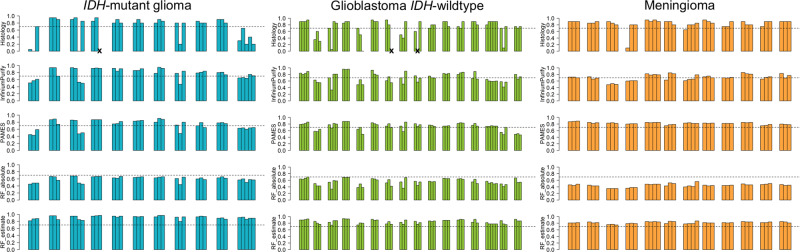
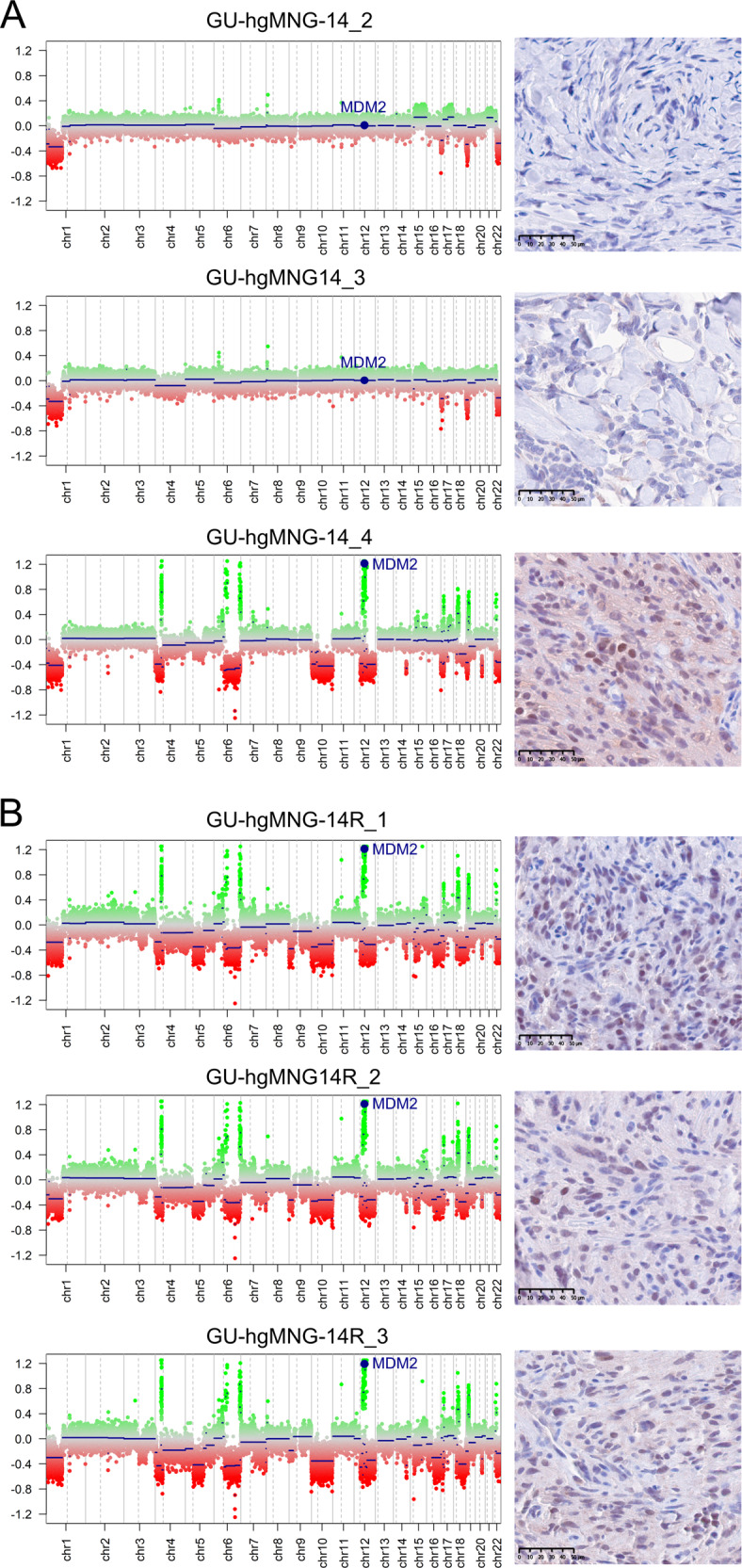
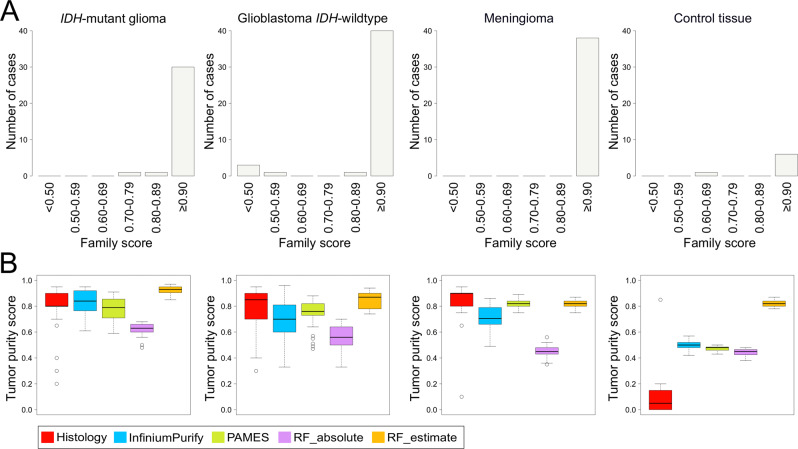
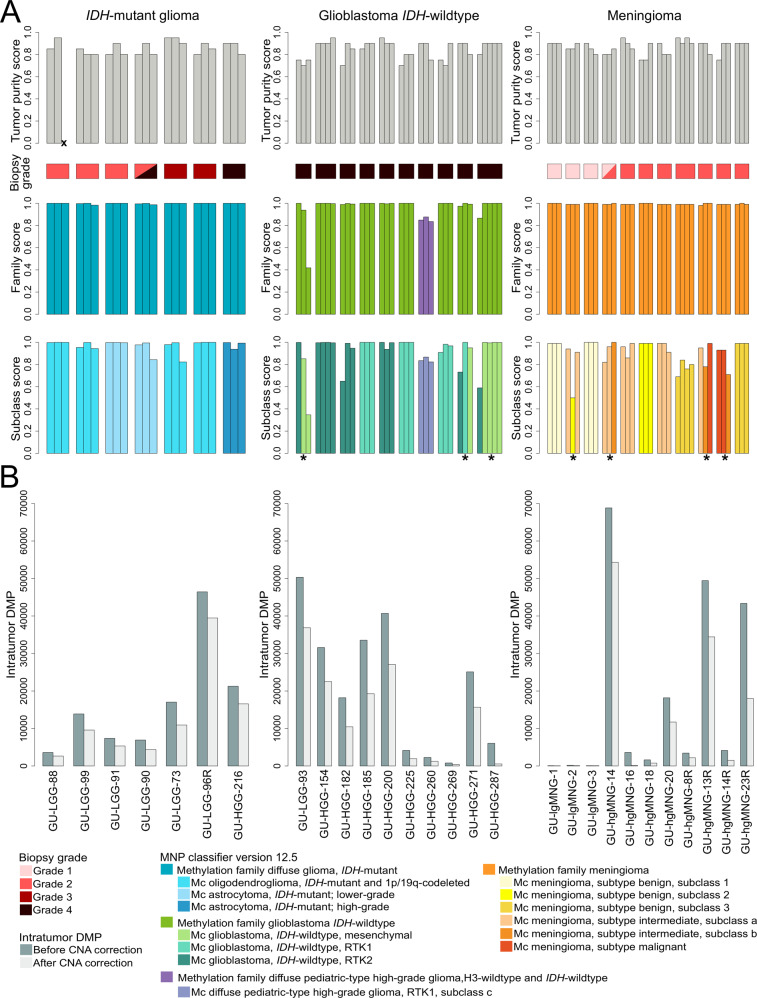
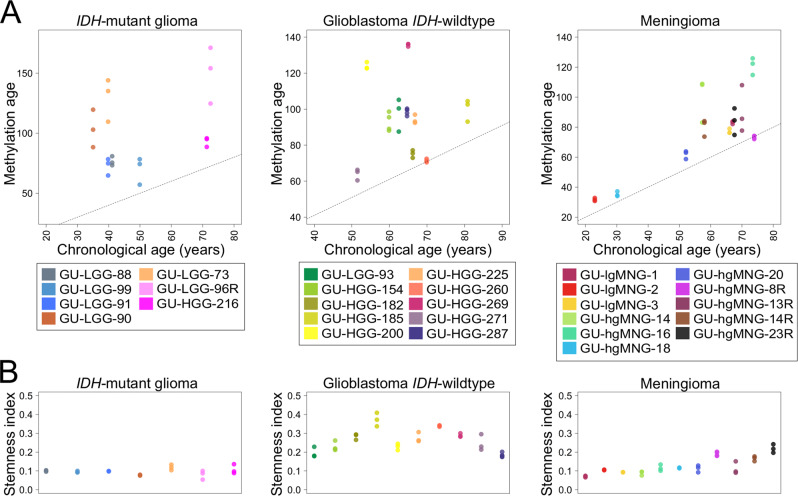
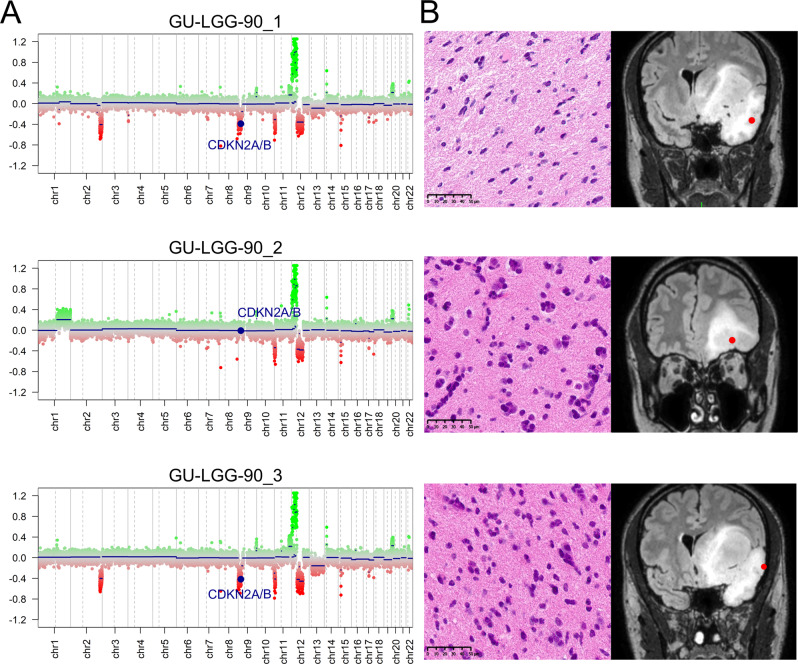
Adult-type diffuse gliomas and meningiomas are the most common primary intracranial tumors of the central nervous system. DNA methylation profiling is a novel diagnostic technique increasingly used also in the clinic. Although molecular heterogeneity is well described in these tumors, DNA methylation heterogeneity is less studied. We therefore investigated the intratumor genetic and epigenetic heterogeneity in diffuse gliomas and meningiomas, with focus on potential clinical implications. We further investigated tumor purity as a source for heterogeneity in the tumors. We analyzed genome-wide DNA methylation profiles generated from 126 spatially separated tumor biopsies from 39 diffuse gliomas and meningiomas. Moreover, we evaluated five methods for measurement of tumor purity and investigated intratumor heterogeneity by assessing DNA methylation-based classification, chromosomal copy number alterations and molecular markers. Our results demonstrated homogeneous methylation-based classification of IDH-mutant gliomas and further corroborates subtype heterogeneity in glioblastoma IDH-wildtype and high-grade meningioma patients after excluding samples with low tumor purity. We detected a large number of differentially methylated CpG sites within diffuse gliomas and meningiomas, particularly in tumors of higher grades. The presence of CDKN2A/B homozygous deletion differed in one out of two patients with IDH-mutant astrocytomas, CNS WHO grade 4. We conclude that diffuse gliomas and high-grade meningiomas are characterized by intratumor heterogeneity, which should be considered in clinical diagnostics and in the assessment of methylation-based and molecular markers.
成人弥漫性神经胶质瘤和脑膜瘤是中枢神经系统最常见的原发性颅内肿瘤。DNA 甲基化分析是一种新兴的诊断技术,在临床上也越来越多地被应用。尽管这些肿瘤的分子异质性已得到很好的描述,但 DNA 甲基化异质性的研究较少。因此,我们研究了弥漫性神经胶质瘤和脑膜瘤中的肿瘤内遗传和表观遗传异质性,并重点研究了其潜在的临床意义。我们进一步研究了肿瘤纯度作为肿瘤异质性的来源。我们分析了 39 例弥漫性神经胶质瘤和脑膜瘤中 126 个空间分离的肿瘤活检样本的全基因组 DNA 甲基化谱。此外,我们评估了五种测量肿瘤纯度的方法,并通过评估基于 DNA 甲基化的分类、染色体拷贝数改变和分子标志物来研究肿瘤内异质性。我们的结果表明,IDH 突变型神经胶质瘤的基于甲基化的分类是同质的,并且在排除了肿瘤纯度较低的样本后,进一步证实了 IDH 野生型胶质母细胞瘤和高级别脑膜瘤患者的亚型异质性。我们在弥漫性神经胶质瘤和脑膜瘤中检测到大量差异甲基化 CpG 位点,尤其是在高级别肿瘤中。在 IDH 突变型星形细胞瘤患者中,有 1/2 的患者存在 CDKN2A/B 纯合缺失,这些患者的中枢神经系统世界卫生组织分级为 4 级。我们的结论是,弥漫性神经胶质瘤和高级别脑膜瘤的特点是肿瘤内异质性,在临床诊断和评估基于甲基化和分子标志物时应考虑这一点。