Montali Ilaria, Vecchi Andrea, Rossi Marzia, Tiezzi Camilla, Penna Amalia, Reverberi Valentina, Laccabue Diletta, Missale Gabriele, Boni Carolina, Fisicaro Paola
Laboratory of Viral Immunopathology, Unit of Infectious Diseases and Hepatology, Azienda Ospedaliero-Universitaria di Parma, 43126 Parma, Italy.
Department of Medicine and Surgery, University of Parma, 43126 Parma, Italy.
Biomedicines. 2022 May 24;10(6):1224. doi: 10.3390/biomedicines10061224.
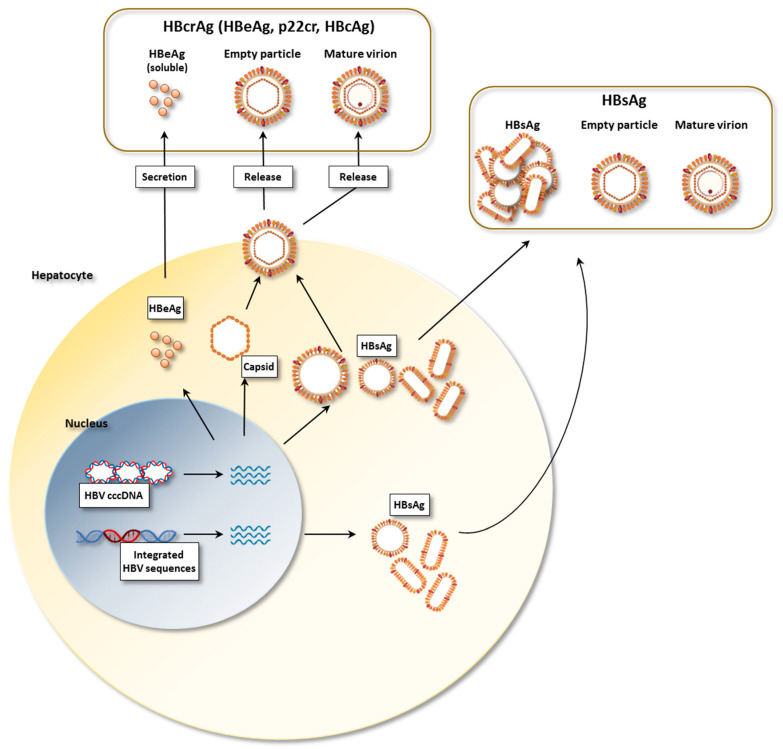
Current treatment for chronic HBV infection is mainly based on nucleos(t)ide analogues, that in most cases need to be administered for a patient's lifetime. There is therefore a pressing need to develop new therapeutic strategies to shorten antiviral treatments. A severe dysfunction of virus-specific T cell responses contributes to virus persistence; hence, immune-modulation to reconstitute an efficient host antiviral response is considered a potential approach for HBV cure. In this perspective, a detailed understanding of the different causes of T cell exhaustion is essential for the design of successful functional T cell correction strategies. Among many different mechanisms which are widely believed to play a role in T cell dysfunction, persistent T cell exposure to high antigen burden, in particular HBsAg, is expected to influence T cell differentiation and function. Definitive evidence of the possibility to improve anti-viral T cell functions by antigen decline is, however, still lacking. This review aims at recapitulating what we have learned so far on the complex T cell-viral antigen interplay in chronic HBV infection.
目前慢性乙型肝炎病毒(HBV)感染的治疗主要基于核苷(酸)类似物,在大多数情况下患者需要终身服用。因此,迫切需要开发新的治疗策略以缩短抗病毒治疗疗程。病毒特异性T细胞反应的严重功能障碍导致病毒持续存在;因此,通过免疫调节来重建有效的宿主抗病毒反应被认为是治愈HBV的一种潜在方法。从这个角度来看,详细了解T细胞耗竭的不同原因对于设计成功的功能性T细胞纠正策略至关重要。在许多被广泛认为在T细胞功能障碍中起作用的不同机制中,T细胞持续暴露于高抗原负荷,特别是乙肝表面抗原(HBsAg),预计会影响T细胞的分化和功能。然而,目前仍缺乏通过降低抗原水平来改善抗病毒T细胞功能可能性的确切证据。这篇综述旨在概括我们目前对慢性HBV感染中复杂的T细胞-病毒抗原相互作用的了解。