Department of Intensive Care Unit, Chongqing General Hospital, University of Chinese Academy of Sciences, Chongqing, China.
Department of Nephrology, Chongqing General Hospital, University of Chinese Academy of Sciences, Chongqing, China.
Medicine (Baltimore). 2022 Jul 8;101(27):e29820. doi: 10.1097/MD.0000000000029820.
Sepsis affects millions of patients annually, resulting in substantial health and economic burdens globally. The role of esmolol potentially plays in the treatment of sepsis and septic shock in adult patients remains controversial.
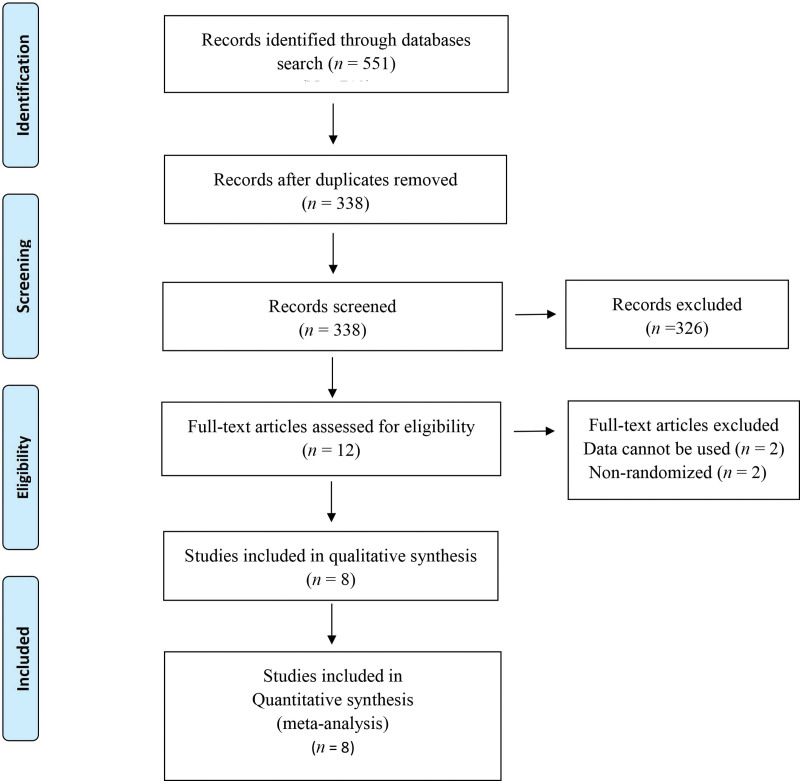
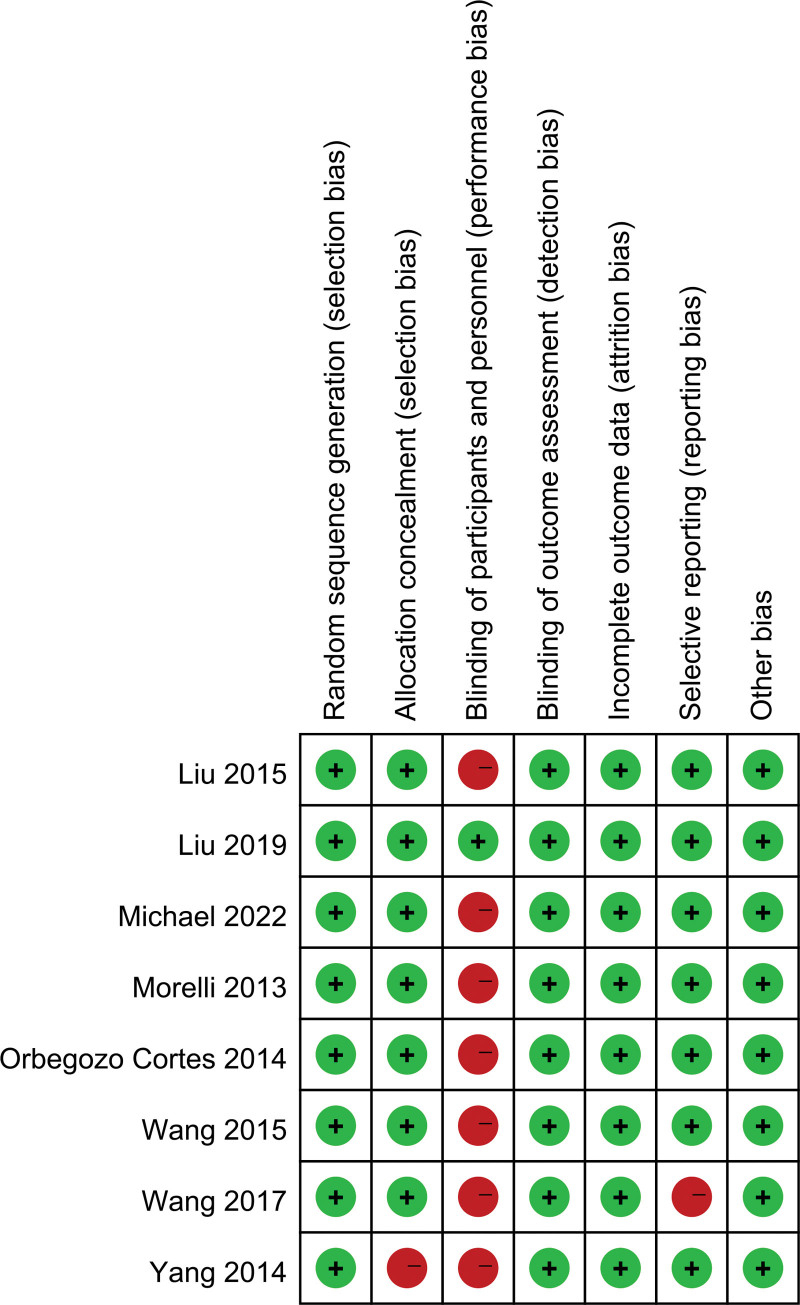
We undertook a systematic search of PubMed, EMBASE, and Cochrane Central Register of Controlled Trials databases from their inception to May 12, 2022, for randomized controlled trials that evaluated the efficacy of esmolol for sepsis and septic shock. A random-effects meta-analysis was performed. Two investigators independently screened articles, extracted data, and assessed the quality of included studies.
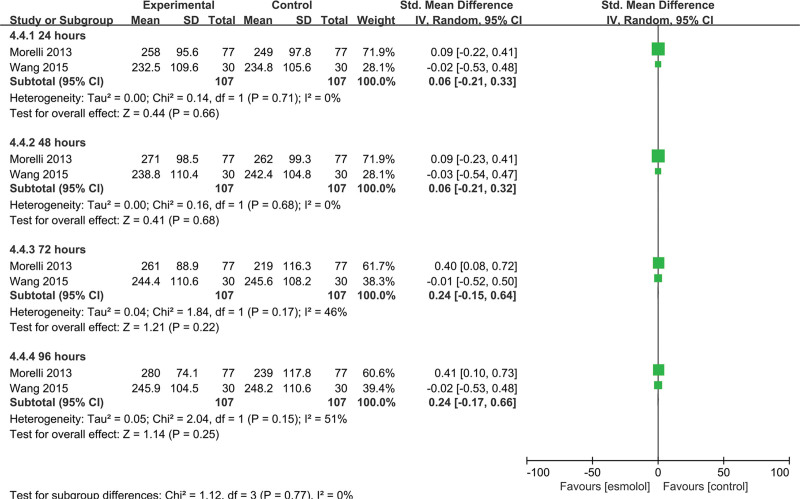
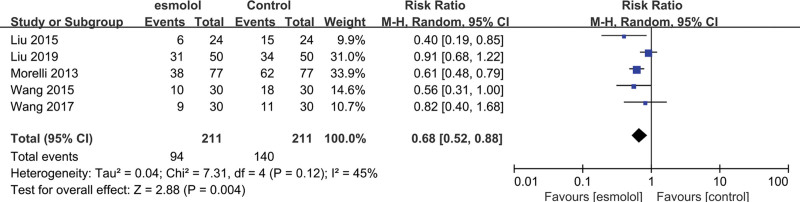
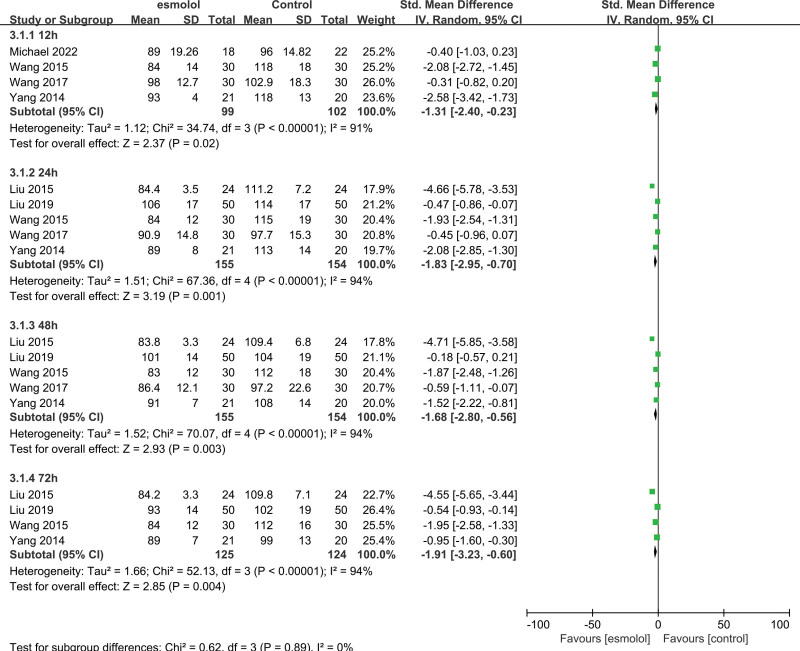
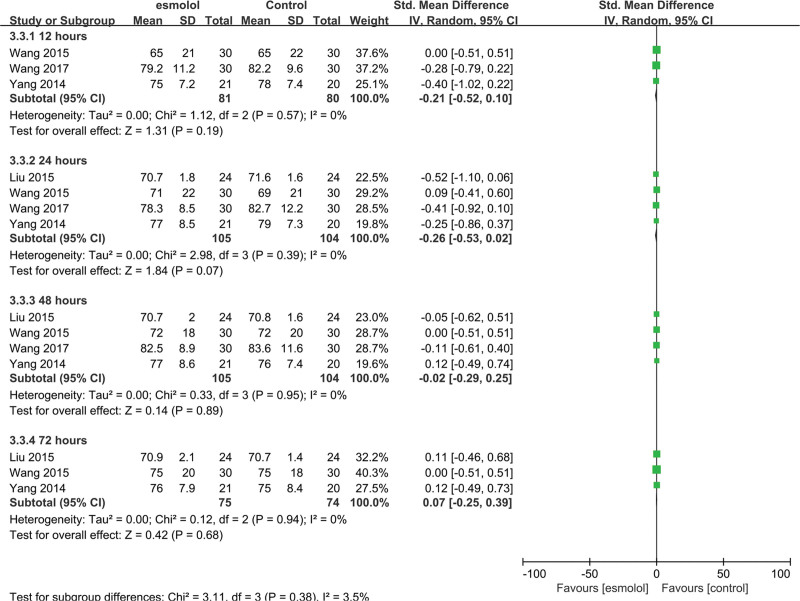
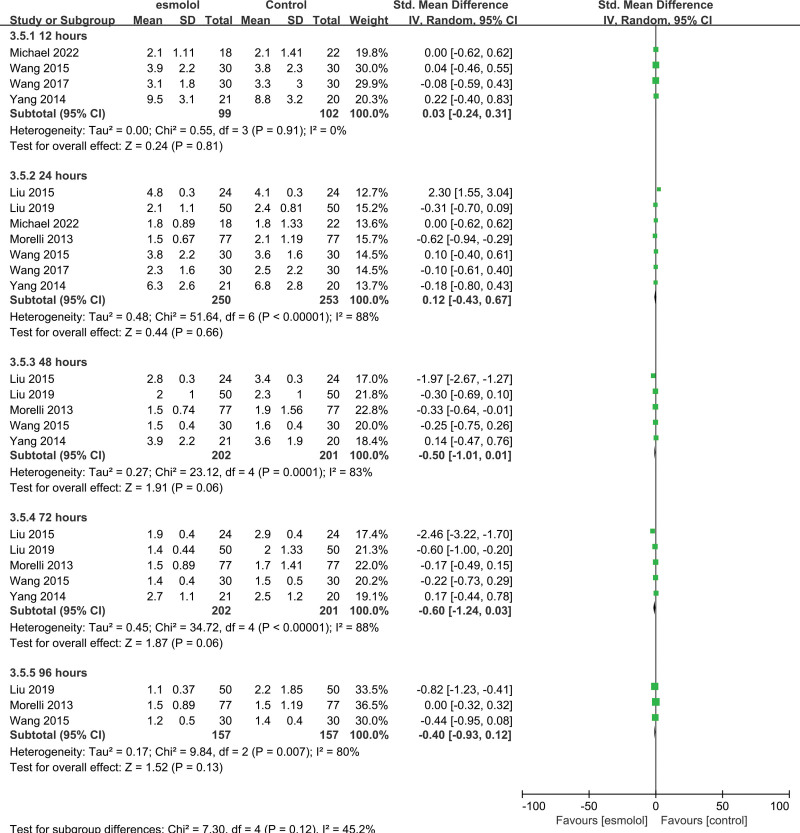
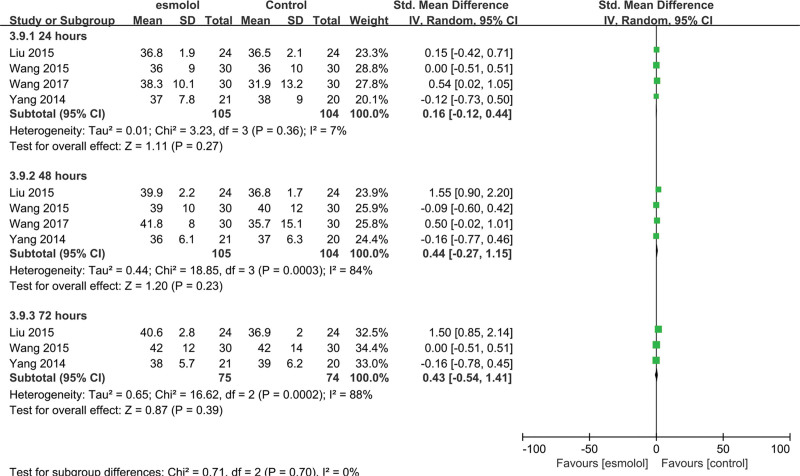
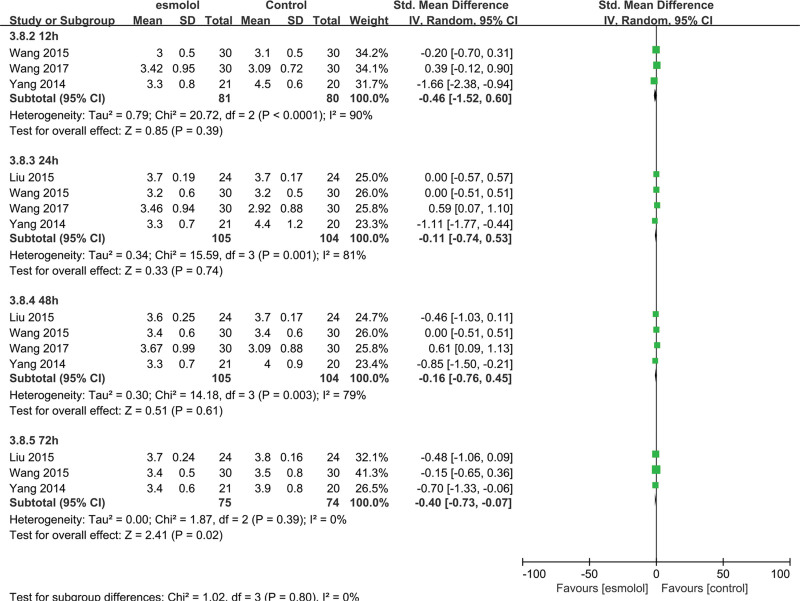
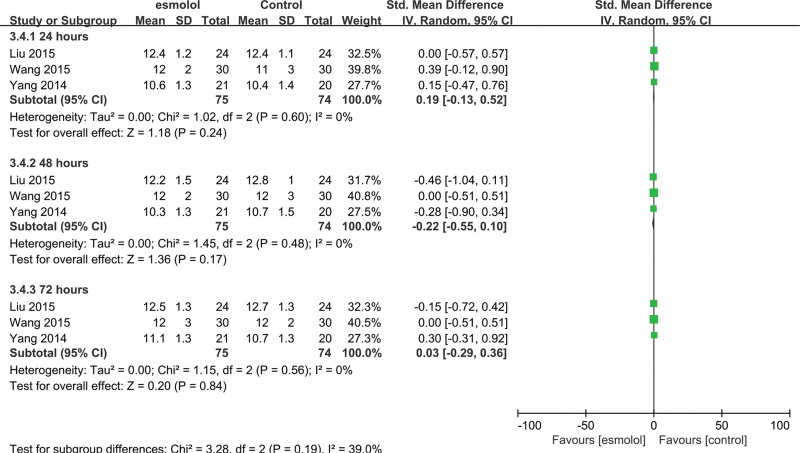
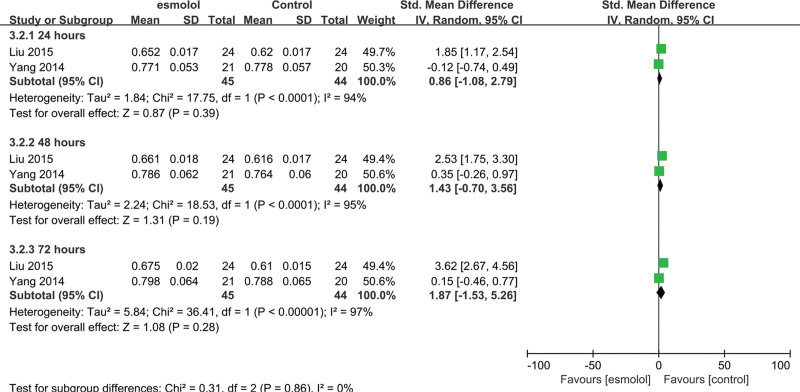
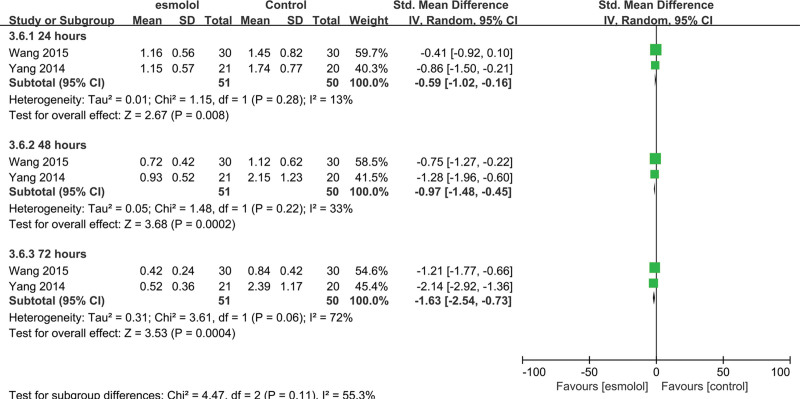
Eight studies from 7 randomized controlled trials were included in our meta-analysis of 503 patients with sepsis and/or septic shock. Compared with standard treatment, esmolol significantly decreased 28-day mortality (risk ratio 0.68, 95% confidence interval [CI] 0.52-0.88; P = .004), heart rate (standardized mean difference [SMD] -1.83, 95% CI -2.95 to -0.70, P = .001), tumor necrosis factor-a (SMD -0.48, 95% CI -0.94 to -0.02, P = .04), and the troponin I level (SMD -0.59, 95% CI -1.02 to -0.16, P = .008) 24 hours after treatment. No significant effect was found in terms of length of intensive care unit stay; mean arterial pressure, lactic acid, central venous pressure, or central venous oxygen saturation, interleukin 6, or white blood cell levels; stroke volume index; or the PaO2/FiO2 ratio.
Esmolol treatment may be safe and effective in decreasing 28-day mortality, controlling heart rate, and providing cardioprotective function, but has no effect on lung injury in patients with sepsis or septic shock after early fluid resuscitation. Improvement in cardiac function may be related to changes in serum inflammatory mediators. No significant adverse effects on tissue perfusion and oxygen utilization were observed.
脓毒症每年影响数百万患者,在全球范围内造成了巨大的健康和经济负担。艾司洛尔在治疗成人脓毒症和脓毒性休克中的作用仍存在争议。
我们对 PubMed、EMBASE 和 Cochrane 对照试验中心注册数据库进行了系统检索,检索时间从数据库建立到 2022 年 5 月 12 日,以评估艾司洛尔治疗脓毒症和脓毒性休克的疗效的随机对照试验。我们进行了随机效应荟萃分析。两位研究者独立筛选文章、提取数据并评估纳入研究的质量。
纳入我们对 503 例脓毒症和/或脓毒性休克患者的荟萃分析的 8 项研究来自 7 项随机对照试验。与标准治疗相比,艾司洛尔显著降低 28 天死亡率(风险比 0.68,95%置信区间 [CI] 0.52-0.88;P =.004)、心率(标准化均数差 [SMD] -1.83,95%CI -2.95 至 -0.70,P =.001)、肿瘤坏死因子-α(SMD -0.48,95%CI -0.94 至 -0.02,P =.04)和肌钙蛋白 I 水平(SMD -0.59,95%CI -1.02 至 -0.16,P =.008)24 小时后。在 ICU 住院时间、平均动脉压、乳酸、中心静脉压或中心静脉血氧饱和度、白细胞介素 6 或白细胞计数、每搏量指数或 PaO2/FiO2 比值方面,没有观察到显著影响。
在早期液体复苏后,艾司洛尔治疗可能安全且有效,可降低 28 天死亡率、控制心率并提供心脏保护作用,但对脓毒症或脓毒性休克患者的肺损伤没有影响。心脏功能的改善可能与血清炎症介质的变化有关。未观察到对组织灌注和氧利用的显著不利影响。