• 文献检索
  • 文档翻译
  • 深度研究
  • 学术资讯
  • Suppr Zotero 插件Zotero 插件
  • 邀请有礼
  • 套餐&价格
  • 历史记录
应用&插件
Suppr Zotero 插件Zotero 插件浏览器插件Mac 客户端Windows 客户端微信小程序
定价
高级版会员购买积分包购买API积分包
服务
文献检索文档翻译深度研究API 文档MCP 服务
关于我们
关于 Suppr公司介绍联系我们用户协议隐私条款
关注我们

Suppr 超能文献

核心技术专利:CN118964589B侵权必究
粤ICP备2023148730 号-1Suppr @ 2026

文献检索

告别复杂PubMed语法,用中文像聊天一样搜索,搜遍4000万医学文献。AI智能推荐,让科研检索更轻松。

立即免费搜索

文件翻译

保留排版,准确专业,支持PDF/Word/PPT等文件格式,支持 12+语言互译。

免费翻译文档

深度研究

AI帮你快速写综述,25分钟生成高质量综述,智能提取关键信息,辅助科研写作。

立即免费体验

患者对运动神经元疾病护理和临床试验中数字医疗技术的看法:一项国际调查。

Patient perspectives on digital healthcare technology in care and clinical trials for motor neuron disease: an international survey.

机构信息

Department of Rehabilitation, Physical Therapy Science and Sports, UMC Utrecht Brain Center, University Medical Center Utrecht, Utrecht, the Netherlands.

Center of Excellence for Rehabilitation Medicine, UMC Utrecht Brain Center, University Medical Center Utrecht, and De Hoogstraat Rehabilitation, Utrecht, the Netherlands.

出版信息

J Neurol. 2022 Nov;269(11):6003-6013. doi: 10.1007/s00415-022-11273-x. Epub 2022 Jul 18.

DOI:10.1007/s00415-022-11273-x
PMID:35849154
原文链接:https://pmc.ncbi.nlm.nih.gov/articles/PMC9294855/
Abstract

INTRODUCTION

To capture the patient's attitude toward remote monitoring of motor neuron disease (MND) in care and clinical trials, and their concerns and preferences regarding the use of digital technology.

METHODS

We performed an international multi-centre survey study in three MND clinics in The Netherlands, the United Kingdom, and Australia. The survey was co-developed by investigators and patients with MND, and sent to patients by e-mail or postal-mail. The main topics included: patients' attitude towards remote care, participating in decentralized clinical trials, and preferences for and concerns with digital technology use.

RESULTS

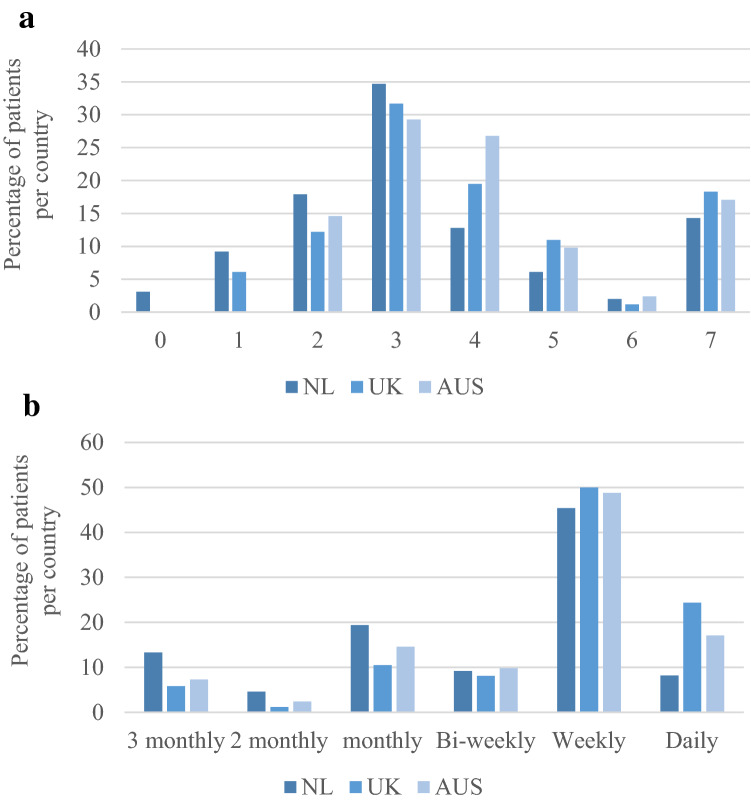
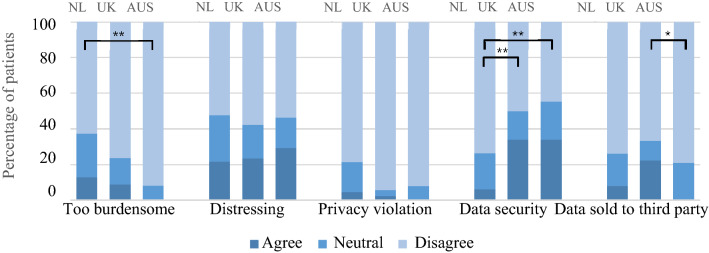
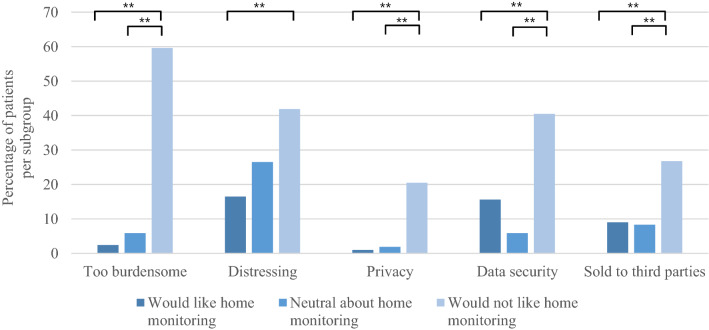
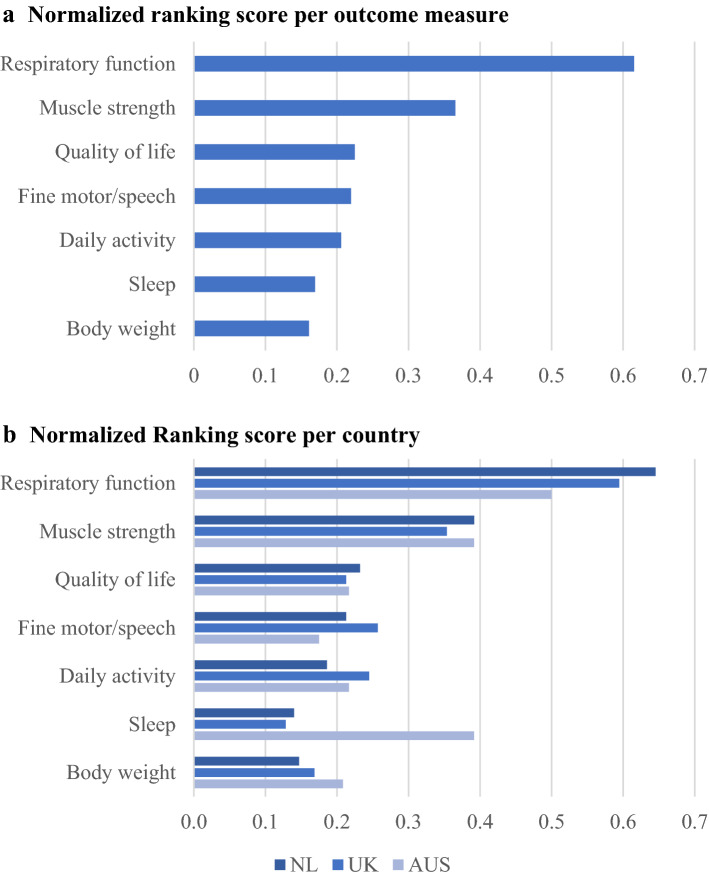
In total, 332 patients with MND participated. A majority of patients indicated they would be happy to self-monitor their health from home (69%), be remotely monitored by a multidisciplinary care team (75%), and would be willing to participate in clinical trials from home (65%). Patients considered respiratory function and muscle strength most valuable for home-monitoring. The majority of patients considered the use of at least three devices/apps (75%) once a week (61%) to be acceptable for home-monitoring. Fifteen percent of patients indicated they would not wish to perform home-measurements; reporting concerns about the burden and distress of home-monitoring, privacy and data security.

CONCLUSION

Most patients with MND exhibited a positive attitude toward the use of digital technology in both care and clinical trial settings. A subgroup of patients reported concerns with home-monitoring, which should be addressed in order to improve widespread adoption of remote digital technology in clinical MND care.

摘要

简介

为了了解患者对运动神经元病(MND)远程监测的态度,以及他们对使用数字技术的关注和偏好,我们在荷兰、英国和澳大利亚的三个 MND 诊所进行了一项国际多中心调查研究。该调查由研究人员和 MND 患者共同开发,并通过电子邮件或邮寄方式发送给患者。主要主题包括:患者对远程护理的态度、参与去中心化临床试验、对数字技术使用的偏好和担忧。

结果

共有 332 名 MND 患者参与了研究。大多数患者表示他们愿意在家中自我监测健康状况(69%)、接受多学科护理团队的远程监测(75%),并愿意在家中参加临床试验(65%)。患者认为呼吸功能和肌肉力量最适合在家中监测。大多数患者认为每周使用至少三种设备/应用程序(75%)一次是可以接受的(61%)。有 15%的患者表示他们不愿意进行家庭测量,他们担心家庭监测会带来负担和痛苦,以及隐私和数据安全问题。

结论

大多数 MND 患者对数字技术在护理和临床试验中的应用持积极态度。但有一小部分患者对家庭监测表示担忧,为了提高远程数字技术在临床 MND 护理中的广泛应用,需要解决这些问题。
https://cdn.ncbi.nlm.nih.gov/pmc/blobs/b0c8/9553823/7f729ba97687/415_2022_11273_Fig5_HTML.jpg
https://cdn.ncbi.nlm.nih.gov/pmc/blobs/b0c8/9553823/57e845635c58/415_2022_11273_Fig1_HTML.jpg
https://cdn.ncbi.nlm.nih.gov/pmc/blobs/b0c8/9553823/2b105d01b014/415_2022_11273_Fig2_HTML.jpg
https://cdn.ncbi.nlm.nih.gov/pmc/blobs/b0c8/9553823/f6dcf1aa6f35/415_2022_11273_Fig3_HTML.jpg
https://cdn.ncbi.nlm.nih.gov/pmc/blobs/b0c8/9553823/3388fa1501de/415_2022_11273_Fig4_HTML.jpg
https://cdn.ncbi.nlm.nih.gov/pmc/blobs/b0c8/9553823/7f729ba97687/415_2022_11273_Fig5_HTML.jpg
https://cdn.ncbi.nlm.nih.gov/pmc/blobs/b0c8/9553823/57e845635c58/415_2022_11273_Fig1_HTML.jpg
https://cdn.ncbi.nlm.nih.gov/pmc/blobs/b0c8/9553823/2b105d01b014/415_2022_11273_Fig2_HTML.jpg
https://cdn.ncbi.nlm.nih.gov/pmc/blobs/b0c8/9553823/f6dcf1aa6f35/415_2022_11273_Fig3_HTML.jpg
https://cdn.ncbi.nlm.nih.gov/pmc/blobs/b0c8/9553823/3388fa1501de/415_2022_11273_Fig4_HTML.jpg
https://cdn.ncbi.nlm.nih.gov/pmc/blobs/b0c8/9553823/7f729ba97687/415_2022_11273_Fig5_HTML.jpg

相似文献

1
Patient perspectives on digital healthcare technology in care and clinical trials for motor neuron disease: an international survey.患者对运动神经元疾病护理和临床试验中数字医疗技术的看法:一项国际调查。
J Neurol. 2022 Nov;269(11):6003-6013. doi: 10.1007/s00415-022-11273-x. Epub 2022 Jul 18.
2
Patients' perspectives of multidisciplinary home-based e-Health service delivery for motor neurone disease.患者对运动神经元疾病多学科居家电子健康服务提供的看法。
Disabil Rehabil Assist Technol. 2019 Oct;14(7):737-743. doi: 10.1080/17483107.2018.1499139. Epub 2018 Sep 5.
3
Development and Evaluation of the Telehealth in Motor Neuron Disease System: The TIME Study Protocol.远程医疗在运动神经元病系统中的开发和评估:TIME 研究方案。
JMIR Res Protoc. 2024 Oct 8;13:e57685. doi: 10.2196/57685.
4
Home-monitoring of vital capacity in people with a motor neuron disease.在家监测运动神经元病患者的肺活量。
J Neurol. 2022 Jul;269(7):3713-3722. doi: 10.1007/s00415-022-10996-1. Epub 2022 Feb 7.
5
Objectively Monitoring Amyotrophic Lateral Sclerosis Patient Symptoms During Clinical Trials With Sensors: Observational Study.使用传感器客观监测临床试验中的肌萎缩侧索硬化症患者症状:观察性研究。
JMIR Mhealth Uhealth. 2019 Dec 20;7(12):e13433. doi: 10.2196/13433.
6
Perceptions of digital technology use for monitoring health in people living with neurological disorders.监测神经障碍患者健康的数字技术使用感知。
J Neurol Sci. 2024 Jul 15;462:123072. doi: 10.1016/j.jns.2024.123072. Epub 2024 Jun 6.
7
Communications Technology and Motor Neuron Disease: An Australian Survey of People With Motor Neuron Disease.通信技术与运动神经元病:澳大利亚运动神经元病患者调查
JMIR Rehabil Assist Technol. 2016 Jan 25;3(1):e2. doi: 10.2196/rehab.4017.
8
Evaluation of the nation-wide implementation of ALS home monitoring & coaching: an e-health innovation for personalized care for patients with motor neuron disease.评估全国范围内肌萎缩侧索硬化症家庭监测和指导的实施情况:一项针对运动神经元病患者个性化护理的电子健康创新。
BMC Health Serv Res. 2022 Nov 22;22(1):1389. doi: 10.1186/s12913-022-08724-6.
9
"Anything that makes life's journey better." Exploring the use of digital technology by people living with motor neurone disease.“任何能让人生旅程更美好的事物。” 探究运动神经元病患者对数字技术的使用情况。
Amyotroph Lateral Scler Frontotemporal Degener. 2017 Aug;18(5-6):378-387. doi: 10.1080/21678421.2017.1288253. Epub 2017 Feb 20.
10
A Road Map for Remote Digital Health Technology for Motor Neuron Disease.运动神经元病远程数字健康技术路线图
J Med Internet Res. 2021 Sep 22;23(9):e28766. doi: 10.2196/28766.

引用本文的文献

1
Remote Monitoring of Amyotrophic Lateral Sclerosis Using Digital Health Technologies: Shifting Toward Digitalized Care and Research?利用数字健康技术对肌萎缩侧索硬化症进行远程监测:是否正在向数字化护理和研究转变?
Neurology. 2025 Jul 8;105(1):e213738. doi: 10.1212/WNL.0000000000213738. Epub 2025 Jun 3.
2
Identification of passive wrist-worn accelerometry outcomes for improved disease monitoring and trial design in motor neuron disease.确定用于改善运动神经元疾病的疾病监测和试验设计的被动式腕部佩戴式加速度计测量结果。
EBioMedicine. 2025 May 29;117:105779. doi: 10.1016/j.ebiom.2025.105779.
3
A Systematic Review of Attributes Influencing Preferences for Treatments and Interventions in People With Amyotrophic Lateral Sclerosis (ALS).

本文引用的文献

1
Portable fixed dynamometry: towards remote muscle strength measurements in patients with motor neuron disease.便携式固定测力计:用于测量运动神经元病患者的远程肌肉力量。
J Neurol. 2021 May;268(5):1738-1746. doi: 10.1007/s00415-020-10366-9. Epub 2020 Dec 23.
2
Secondary research use of personal medical data: attitudes from patient and population surveys in The Netherlands and Germany.个人医疗数据的二次研究利用:荷兰和德国患者和人群调查的态度。
Eur J Hum Genet. 2021 Mar;29(3):495-502. doi: 10.1038/s41431-020-00735-3. Epub 2020 Oct 1.
3
New technologies and Amyotrophic Lateral Sclerosis - Which step forward rushed by the COVID-19 pandemic?
肌萎缩侧索硬化症(ALS)患者对治疗和干预措施偏好的影响因素的系统评价
Muscle Nerve. 2025 Sep;72(3):359-382. doi: 10.1002/mus.28437. Epub 2025 May 23.
4
The Use of Digital Devices to Monitor Physical Behavior in Motor Neuron Disease: Systematic Review.使用数字设备监测运动神经元病患者的身体行为:系统评价
J Med Internet Res. 2025 Apr 17;27:e68479. doi: 10.2196/68479.
5
Patient perspectives on the use of digital medical devices and health data for AI-driven personalised medicine in Parkinson's Disease.帕金森病患者对使用数字医疗设备和健康数据进行人工智能驱动的个性化医疗的看法。
Front Neurol. 2024 Dec 4;15:1453243. doi: 10.3389/fneur.2024.1453243. eCollection 2024.
6
Cancer Patients' Perspectives and Requirements of Digital Health Technologies: A Scoping Literature Review.癌症患者对数字健康技术的看法和需求:一项范围界定文献综述
Cancers (Basel). 2024 Jun 21;16(13):2293. doi: 10.3390/cancers16132293.
7
The use of digital tools in rare neurological diseases towards a new care model: a narrative review.数字工具在罕见神经系统疾病中的应用:迈向新型护理模式的叙述性综述。
Neurol Sci. 2024 Oct;45(10):4657-4668. doi: 10.1007/s10072-024-07631-4. Epub 2024 Jun 10.
8
Update on recent advances in amyotrophic lateral sclerosis.肌萎缩侧索硬化症的最新进展综述。
J Neurol. 2024 Jul;271(7):4693-4723. doi: 10.1007/s00415-024-12435-9. Epub 2024 May 27.
9
Developing a digital mind body medicine supportive care intervention for people with amyotrophic lateral sclerosis using stakeholder engagement and design thinking.运用利益相关者参与和设计思维,为肌萎缩侧索硬化症患者开发一种数字身心医学支持性护理干预措施。
Digit Health. 2024 May 20;10:20552076241255928. doi: 10.1177/20552076241255928. eCollection 2024 Jan-Dec.
10
Non-motor symptoms in motor neuron disease: prevalence, assessment and impact.运动神经元病中的非运动症状:患病率、评估及影响
Brain Commun. 2023 Dec 7;6(1):fcad336. doi: 10.1093/braincomms/fcad336. eCollection 2024.
新技术与肌萎缩侧索硬化症——新冠疫情推动了哪些进步?
J Neurol Sci. 2020 Nov 15;418:117081. doi: 10.1016/j.jns.2020.117081. Epub 2020 Aug 5.
4
Using patient-reported symptoms of dyspnea for screening reduced respiratory function in patients with motor neuron diseases.使用患者报告的呼吸困难症状对运动神经元病患者的呼吸功能进行筛查。
J Neurol. 2020 Nov;267(11):3310-3318. doi: 10.1007/s00415-020-10003-5. Epub 2020 Jun 23.
5
Accelerometry for remote monitoring of physical activity in amyotrophic lateral sclerosis: a longitudinal cohort study.加速度计遥测肌萎缩侧索硬化症患者的体力活动:一项纵向队列研究。
J Neurol. 2019 Oct;266(10):2387-2395. doi: 10.1007/s00415-019-09427-5. Epub 2019 Jun 11.
6
Modeling the adoption of personal health record (PHR) among individual: the effect of health-care technology self-efficacy and gender concern.个体层面个人健康记录(PHR)采用情况的建模:医疗保健技术自我效能感和性别因素的影响。
Libyan J Med. 2018 Dec;13(1):1500349. doi: 10.1080/19932820.2018.1500349.