Research Unit for General Practice, Bartholins Allé 2, DK-8000, Aarhus C, Denmark.
Department of Public Health, Aarhus University, Bartholins Allé 2, DK-8000, Aarhus C, Denmark.
BMC Cancer. 2022 Jul 21;22(1):805. doi: 10.1186/s12885-022-09912-7.
The time interval from first symptom and sign until a cancer diagnosis significantly affects the prognosis. Therefore, recognising and acting on signs of cancer, such as anaemia, is essential. Evidence is sparse on the overall risk of cancer and the risk of specific cancer types in persons with new-onset anaemia detected in an unselected general practice population. We aimed to assess the risk of cancer in persons with new-onset anaemia detected in general practice, both overall and for selected cancer types.
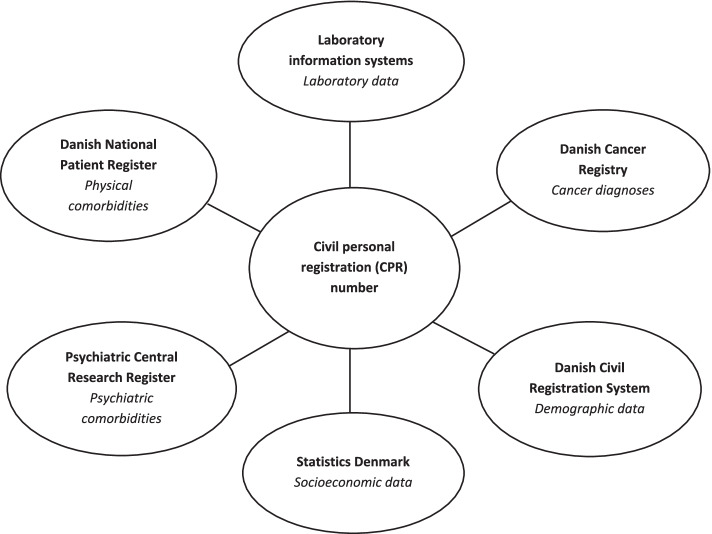
This observational population-based cohort study used individually linked electronic data from laboratory information systems and nationwide healthcare registries in Denmark. We included persons aged 40-90 years without a prior history of cancer and with new-onset anaemia (no anaemia during the previous 15 months) detected in general practice in 2014-2018. We measured the incidence proportion and standardised incidence ratios of a new cancer diagnosis (all cancers except for non-melanoma skin cancers) during 12 months follow-up.
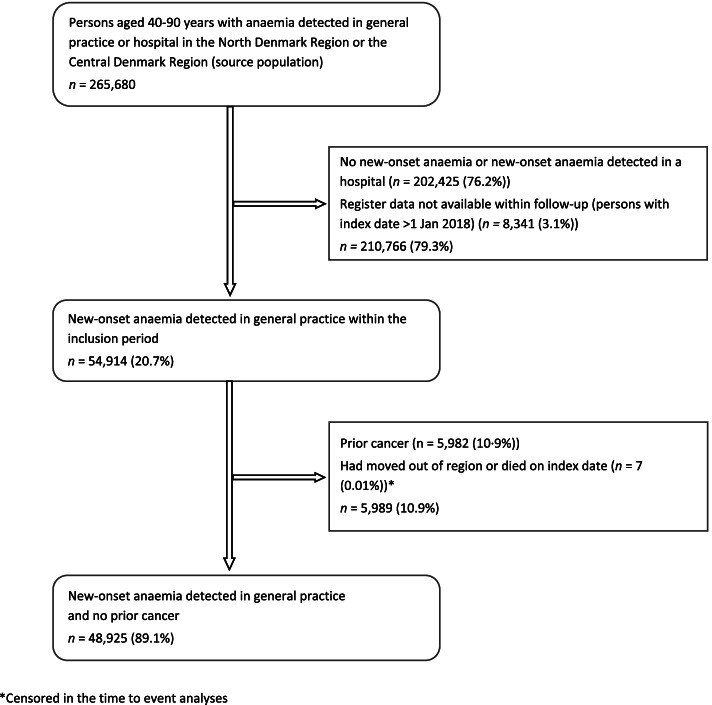
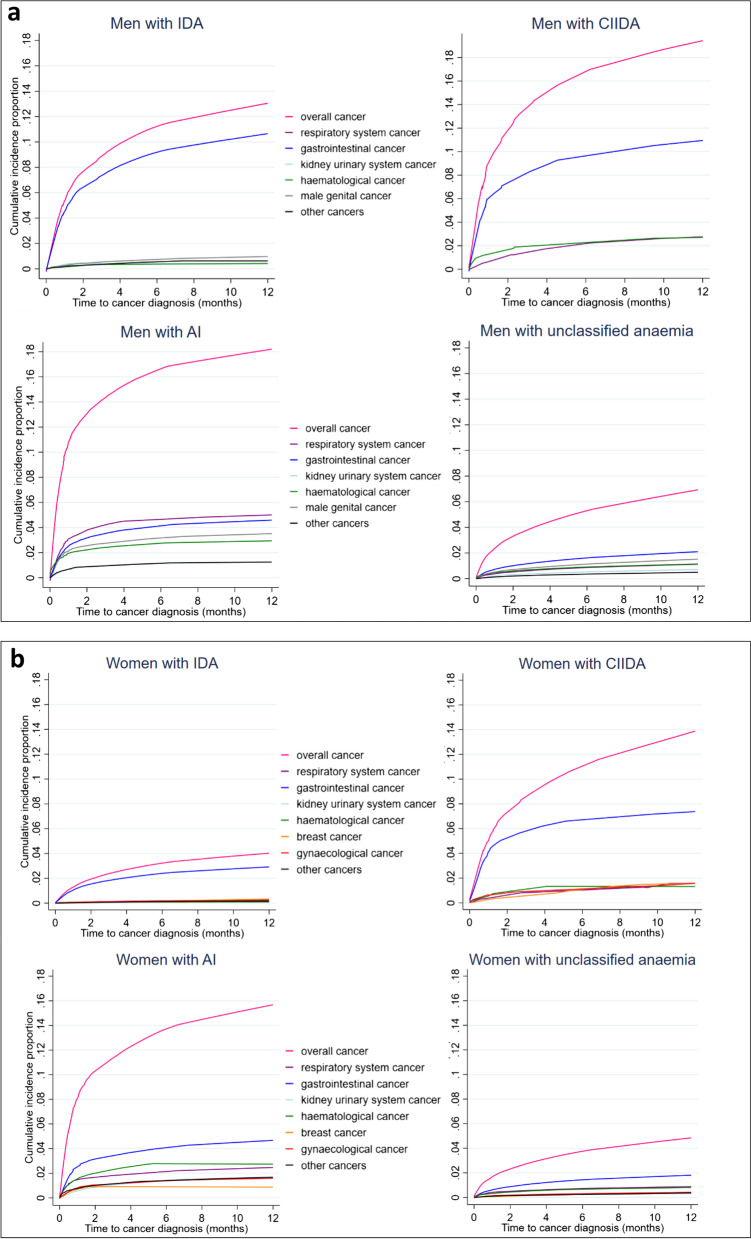
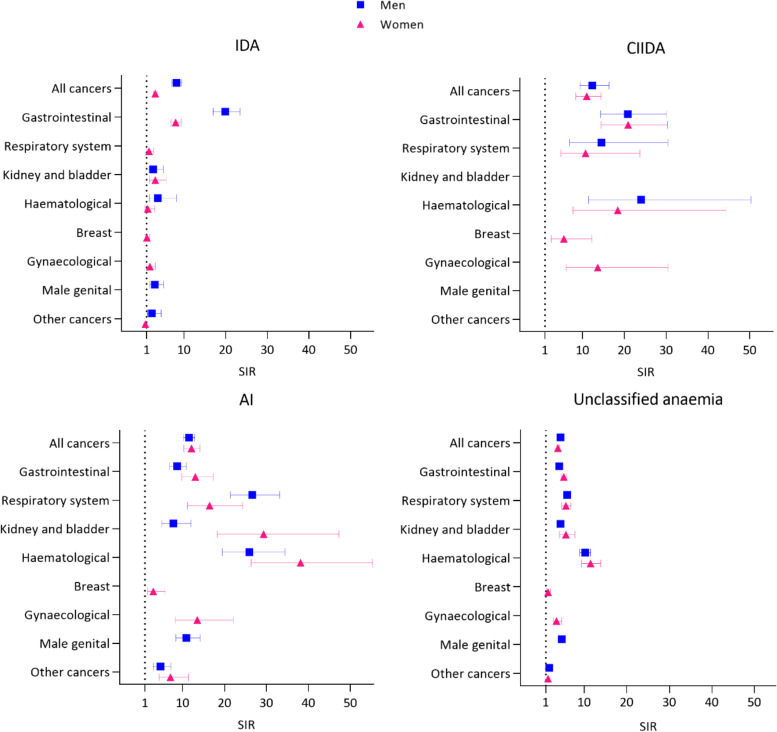
A total of 48,925 persons (median [interquartile interval] age, 69 [55-78] years; 55.5% men) were included in the study. In total, 7.9% (95% confidence interval (CI): 7.6 to 8.2) of men and 5.2% (CI: 4.9 to 5.5) of women were diagnosed with cancer during 12 months. Across selected anaemia types, the highest cancer incidence proportion was seen in women with 'anaemia of inflammation' (15.3%, CI: 13.1 to 17.5) (ferritin > 100 ng/mL and increased C-reactive protein (CRP)) and in men with 'combined inflammatory iron deficiency anaemia' (19.3%, CI: 14.5 to 24.1) (ferritin < 100 ng/mL and increased CRP). For these two anaemia types, the cancer incidence across cancer types was 10- to 30-fold higher compared to the general population.
Persons with new-onset anaemia detected in general practice have a high cancer risk; and markedly high for 'combined inflammatory iron deficiency anaemia' and 'anaemia of inflammation'. Anaemia is a sign of cancer that calls for increased awareness and action. There is a need for research on how to improve the initial pathway for new-onset anaemia in general practice.
从首次出现症状和体征到癌症确诊的时间间隔对预后有重要影响。因此,识别和处理癌症的体征(如贫血)至关重要。在未选择的普通诊所人群中,新发生的贫血患者中,癌症的总体风险以及特定癌症类型的风险的证据非常有限。我们旨在评估普通诊所新发生的贫血患者中癌症的风险,包括总体风险和特定癌症类型的风险。
本观察性基于人群的队列研究使用了丹麦实验室信息系统和全国医疗保健登记处的个体链接电子数据。我们纳入了 2014 年至 2018 年期间年龄在 40-90 岁之间、无既往癌症病史且在普通诊所新发生贫血(过去 15 个月内无贫血)的患者。我们测量了 12 个月随访期间新发癌症诊断(所有癌症,非黑色素瘤皮肤癌除外)的发病率比例和标准化发病率比。
共纳入 48925 名患者(中位数[四分位距]年龄,69[55-78]岁;55.5%为男性)。共有 7.9%(95%置信区间[CI]:7.6 至 8.2)的男性和 5.2%(CI:4.9 至 5.5)的女性在 12 个月内被诊断患有癌症。在所选择的贫血类型中,女性中“炎症性贫血”(15.3%,CI:13.1 至 17.5)(铁蛋白>100ng/mL 和 C 反应蛋白(CRP)升高)和男性中“炎症性缺铁性贫血”(19.3%,CI:14.5 至 24.1)(铁蛋白<100ng/mL 和 CRP 升高)的癌症发病率最高。对于这两种贫血类型,与普通人群相比,癌症发病率高 10-30 倍。
普通诊所新发生贫血的患者癌症风险较高;而“炎症性缺铁性贫血”和“炎症性贫血”的风险明显较高。贫血是癌症的一个体征,需要提高认识和采取行动。需要研究如何改善普通诊所新发生贫血的初始途径。