• 文献检索
  • 文档翻译
  • 深度研究
  • 学术资讯
  • Suppr Zotero 插件Zotero 插件
  • 邀请有礼
  • 套餐&价格
  • 历史记录
应用&插件
Suppr Zotero 插件Zotero 插件浏览器插件Mac 客户端Windows 客户端微信小程序
定价
高级版会员购买积分包购买API积分包
服务
文献检索文档翻译深度研究API 文档MCP 服务
关于我们
关于 Suppr公司介绍联系我们用户协议隐私条款
关注我们

Suppr 超能文献

核心技术专利:CN118964589B侵权必究
粤ICP备2023148730 号-1Suppr @ 2026

文献检索

告别复杂PubMed语法,用中文像聊天一样搜索,搜遍4000万医学文献。AI智能推荐,让科研检索更轻松。

立即免费搜索

文件翻译

保留排版,准确专业,支持PDF/Word/PPT等文件格式,支持 12+语言互译。

免费翻译文档

深度研究

AI帮你快速写综述,25分钟生成高质量综述,智能提取关键信息,辅助科研写作。

立即免费体验

非易失性信号和氧化还原机制是拟南芥根系对水稻黄单胞菌响应所必需的。

Non-volatile signals and redox mechanisms are required for the responses of Arabidopsis roots to Pseudomonas oryzihabitans.

机构信息

Institute of Research and Agrofood technology (IRTA) Postharvest Program, Edifici Fruitcentre, Parc Científic i Tecnològic Agroalimentari de Lleida, 25003 Lleida, Catalonia, Spain.

IRTA, Plant In Vitro Culture Laboratory, Fruticulture Program, Barcelona, Spain.

出版信息

J Exp Bot. 2022 Nov 2;73(19):6971-6982. doi: 10.1093/jxb/erac346.

DOI:10.1093/jxb/erac346
PMID:36001048
原文链接:https://pmc.ncbi.nlm.nih.gov/articles/PMC10277831/
Abstract

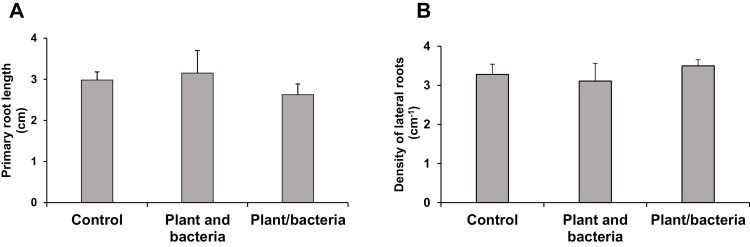
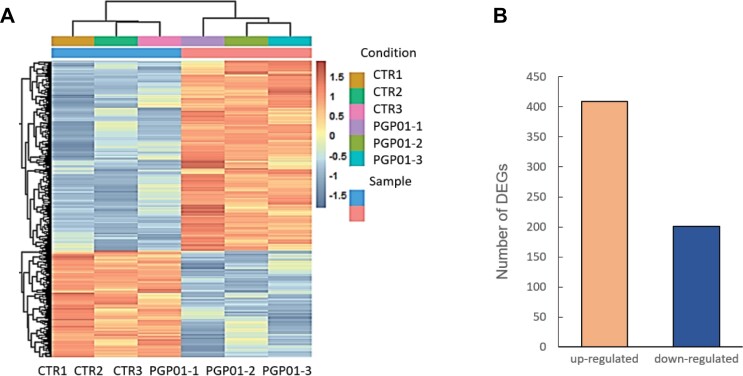
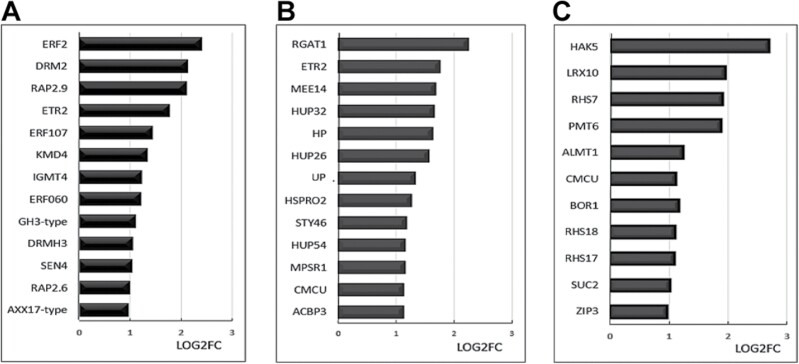
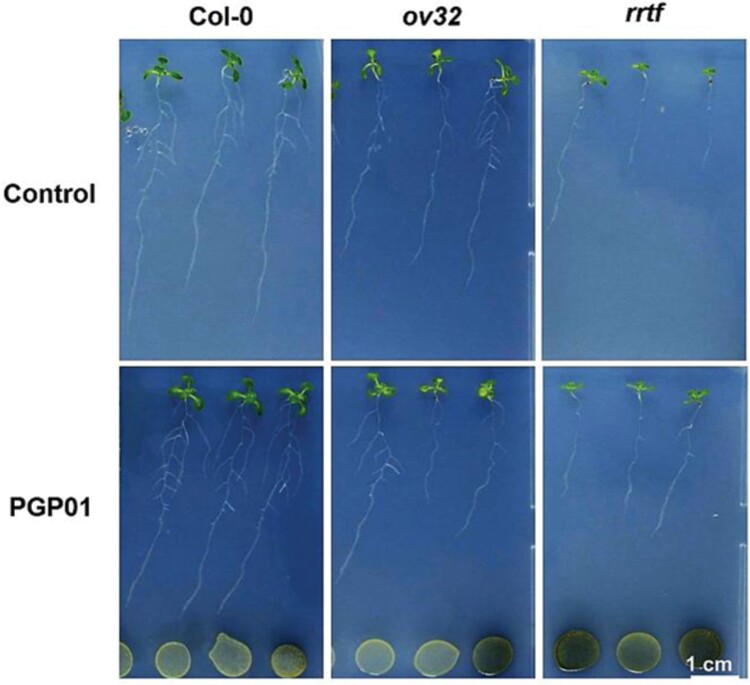
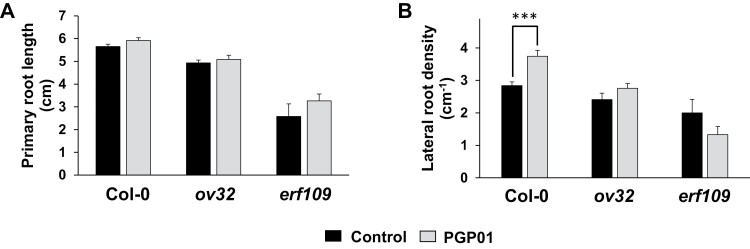
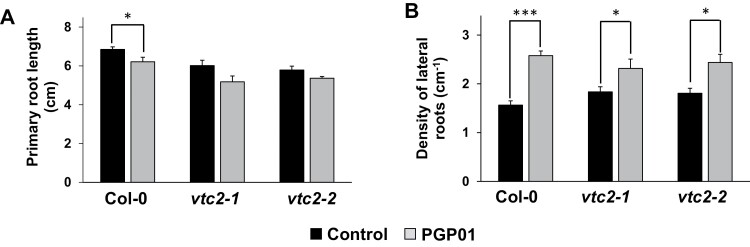
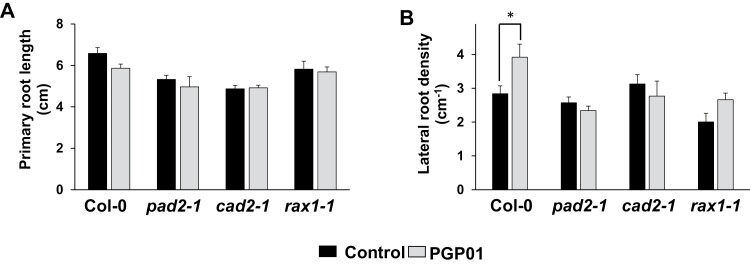
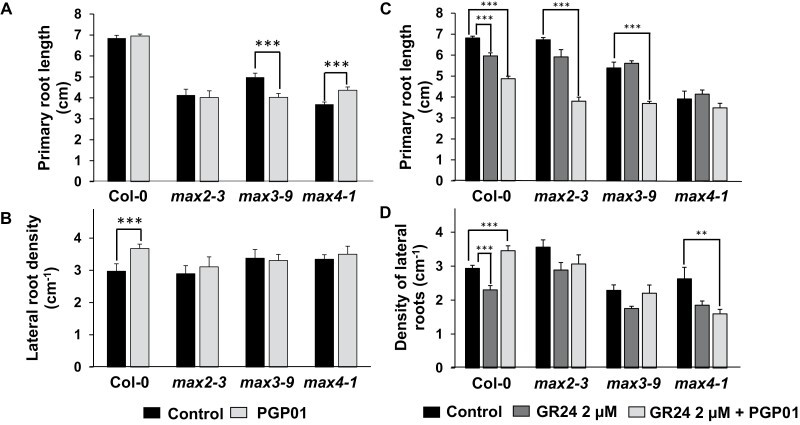
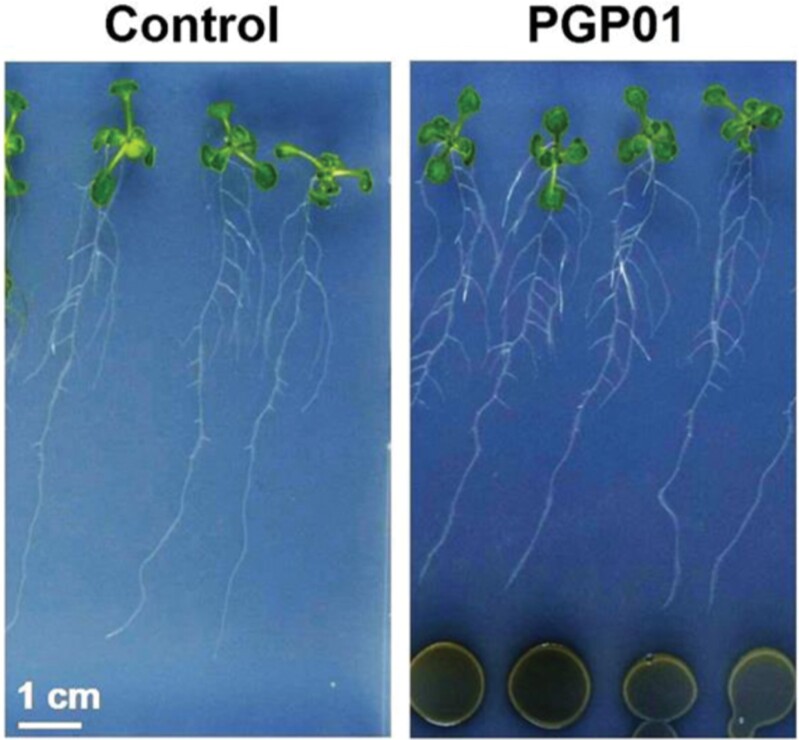
Soil bacteria promote plant growth and protect against environmental stresses, but the mechanisms involved remain poorly characterized, particularly when there is no direct contact between the roots and bacteria. Here, we explored the effects of Pseudomonas oryzihabitans PGP01 on the root system architecture (RSA) in Arabidopsis thaliana seedlings. Significant increases in lateral root (LR) density were observed when seedlings were grown in the presence of P. oryzihabitans, as well as an increased abundance of transcripts associated with altered nutrient transport and phytohormone responses. However, no bacterial transcripts were detected on the root samples by RNAseq analysis, demonstrating that the bacteria do not colonize the roots. Separating the agar containing bacteria from the seedlings prevented the bacteria-induced changes in RSA. Bacteria-induced changes in RSA were absent from mutants defective in ethylene response factor (ERF109), glutathione synthesis (pad2-1, cad2-1, and rax1-1) and in strigolactone synthesis (max3-9 and max4-1) or signalling (max2-3). However, the P. oryzihabitans-induced changes in RSA were similar in the low ascorbate mutants (vtc2-1and vtc2-2) to the wild-type controls. Taken together, these results demonstrate the importance of non-volatile signals and redox mechanisms in the root architecture regulation that occurs following long-distance perception of P. oryzihabitans.

摘要

土壤细菌能促进植物生长并抵御环境胁迫,但相关机制仍知之甚少,特别是当根系与细菌没有直接接触时。在这里,我们研究了 Pseudomonas oryzihabitans PGP01 对拟南芥幼苗根系架构(RSA)的影响。当幼苗在 P. oryzihabitans 存在的情况下生长时,侧根(LR)密度显著增加,同时与改变养分运输和植物激素反应相关的转录本丰度也增加。然而,通过 RNAseq 分析在根样本上未检测到细菌转录本,表明细菌不会定植在根上。将含有细菌的琼脂与幼苗分离,可防止细菌引起的 RSA 变化。在乙烯反应因子(ERF109)、谷胱甘肽合成(pad2-1、cad2-1 和 rax1-1)和独脚金内酯合成(max3-9 和 max4-1)或信号转导(max2-3)缺陷的突变体中,不存在细菌诱导的 RSA 变化。然而,在低抗坏血酸突变体(vtc2-1 和 vtc2-2)中,PGP01 诱导的 RSA 变化与野生型对照相似。综上所述,这些结果表明,在远距离感知 P. oryzihabitans 后,非挥发性信号和氧化还原机制在根系架构调控中具有重要作用。
https://cdn.ncbi.nlm.nih.gov/pmc/blobs/76fe/10277831/0471aec873e5/erac346_fig11.jpg
https://cdn.ncbi.nlm.nih.gov/pmc/blobs/76fe/10277831/24602ba81709/erac346_fig1.jpg
https://cdn.ncbi.nlm.nih.gov/pmc/blobs/76fe/10277831/e8f2d6818743/erac346_fig2.jpg
https://cdn.ncbi.nlm.nih.gov/pmc/blobs/76fe/10277831/301bb745867d/erac346_fig3.jpg
https://cdn.ncbi.nlm.nih.gov/pmc/blobs/76fe/10277831/fce94f23e91d/erac346_fig4.jpg
https://cdn.ncbi.nlm.nih.gov/pmc/blobs/76fe/10277831/530d57f84d7e/erac346_fig5.jpg
https://cdn.ncbi.nlm.nih.gov/pmc/blobs/76fe/10277831/bd7d74e4dc99/erac346_fig6.jpg
https://cdn.ncbi.nlm.nih.gov/pmc/blobs/76fe/10277831/994733da881b/erac346_fig7.jpg
https://cdn.ncbi.nlm.nih.gov/pmc/blobs/76fe/10277831/cbedb3121a22/erac346_fig8.jpg
https://cdn.ncbi.nlm.nih.gov/pmc/blobs/76fe/10277831/87f9e3f95112/erac346_fig9.jpg
https://cdn.ncbi.nlm.nih.gov/pmc/blobs/76fe/10277831/6e1c7e22c5b5/erac346_fig10.jpg
https://cdn.ncbi.nlm.nih.gov/pmc/blobs/76fe/10277831/0471aec873e5/erac346_fig11.jpg
https://cdn.ncbi.nlm.nih.gov/pmc/blobs/76fe/10277831/24602ba81709/erac346_fig1.jpg
https://cdn.ncbi.nlm.nih.gov/pmc/blobs/76fe/10277831/e8f2d6818743/erac346_fig2.jpg
https://cdn.ncbi.nlm.nih.gov/pmc/blobs/76fe/10277831/301bb745867d/erac346_fig3.jpg
https://cdn.ncbi.nlm.nih.gov/pmc/blobs/76fe/10277831/fce94f23e91d/erac346_fig4.jpg
https://cdn.ncbi.nlm.nih.gov/pmc/blobs/76fe/10277831/530d57f84d7e/erac346_fig5.jpg
https://cdn.ncbi.nlm.nih.gov/pmc/blobs/76fe/10277831/bd7d74e4dc99/erac346_fig6.jpg
https://cdn.ncbi.nlm.nih.gov/pmc/blobs/76fe/10277831/994733da881b/erac346_fig7.jpg
https://cdn.ncbi.nlm.nih.gov/pmc/blobs/76fe/10277831/cbedb3121a22/erac346_fig8.jpg
https://cdn.ncbi.nlm.nih.gov/pmc/blobs/76fe/10277831/87f9e3f95112/erac346_fig9.jpg
https://cdn.ncbi.nlm.nih.gov/pmc/blobs/76fe/10277831/6e1c7e22c5b5/erac346_fig10.jpg
https://cdn.ncbi.nlm.nih.gov/pmc/blobs/76fe/10277831/0471aec873e5/erac346_fig11.jpg