
关于GEP-NETs中Ki-67评估的一种新诊断组织病理学方法的提案。
Proposal for a New Diagnostic Histopathological Approach in the Evaluation of Ki-67 in GEP-NETs.
作者信息
Faviana Pinuccia, Boldrini Laura, Gentile Carlo, Erba Paola Anna, Sammarco Enrico, Bartoli Francesco, Esposito Enrica, Galli Luca, Lippolis Piero Vincenzo, Bardi Massimo
机构信息
Department of Surgical, Medical, Molecular Pathology and Critical Area, University of Pisa, 56126 Pisa, Italy.
Azienda Ospedaliera di Catanzaro "Pugliese Ciaccio", 88100 Catanzaro, Italy.
出版信息
Diagnostics (Basel). 2022 Aug 13;12(8):1960. doi: 10.3390/diagnostics12081960.
INTRODUCTION
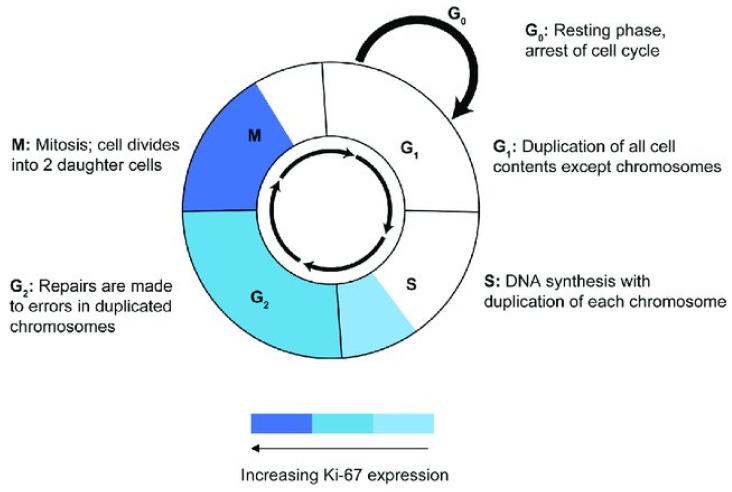
Studies have shown that the Ki-67 index is a valuable biomarker for the diagnosis, and classification of gastro-entero-pancreatic neuroendocrine tumors (GEP-NETs). We re-evaluated the expression of Ki-67 based on the intensity of the stain, basing our hypothesis on the fact that the Ki-67 protein is continuously degraded.
BACKGROUND
The aim was to evaluate whether a new scoring method would be more effective in classifying NETs by reducing staining heterogeneity.
METHODS
Patients with GEP-NET (n = 87) were analyzed. The classification difference between the two methods was determined.
RESULTS
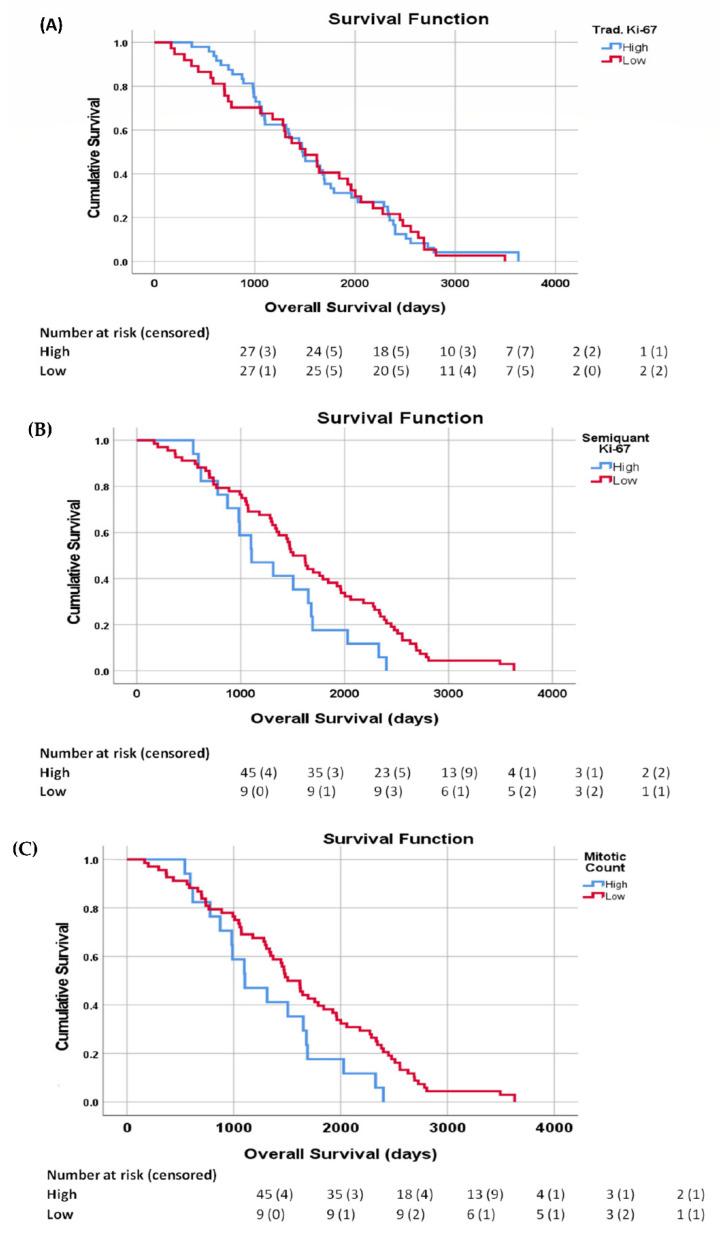
The classification changed significantly when the Ki-67 semiquantal index was used. The percentage of G1 patients increased from 18.4% to 60.9%, while the G2 patients decreased from 66.7% to 29.9% and the G3 patients also decreased from 14.9% to 9.2%. Moreover, it was found that the traditional Ki-67 was not significantly related to the overall survival (OS), whereas the semiquantal Ki-67 was significantly related to the OS.
CONCLUSIONS
The new quantification was a better predictor of OS and of tumor classification. Therefore, it could be used both as a marker of proliferation and as a tool to map tumor dynamics that can influence the diagnosis and guide the choice of therapy.
引言
研究表明,Ki-67指数是胃肠胰神经内分泌肿瘤(GEP-NETs)诊断和分类的重要生物标志物。基于Ki-67蛋白会持续降解这一事实,我们根据染色强度重新评估了Ki-67的表达情况。
背景
目的是评估一种新的评分方法能否通过减少染色异质性在NETs分类中更有效。
方法
对87例GEP-NET患者进行分析,确定两种方法之间的分类差异。
结果
使用Ki-67半定量指数时,分类有显著变化。G1期患者的比例从18.4%增至60.9%,G2期患者从66.7%降至29.9%,G3期患者也从14.9%降至9.2%。此外,发现传统的Ki-67与总生存期(OS)无显著相关性,而半定量Ki-67与OS显著相关。
结论
新的量化方法能更好地预测OS和肿瘤分类。因此,它既可以用作增殖标志物,也可以作为描绘肿瘤动态变化的工具,从而影响诊断并指导治疗选择。


 Zotero 插件