Teshome Zawde Tadesse
Department of Natural Resource Management, College of Dryland Agriculture, Kebridehar University, Kebridehar, Korahe, Ethiopia.
Heliyon. 2022 Aug 7;8(8):e10097. doi: 10.1016/j.heliyon.2022.e10097. eCollection 2022 Aug.
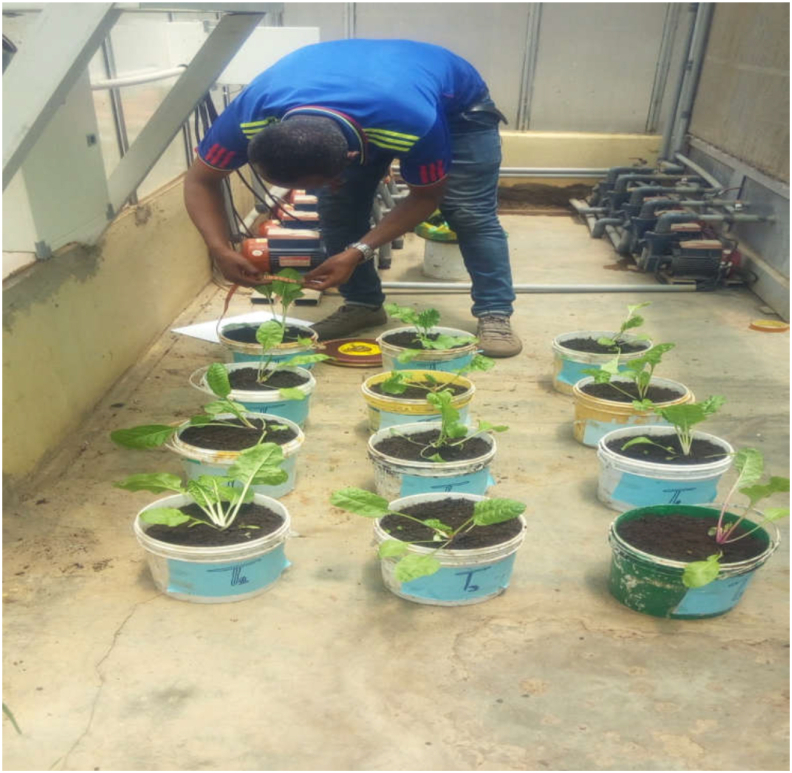
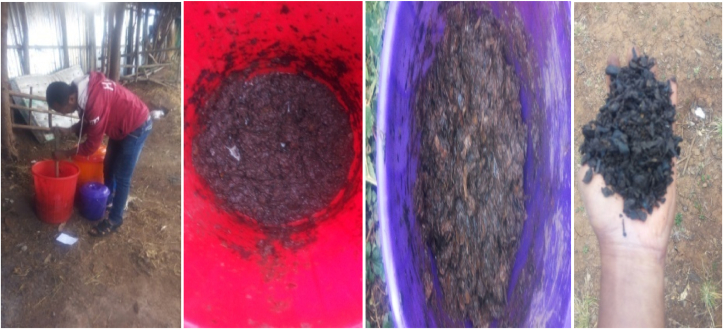
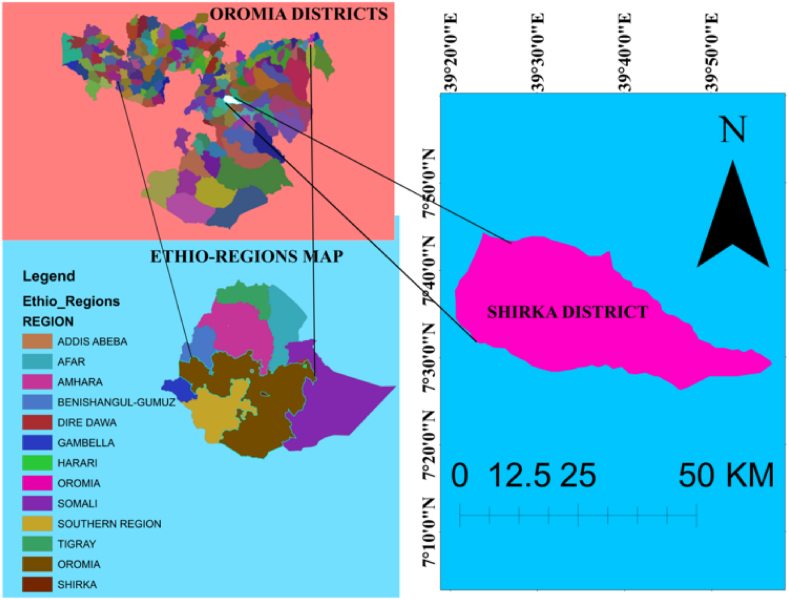
Increasing Population growth and expansion of urbanization lead to the emission of solid waste, including household waste, which causes environmental pollution. However, these wastes can be converted into forms used for organic farming. Therefore, the study was conducted to examine the effect of banana peel compost rates on the growth performance and yield of Swiss chard. The experiment took place in the Kulumsa Agricultural Research Center Greenhouse, with an area of 1.42m and pot area of 628cm. The randomization of both treatments and replication was done by using Randomized Complete Block Design (RCBD). Field and laboratory data were subjected to one-way analysis of variance (ANOVA) by using general linear model (GLM) of the SAS statistical package version 9.0 to determine the existence of any statistical difference among the treatments. Soil and 10, 20, and30g rates of banana peel compost were characterized by a variety of plant nutrients. These include nitrogen, phosphorus, potassium, calcium, magnesium, sulfur, micronutrients (iron, manganese, zinc, and molybdenum), power of hydrogen, organic carbon, and cat ion exchange capacity, carbon to nitrogen ratio, moisture content, and electrical conductivity. Each of plant nutrients were tested in the soil and banana peel compost rates(10, 20 and 30g), with nitrogen of 0.46, 1.54,1.93 and 2.58%; phosphorus of 1.51, 5.77, 5.8, and 5.91mg/kg, potassium of 11.82,41.28, 41.98, and 42.34mg/kg; calcium of 5.55, 25.04, 27.08, and 29.02mg/kg, magnesium of 6.2, 20.48, 22.88, and 23.93mg/kg; and sulfur of 5.79, 13.00, 14.38 and 16.45mg/kg/, respectively. Similarly, iron of 9.65, 15.72, 17.85, and 18.16mg/kg; manganese of 1.41, 4.23,6.38, and 8.91mg/kg; zinc of 1.17, 2.95, 4.25, and 5.60mg/kg; molybdenum of 0.53, 1.21,3.28, and 5.30mg/kg were tested, respectively. In addition to these, power of hydrogen was 6.34, 6.10, 6.22, and 7.30; organic carbon was 1.31, 15.0, 23.47, and 25.50%; carbon to nitrogen ratio was 2.85, 9.81, 12.16, and 9.88; cat ion exchange capacity was 21.08, 24.21, 34.58, and 36.94 (cmol (+) /kg; moister content was 5.75,7.24, 8.81, and 9.85%; and electrical conductivity was 0.11, 2.06, 3.23, and 4.09(ds/cm), respectively, for soil and 10, 20, and 30g rates of banana peel compost. The height of the plants, the number of leaves, the leaves area, the leaves area index (LAI), the length of the leaf and the width of the leaves were all parameters of Swiss chard growth performance based. Each of the Swiss Chard growth parameters was measured in 10g, 20g, and 30g treatments, with average plants height of 22.00, 24.67 and 26.33 cm, average leaves number of 9.00, 12.00 and 8.00, average leaves area of 111.33 and 134.30cmand average leaves width of 8.33, 10.80, and 12.77cm, respectively. Similarly, the mean leaves area index (LAI) was 0.10, 0.30, and 0.5; leaves length was 12.80, 13.00, and 14.67cm, respectively, for 10g, 20g, and 30g treatments. In addition to the Swiss chard growth parameters, the Swiss chard yield parameters have also been measured. Fresh and dry weights were the Swiss chard yield parameters. For each treatment (10g, 20g and 30g), fresh weights 2.44, 2.03 and 3.41g, and dry weights 0.11, 0.08 and 0.14g were recorded, respectively. In conclusion, all the rates of banana peel compost were enhanced and improved Swiss chard growth performance and yield, better than the no compost control.
人口增长和城市化扩张导致包括生活垃圾在内的固体废物排放,进而造成环境污染。然而,这些废物可以转化为用于有机农业的形式。因此,开展了本研究以考察香蕉皮堆肥施用量对瑞士甜菜生长性能和产量的影响。试验在库伦萨农业研究中心温室进行,温室面积为1.42平方米,花盆面积为628平方厘米。采用随机完全区组设计(RCBD)对处理和重复进行随机化。利用SAS统计软件版本9.0的通用线性模型(GLM)对田间和实验室数据进行单因素方差分析(ANOVA),以确定各处理之间是否存在任何统计学差异。土壤以及10克、20克和30克香蕉皮堆肥施用量的各种植物养分特征如下。这些养分包括氮、磷、钾、钙、镁、硫、微量元素(铁、锰、锌和钼)、氢离子浓度、有机碳、阳离子交换容量、碳氮比、水分含量和电导率。对土壤和香蕉皮堆肥施用量(10克、20克和30克)中的每种植物养分进行了检测,氮含量分别为0.46%、1.54%、1.93%和2.58%;磷含量分别为1.51毫克/千克、5.77毫克/千克、5.8毫克/千克和5.91毫克/千克;钾含量分别为11.82毫克/千克、41.28毫克/千克、41.98毫克/千克和42.34毫克/千克;钙含量分别为5.55毫克/千克、25.04毫克/千克、27.08毫克/千克和29.02毫克/千克;镁含量分别为6.2毫克/千克、20.48毫克/千克、22.88毫克/千克和23.93毫克/千克;硫含量分别为5.79毫克/千克、13.00毫克/千克、14.38毫克/千克和16.45毫克/千克。同样,铁含量分别为9.65毫克/千克、15.72毫克/千克、17.85毫克/千克和18.16毫克/千克;锰含量分别为1.41毫克/千克、4.23毫克/千克、6.38毫克/千克和8.91毫克/千克;锌含量分别为1.17毫克/千克、2.95毫克/千克、4.25毫克/千克和5.60毫克/千克;钼含量分别为0.53毫克/千克、1.21毫克/千克、3.28毫克/千克和5.30毫克/千克。除此之外,氢离子浓度分别为6.34、6.10、6.22和7.�0;有机碳含量分别为1.31%、15.0%、23.47%和25.50%;碳氮比分别为2.85、9.81、12.16和9.88;阳离子交换容量分别为21.08、24.21、34.58和36.94(厘摩尔(+)/千克);水分含量分别为5.75%、7.24%、8.81%和9.85%;电导率分别为0.11、2.06、3.23和4.09(毫西门子/厘米),分别对应土壤以及10克、20克和30克香蕉皮堆肥施用量。植株高度、叶片数量、叶面积、叶面积指数(LAI)、叶片长度和叶片宽度均为基于瑞士甜菜生长性能的参数。在10克、20克和30克处理中分别测量了瑞士甜菜的各项生长参数,平均株高分别为22.00厘米、24.67厘米和26.33厘米,平均叶片数分别为9.00片、12.00片和8.00片,平均叶面积分别为111.33平方厘米和134.30平方厘米,平均叶片宽度分别为8.33厘米、10.80厘米和12.77厘米。同样,10克、20克和30克处理的平均叶面积指数(LAI)分别为0.10、0.30和0.5;叶片长度分别为12.80厘米、13.00厘米和14.67厘米。除了瑞士甜菜的生长参数外,还测量了瑞士甜菜的产量参数。鲜重和干重是瑞士甜菜的产量参数。对于每个处理(10克、20克和30克),记录的鲜重分别为2.44克、2.03克和3.41克,干重分别为0.11克、0.08克和0.14克。总之,所有香蕉皮堆肥施用量均提高并改善了瑞士甜菜的生长性能和产量,优于不施堆肥的对照处理。