Yang Yong, Chen Ting, Dai Xiaoqiu, Yang Dong, Wu Yushuang, Chen Huilan, Zheng Yixiong, Zhi Qingqing, Wan Xiaorong, Tan Xiaodan
Guangzhou Key Laboratory for Research and Development of Crop Germplasm Resources, Zhongkai University of Agriculture and Engineering, Guangzhou, China.
Key Laboratory of Horticultural Plant Biology (HZAU), Ministry of Education, Key Laboratory of Potato Biology and Biotechnology (HZAU), Ministry of Agriculture and Rural Affairs, Huazhong Agricultural University, Wuhan, China.
Front Microbiol. 2022 Aug 25;13:998817. doi: 10.3389/fmicb.2022.998817. eCollection 2022.
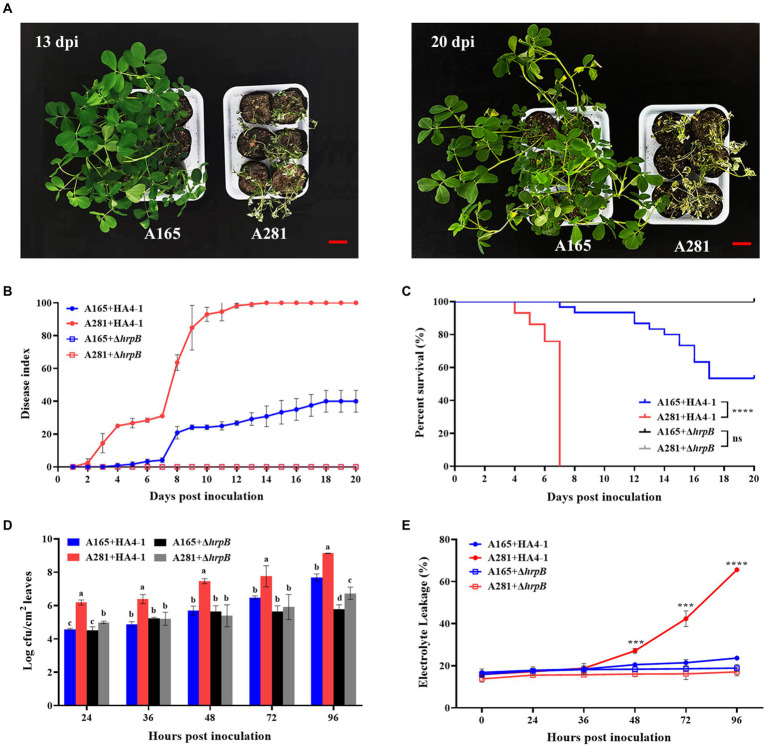
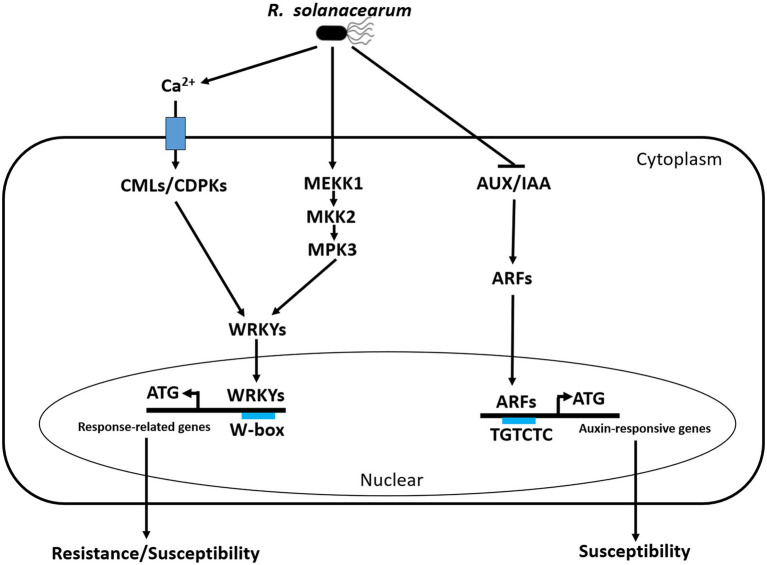
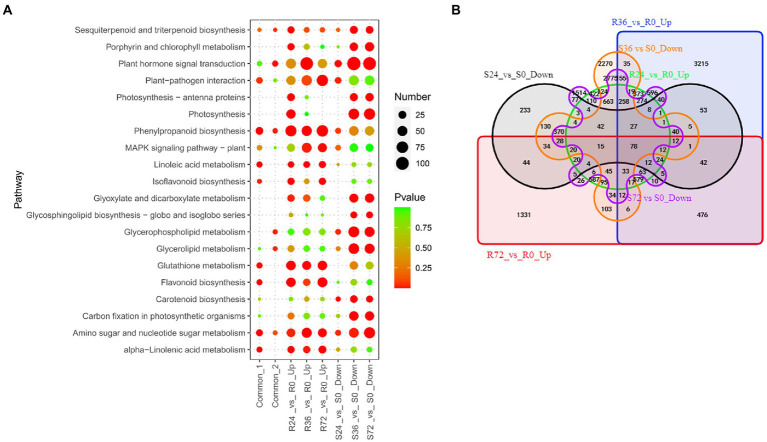
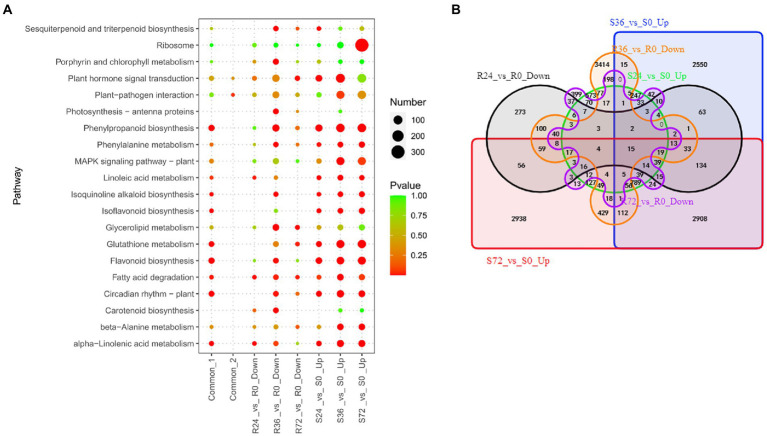
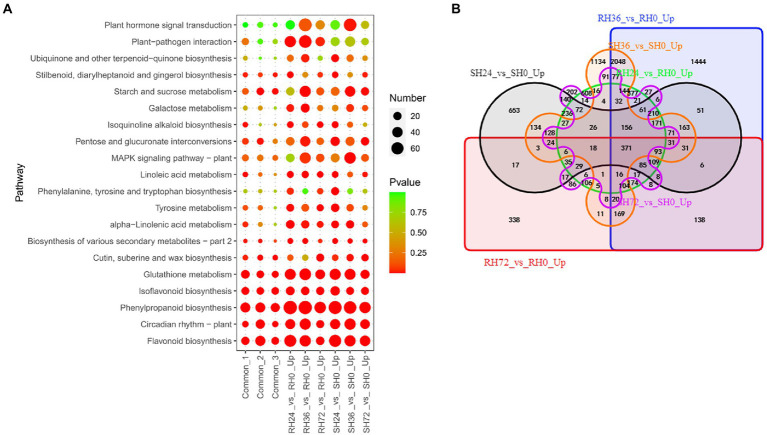
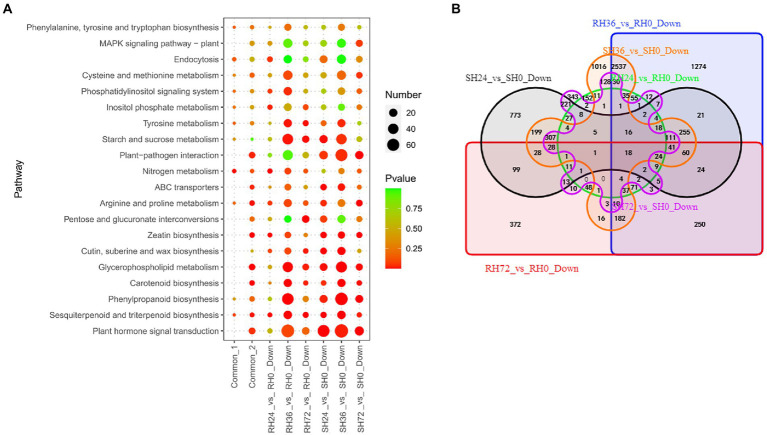
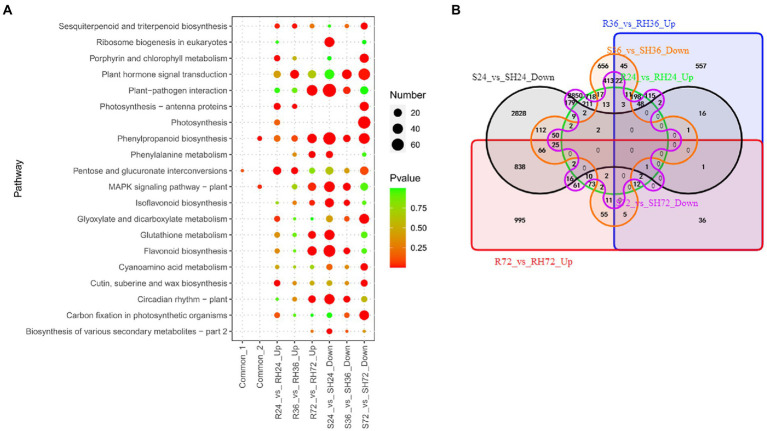
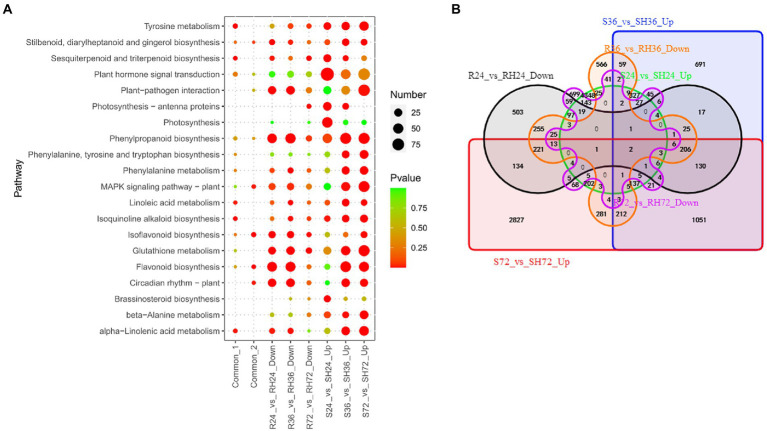
Bacterial wilt caused by is a serious soil-borne disease that limits peanut production and quality, but the molecular mechanisms of the peanut response to remain unclear. In this study, we reported the first work analyzing the transcriptomic changes of the resistant and susceptible peanut leaves infected with HA4-1 and its type III secretion system mutant strains by the cutting leaf method at different timepoints (0, 24, 36, and 72 h post inoculation). A total of 125,978 differentially expressed genes (DEGs) were identified and subsequently classified into six groups to analyze, including resistance-response genes, susceptibility-response genes, PAMPs induced resistance-response genes, PAMPs induced susceptibility-response genes, T3Es induced resistance-response genes, and T3Es induced susceptibility-response genes. KEGG enrichment analyses of these DEGs showed that plant-pathogen interaction, plant hormone signal transduction, and MAPK signaling pathway were the outstanding pathways. Further analysis revealed that CMLs/CDPKs-WRKY module, MEKK1-MKK2-MPK3 cascade, and auxin signaling played important roles in the peanut response to . Upon (RSI), three early molecular events were possibly induced in peanuts, including Ca activating CMLs/CDPKs-WRKY module to regulate the expression of resistance/susceptibility-related genes, auxin signaling was induced by AUX/IAA-ARF module to activate auxin-responsive genes that contribute to susceptibility, and MEKK1-MKK2-MPK3-WRKYs was activated by phosphorylation to induce the expression of resistance/susceptibility-related genes. Our research provides new ideas and abundant data resources to elucidate the molecular mechanism of the peanut response to and to further improve the bacterial wilt resistance of peanuts.
由[病原菌名称未给出]引起的青枯病是一种严重的土传病害,限制了花生产量和品质,但花生对[病原菌名称未给出]响应的分子机制仍不清楚。在本研究中,我们报道了第一项通过切叶法在不同时间点(接种后0、24、36和72小时)分析感染[病原菌名称未给出]HA4-1及其III型分泌系统突变菌株的抗性和感病花生叶片转录组变化的工作。共鉴定出125,978个差异表达基因(DEGs),随后将其分为六组进行分析,包括抗性响应基因、感病响应基因、PAMPs诱导的抗性响应基因、PAMPs诱导的感病响应基因、T3Es诱导的抗性响应基因和T3Es诱导的感病响应基因。对这些DEGs的KEGG富集分析表明,植物-病原体相互作用、植物激素信号转导和MAPK信号通路是突出的途径。进一步分析表明,CMLs/CDPKs-WRKY模块、MEKK1-MKK2-MPK3级联和生长素信号在花生对[病原菌名称未给出]的响应中起重要作用。在[病原菌名称未给出]侵染(RSI)时,花生可能诱导了三个早期分子事件,包括Ca激活CMLs/CDPKs-WRKY模块以调节抗性/感病相关基因的表达,AUX/IAA-ARF模块诱导生长素信号激活导致感病的生长素响应基因,以及MEKK1-MKK2-MPK3-WRKYs通过磷酸化被激活以诱导抗性/感病相关基因的表达。我们研究为阐明花生对[病原菌名称未给出]响应的分子机制以及进一步提高花生青枯病抗性提供了新思路和丰富的数据资源。