Scalabrini Andrea, Mucci Clara, Northoff Georg
Department of Human and Social Sciences, University of Bergamo, Bergamo, Italy.
Faculty of Medicine, Centre for Neural Dynamics, The Royal's Institute of Mental Health Research, Brain and Mind Research Institute, University of Ottawa, Ottawa, ON, Canada.
Front Hum Neurosci. 2022 Sep 2;16:980353. doi: 10.3389/fnhum.2022.980353. eCollection 2022.
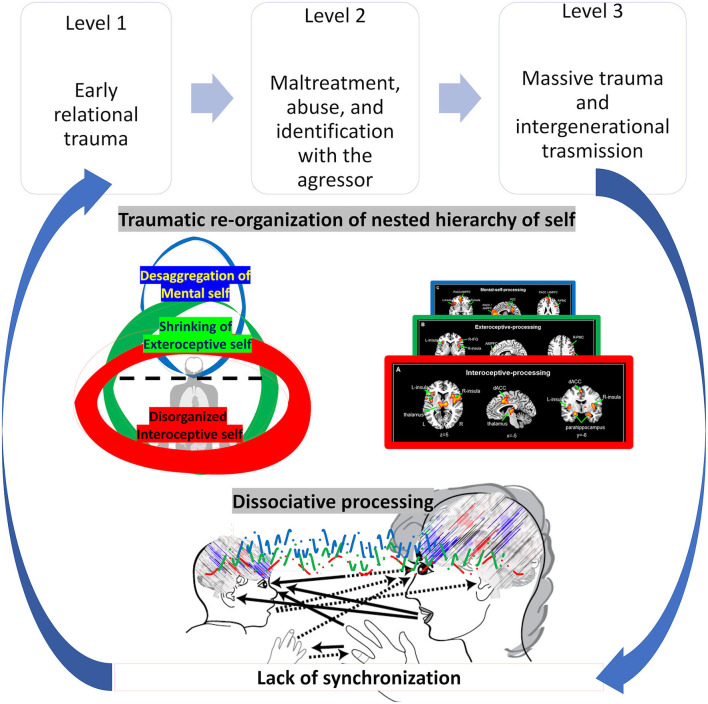
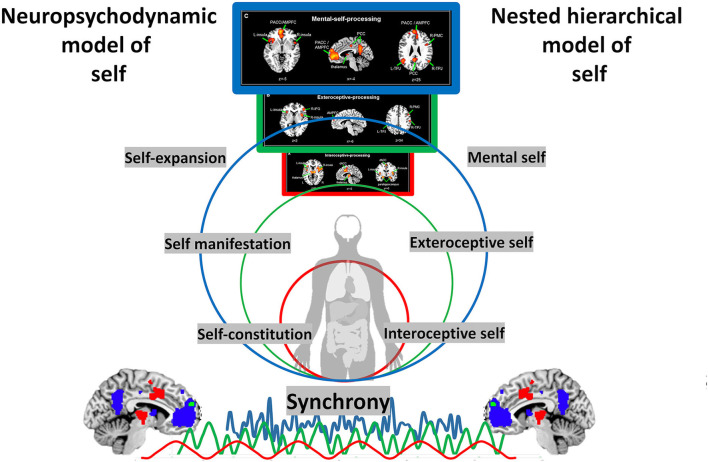
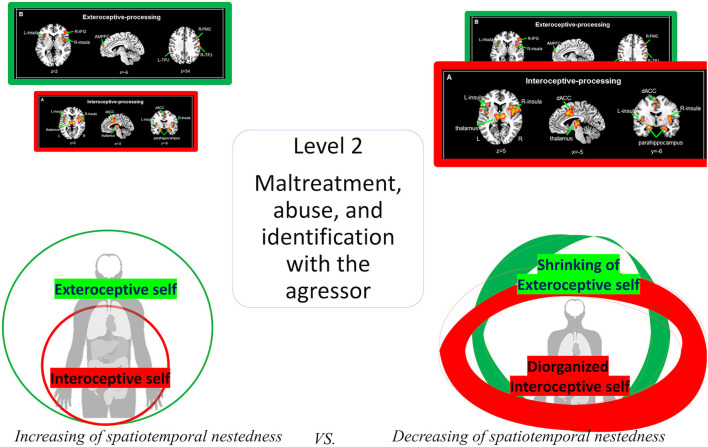
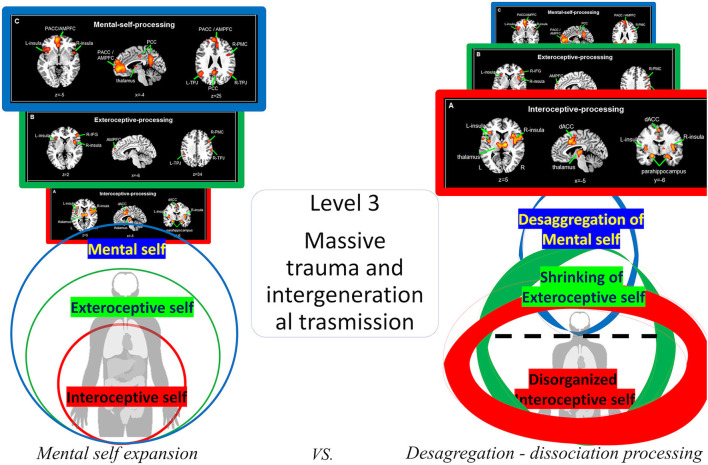
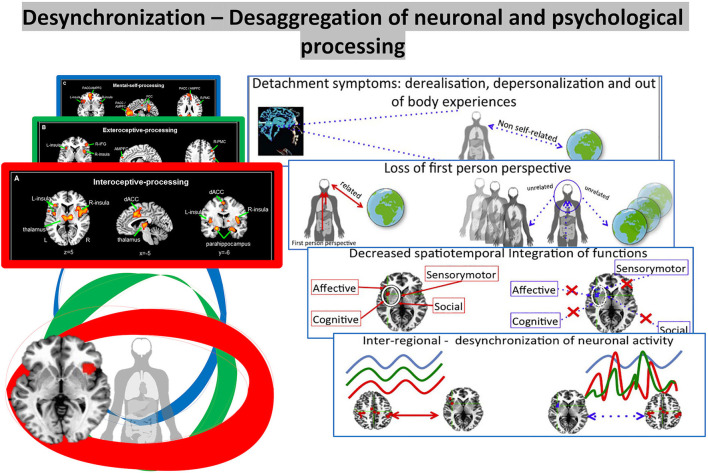
The sense of self has always been a topic of high interest in both psychoanalysis and most recently in neuroscience. Nowadays, there is an agreement in psychoanalysis that the self emerges from the relationship with the other (e.g., the caregiver) in terms of his/her capacity to attune, regulate, and synchronize with the emergent self of the infant. The outcome of this relational/intersubjective synchronization is the development of the sense of self and its regulatory processes both in dynamic psychology and neuroscience. In this work, we propose that synchrony is a fundamental biobehavioral factor in these dialectical processes between self and others which shapes the brain-body-mind system of the individuals, including their sense of self. Recently in neuroscience, it has been proposed by the research group around Northoff that the self is constituted by a brain-based nested hierarchical three-layer structure, including interoceptive, proprio-exteroceptive, and mental layers of self. This may be disrupted, though, when traumatic experiences occur. Following the three levels of trauma theorized by Mucci, we here suggest how different levels of traumatic experiences might have an enduring effect in yielding a trauma-based topographic and dynamic re-organization of the nested model of self featured by dissociation. In conclusion, we propose that different levels and degrees of traumatic experience are related to corresponding disruptions in the topography and dynamic of the brain-based three-layer hierarchical structure of the self.
自我意识一直是精神分析领域以及最近神经科学领域高度关注的话题。如今,精神分析学界达成的共识是,自我意识是在与他人(如照料者)的关系中形成的,这体现在他人能够与婴儿初现的自我进行协调、调节和同步。这种关系性/主体间同步的结果是自我意识及其调节过程在动力心理学和神经科学中的发展。在这项研究中,我们提出同步性是自我与他人之间这些辩证过程中的一个基本生物行为因素,它塑造了个体的脑-身-心系统,包括他们的自我意识。最近在神经科学领域,诺托夫周围的研究团队提出,自我是由一个基于大脑的嵌套层次三层结构构成的,包括自我的内感受层、本体-外感受层和心理层。然而,当创伤经历发生时,这种结构可能会受到破坏。遵循穆奇提出的创伤三个层次理论,我们在此指出不同层次的创伤经历可能如何在产生基于创伤的、以解离为特征的自我嵌套模型的地形学和动态重组方面产生持久影响。总之,我们提出不同层次和程度的创伤经历与自我基于大脑的三层层次结构的地形学和动态方面的相应破坏有关。