
严重散发性成骨不全症的复发风险与预后
Recurrence risks and prognosis in severe sporadic osteogenesis imperfecta.
作者信息
Thompson E M, Young I D, Hall C M, Pembrey M E
出版信息
J Med Genet. 1987 Jul;24(7):390-405. doi: 10.1136/jmg.24.7.390.
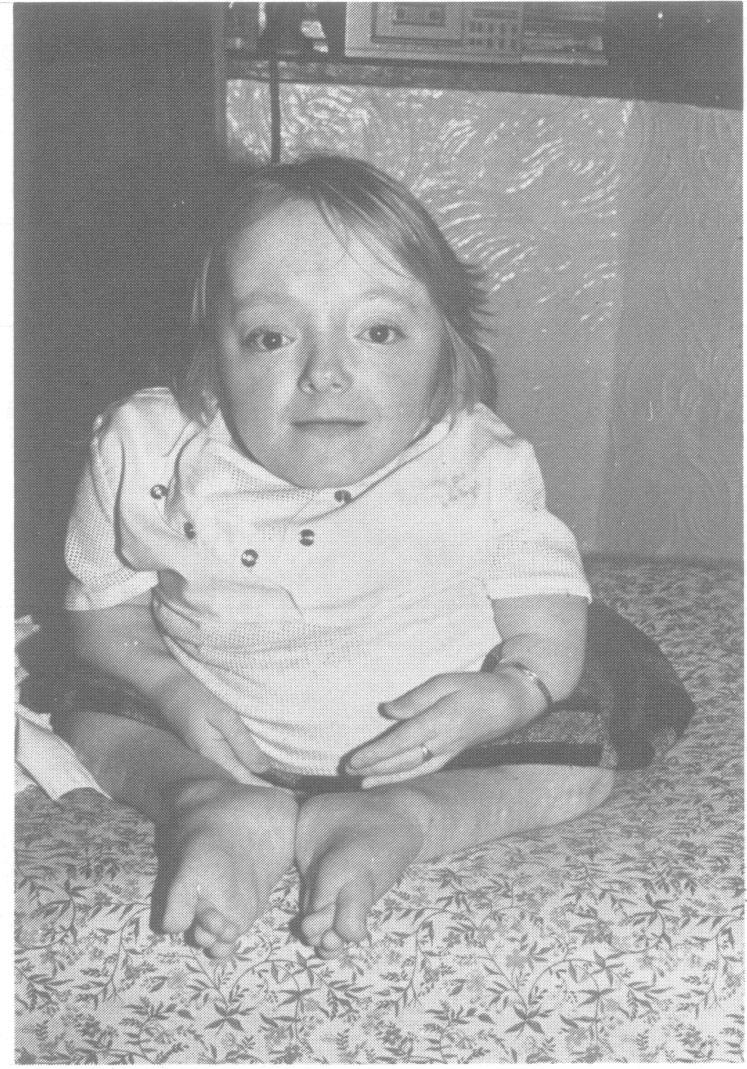
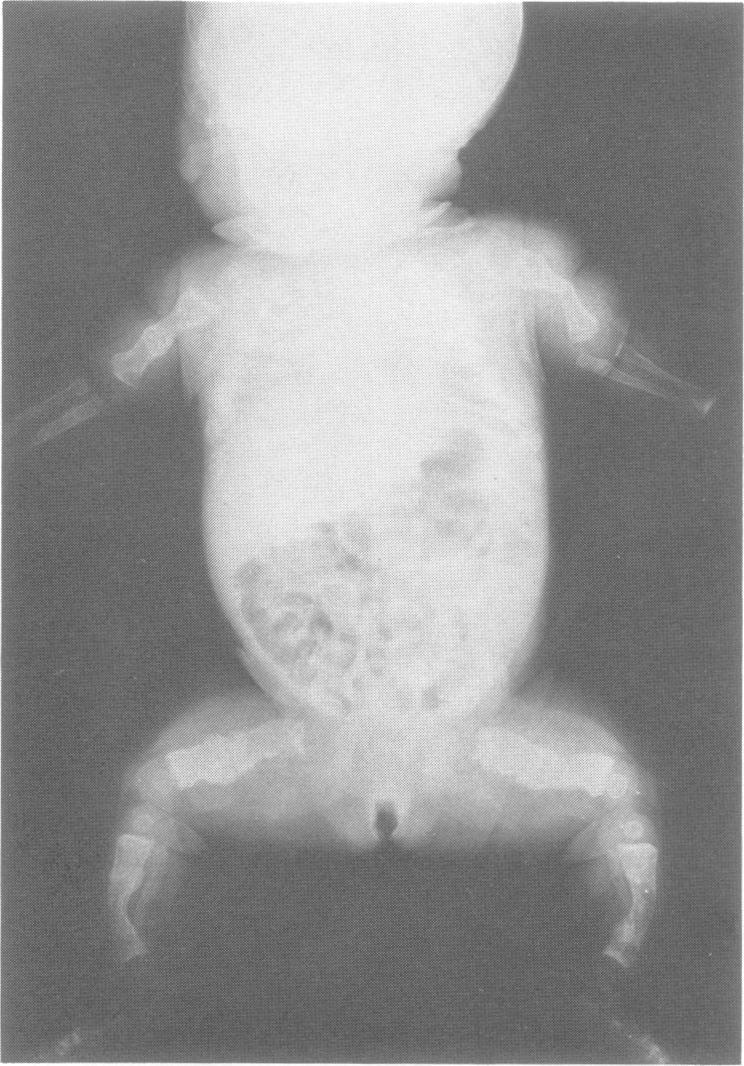
A study was carried out in the United Kingdom of patients with severe osteogenesis imperfecta (OI), born with fractures to normal parents, in order to determine recurrence risks. A total of 105 cases from 98 families survived the perinatal period and 60 cases from 57 families were stillborn or died during the first week of life. The majority of the perinatal survivors correspond to the overlapping group of Sillence type III and sporadic type IV OI. In 40 of these, the radiograph at birth was available and in 37 it showed a characteristic appearance similar to that described previously for type III OI. The other three cases had radiological type IIB OI at birth and died before 26 months of age. The patients with perinatally lethal OI were subdivided on radiological appearance into Sillence type IIA (30 cases, described in the previous paper), type IIB (12 cases from 11 families), and type IIC (three cases from three families), and in five cases from three families the radiological appearance was the same as that of the 37 perinatal survivors described above. Ten cases from 10 families were not classified because their radiographs were unavailable. To analyse the empirical recurrence risks, patients were grouped according to radiological appearance at birth. Those with a type III-like pattern numbered 42 cases and they were grouped with the other cases of severe deforming OI who survived the perinatal period, for whom no x ray at birth was available, making a total of 107 cases. Taking one affected child per family as the proband, there were 98 probands. They had 146 sibs, of whom 10 were affected, giving an empirical recurrence risk of 6.9%. This is consistent with the disease arising as a new dominant mutation in about three quarters of families and as a recessive in about one quarter in this heterogeneous group. It is reasonable to give a recurrence risk of up to 25% in cases with parental consanguinity and a risk of 4.4% in cases with unrelated parents. Fifteen patients (14 probands) with Sillence type IIB OI had 13 sibs, one affected, giving an empirical recurrence risk of 7.7%. The parents were consanguineous in three families and the evidence for autosomal recessive inheritance for the majority in this group is probably stronger. The three patients with type IIC OI had three healthy sibs and the 10 unclassifiable perinatally lethal cases had 22 sibs, all normal. The radiological appearance at birth predicts prognosis to some extent; essentially, the better the bone morphology and mineralisation the longer the survival.
在英国对患有严重成骨不全症(OI)的患者进行了一项研究,这些患者出生时父母正常却伴有骨折,目的是确定复发风险。来自98个家庭的105例患者度过了围产期,来自57个家庭的60例患者在出生后第一周内死产或死亡。围产期存活的大多数患者属于Sillence III型和散发IV型OI的重叠组。其中40例患者出生时的X光片可用,37例显示出与先前描述的III型OI相似的特征性表现。另外3例患者出生时为IIB型OI,在26个月前死亡。围产期致死性OI患者根据X光表现分为Sillence IIA型(30例,在上一篇论文中描述)、IIB型(来自11个家庭的12例)和IIC型(来自3个家庭的3例),来自3个家庭的5例患者的X光表现与上述37例围产期存活者相同。来自10个家庭的10例患者未分类,因为他们的X光片不可用。为了分析经验性复发风险,患者根据出生时的X光表现进行分组。具有III型样模式的有42例,他们与围产期存活的其他严重畸形OI患者分组,这些患者出生时没有X光片,共有107例。以每个家庭中一名患病儿童作为先证者,共有98名先证者。他们有146名兄弟姐妹,其中10名患病,经验性复发风险为6.9%。这与该疾病在约四分之三的家庭中作为新的显性突变出现,在约四分之一的家庭中作为隐性突变出现相一致。在父母近亲结婚的情况下,复发风险高达25%是合理的,在父母无血缘关系的情况下,复发风险为4.4%。15例(14名先证者)Sillence IIB型OI患者有13名兄弟姐妹,1名患病,经验性复发风险为7.7%。3个家庭的父母是近亲,该组中大多数患者的常染色体隐性遗传证据可能更强。3例IIC型OI患者有3名健康的兄弟姐妹,10例围产期致死但无法分类的病例有22名兄弟姐妹,均正常。出生时的X光表现可在一定程度上预测预后;基本上,骨骼形态和矿化越好,存活时间越长。






 Zotero 插件